Related: Best Sub-250g Drones for Beginners: Light, Legal, and Actually Fun
I fly four or five days a week in Phoenix, so I have flown a beginner FPV drone kit through a 110-degree afternoon and a 1-inch sensor ship over a listing in the same week. The two machines have almost nothing in common, and that is exactly why this decision trips people up. One is a trainer you can bounce off a wall without losing your composure. The other is a camera platform you insure before it leaves the case.
Both are on this list. Neither is wrong. The real question is what you want to walk away from a session with: skills, or footage.
Here is the part nobody tells new pilots. Every flight time on a spec sheet was measured in a lab, at room temperature, with no wind and a fresh battery. In a Phoenix summer, cut that number by 30 to 40 percent and you are somewhere near reality. Heat is the real cost of this hobby, and it is why I check how many batteries come in the box before I check anything else. Two batteries is a session. One battery is a tease.
Best for Learning: BETAFPV Aquila20 FPV Kit
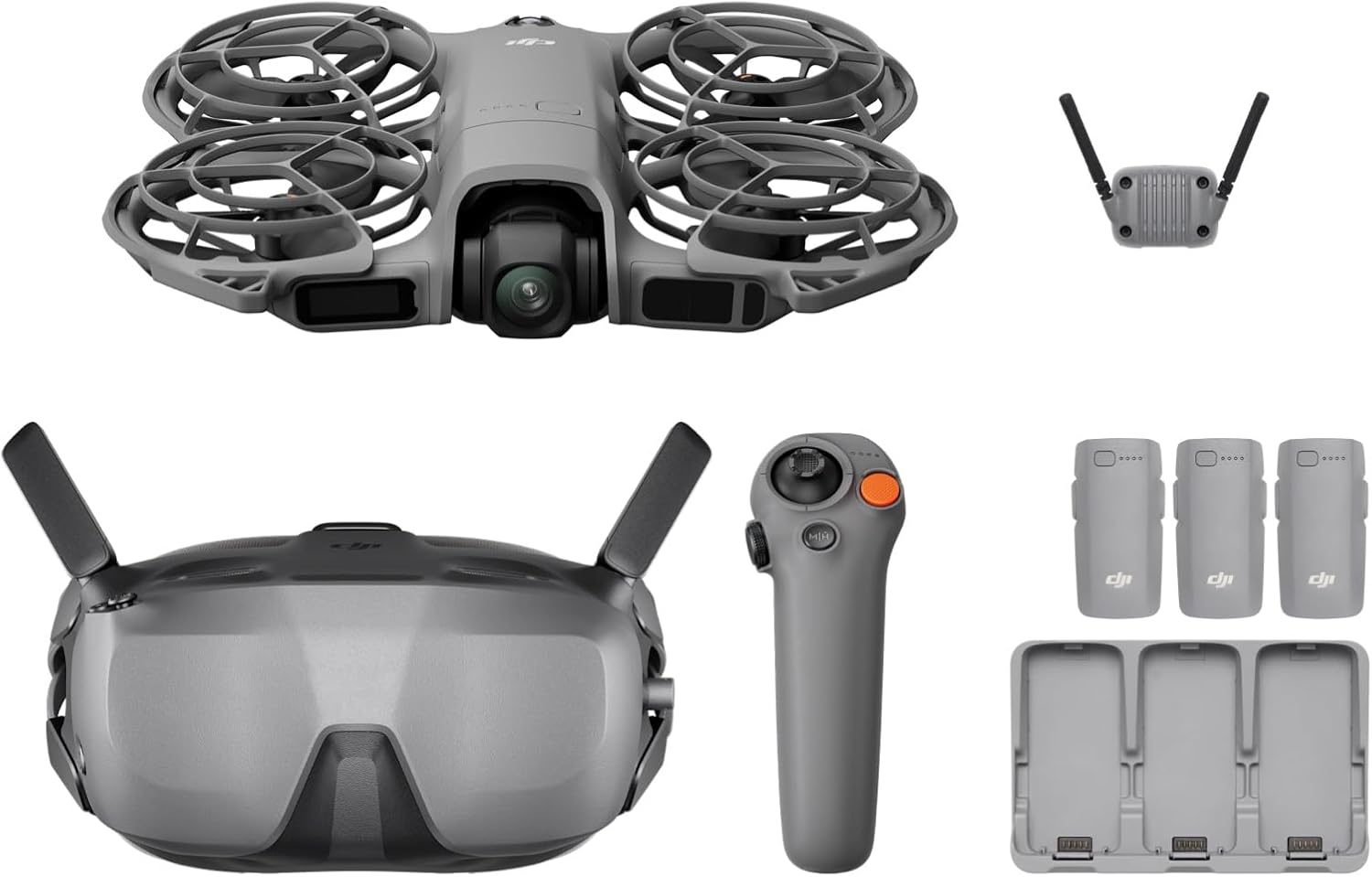
FPV is a different discipline from camera flying, and this is the box I point people toward when they say they want to learn it without building anything. What makes the Aquila20 a kit rather than a drone is that the LiteRadio 4 radio and the VR04 goggles are included. That matters more than it sounds. Half the abandoned FPV projects I have watched die at the compatibility stage, not the flying stage, because somebody bought a quad and then discovered the radio they owned would not bind to it.
The kit is aimed at beginners and at indoor and outdoor flying, which is the right training ground. Indoors teaches throttle discipline, because you cannot outrun a wall. Outdoors teaches you what a gust does to a light quad. And when you outgrow the airframe, the radio you learned on still has a job.
What it is not is a camera platform. If your goal is real estate footage, this is the wrong box. If your goal is to become a pilot who can fly a camera platform later, it is the best money on this page.
Best Budget All-Rounder: FPV Drone with HD Camera
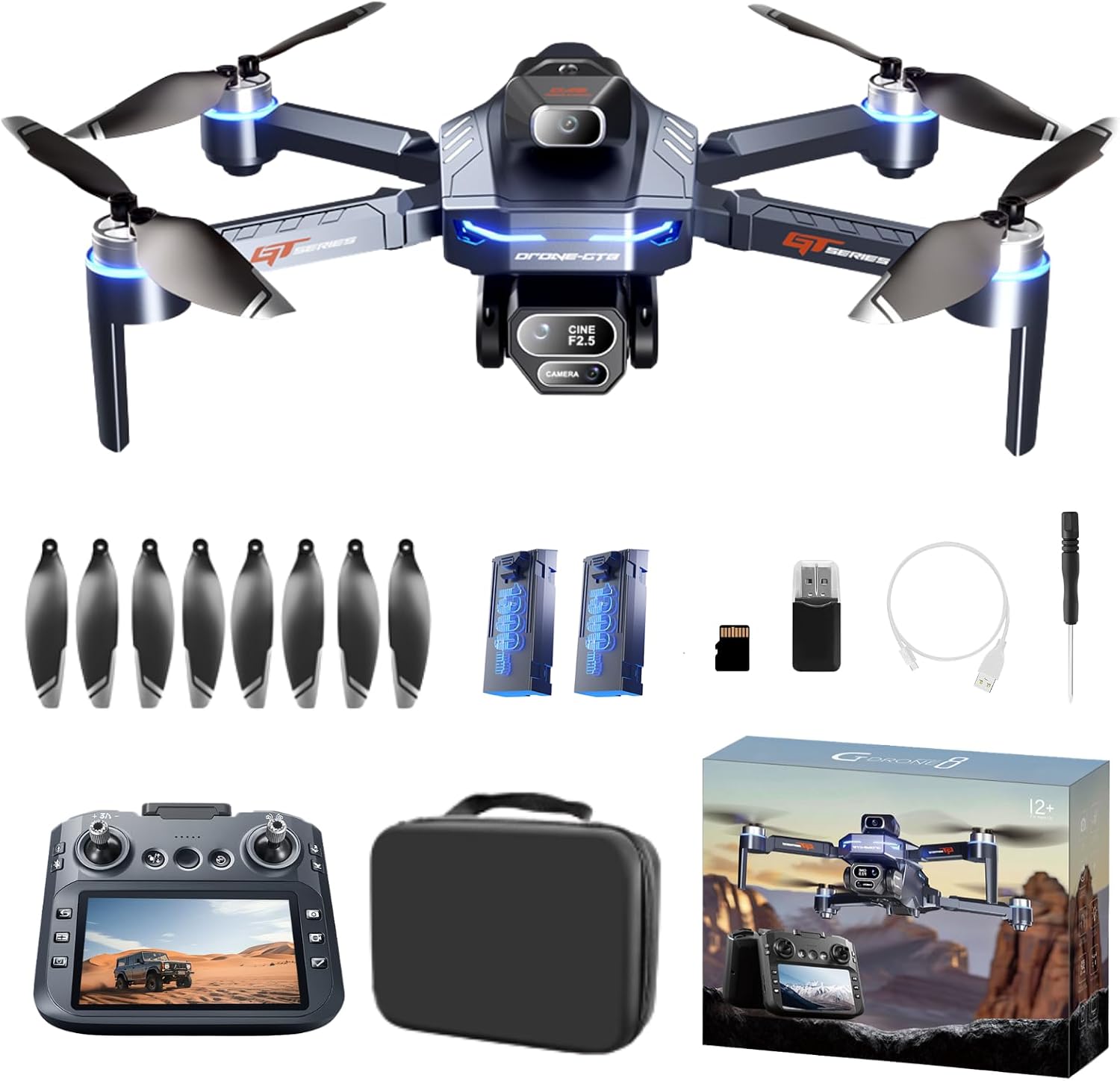
This is the "I want to fly this weekend and film my street" drone. It carries an HD camera, brushless motors, obstacle avoidance, optical flow positioning, headless mode, one key start, and it folds down under 250 grams, with an SD card, two batteries, and a carrying case in the box.
Three of those features are the ones that actually matter for a beginner. Headless mode plus one key start is a set of training wheels that gets you airborne on day one without first memorizing orientation. Optical flow positioning holds a hover indoors where GPS does not reach, which is the difference between a stable platform and a slow drift into a bookshelf. Obstacle avoidance is a safety net, not a pilot. I fly like it does not exist, and so should you.
The 5-inch screen on the controller is the quiet win. No phone mount, no app handshake, no connection dance in the field while the sun cooks your screen. Brushless motors are the other one. They survive crashes that would end a brushed motor's afternoon.
Best Beginner GPS Pick: GPS FPV Drone with EIS Camera
GPS changes what a beginner drone can do. With it on board you get follow me, auto return, and a quad that knows where home is when the link drops. Add EIS, electronic image stabilization, and the footage stops looking like it was shot from a paint shaker.
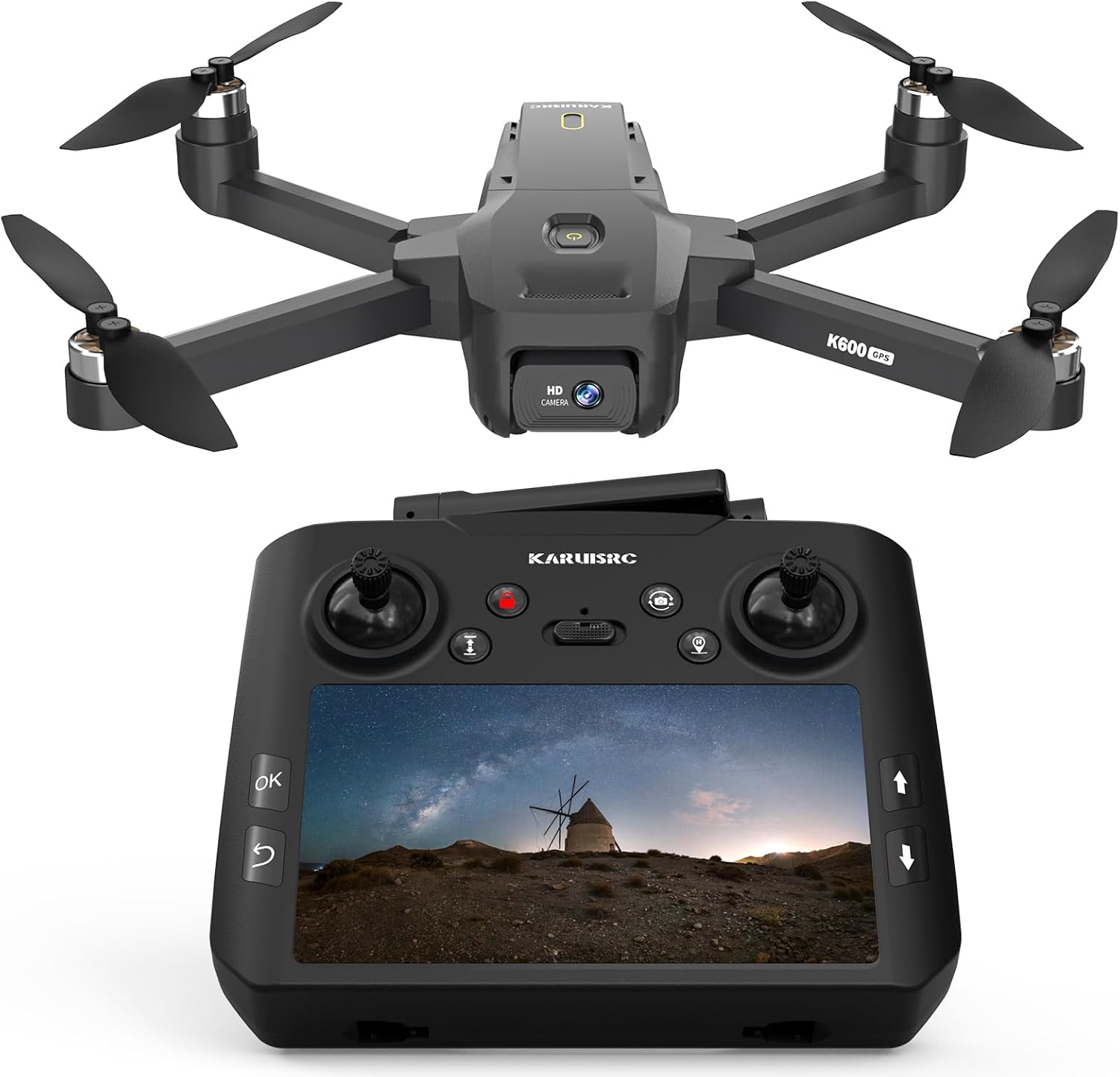
The 4.5-inch screen on the controller and the AI track mode make this the solo-filmmaker option. Set the tracking, start walking or riding, and let the drone follow you instead of asking a friend to hold the camera. At under 249 grams it sits in the lightest class in most places, which matters if you would rather fly than fill out forms.
What GPS does not do is fix a bad pilot. Auto return flies a straight line home, which is fine over a field and less fine when there is a tree or a power line between you and the home point. Set the home point deliberately, wait for a solid lock before launch, and recheck it after every battery swap.
Best Overall: DJI Air 3S Fly More Combo
This is the one that does commercial work. A 1-inch CMOS wide-angle camera plus a medium tele camera, 4K at 60fps, omnidirectional sensing, and smart return to home, with the RC 2 screen remote and three batteries in the Fly More Combo, along with a bundle of Deco Gear accessories and software.
A 1-inch sensor is the line between "drone footage" and "footage a client pays for." Sensor size beats megapixels every time. A 1-inch sensor out-shoots a 48-megapixel phone sensor the moment the light drops, and low light is where real estate and wedding work lives. The medium tele gives you a second look out of the same flight, which is often the difference between one usable shot and three.
The RC 2 remote has a screen built in, so there is no phone to overheat, no tablet to forget, no drained device at the wrong moment. Three batteries is a shoot day instead of a scouting run. The honest caveat: this is the drone you buy when you already know you will use it, or when a client is paying for the results. For learning, it is a lot of machine to lose.
The drone comparison table
This is the table I would keep open while shopping. The last column decides most purchases, because batteries and a case are not accessories. They are the difference between one flight and a session.
| Drone | Best for | Camera and sensing | What is in the box |
|---|---|---|---|
 Visit on Amazon → Visit on Amazon →BETAFPV Aquila20 FPV Kit |
Learning to fly FPV | FPV camera, analog goggles | LiteRadio 4 radio and VR04 goggles included |
 Visit on Amazon → Visit on Amazon →FPV Drone with HD Camera |
First camera drone | HD camera, optical flow positioning, obstacle avoidance | SD card, two batteries, carrying case |
 Visit on Amazon → Visit on Amazon →GPS FPV Drone with EIS Camera |
Solo filming on a budget | EIS camera, GPS, AI track, follow me, auto return | Foldable, controller with 4.5-inch screen |
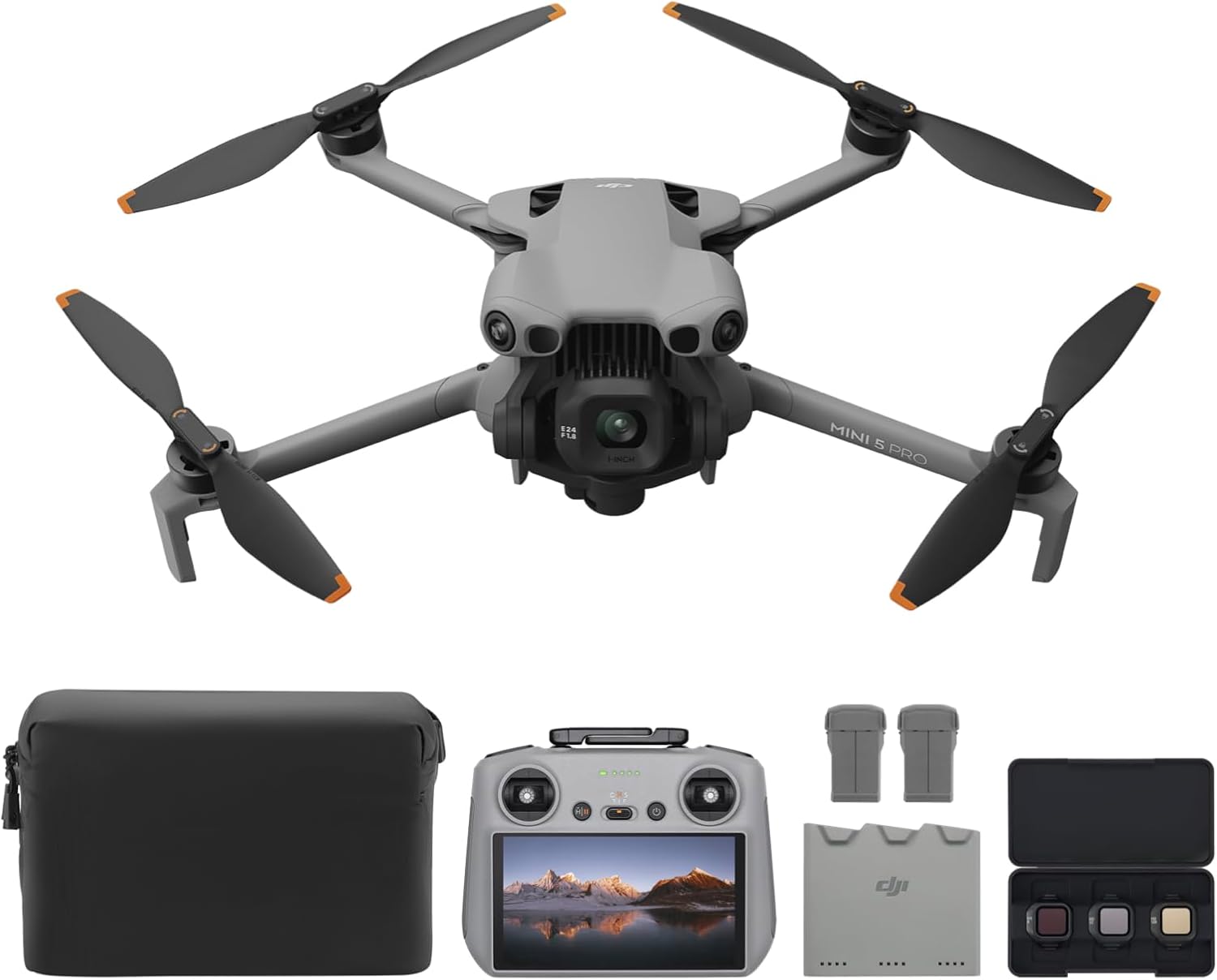 Visit on Amazon → Visit on Amazon →DJI Air 3S Fly More Combo |
Paid camera work | 1-inch CMOS wide plus medium tele, 4K/60fps, omnidirectional sensing | RC 2 screen remote, three batteries, Deco Gear accessories |
How I judge a drone
I judge every machine on four things, in this order: the camera, the battery situation, the app, and the flight time claim. Notice that flight time comes last. That is not a typo.
The camera is half the drone. An airframe that flies beautifully and records mush is a paperweight with props. Sensor size is the number I care about, not megapixels, because a bigger sensor catches more light and light is what makes footage look expensive.
Batteries are the real cost of ownership. A drone with one battery is a fifteen-minute experience with a long charging intermission. Heat is what kills them. I have lost batteries to Phoenix summers, and the pattern is always the same: they swell slightly, hold less, and quit at around 80 percent health. Buy the kit with the extra batteries or expect to buy them later at full retail.
The app experience is part of the product. A drone with a buggy app is a drone that will not fly when you need it, and I have stood in a cul-de-sac waiting on a firmware update that wanted an account I did not want to create.
And flight time: take the claim, subtract 30 to 40 percent for heat and wind, then plan the shoot around the smaller number. Do that and you will never be the pilot who runs out of battery over a client's roof.
Should you buy the BETAFPV Aquila20 FPV Kit?
Yes, if your goal is to become a pilot rather than to collect footage. The radio and goggles are in the box, the airframe is meant for indoor and outdoor learning, and every crash teaches you something instead of costing you a camera. It will not film a listing. It will make you someone who can fly the drone that does.
Should you buy the two under-250g drones?
If you are choosing your first camera drone, yes, and the split is simple. Want stabilized footage of yourself moving through a scene, with follow me and auto return as backup? Take the GPS FPV Drone with EIS Camera. Want the simpler, more forgiving indoor flyer with a screen on the controller, two batteries, and a case already included? Take the FPV Drone with HD Camera. Either one keeps you under 250 grams, which is the class where the least paperwork lives.
Should you buy the DJI Air 3S Fly More Combo?
Yes, if the footage has to earn. The 1-inch CMOS wide-angle and the medium tele cover two very different shots from one flight, omnidirectional sensing watches the airspace you cannot see, and the Fly More Combo answers the battery problem before you have it. Buy it when you are already flying, or when someone else is paying for the results. Just do not buy it as a trainer. That is what the kit is for.