Related: Best Drone for Real Estate Photography Without an Enterprise Budget
I fly drones for money, mostly real estate and solar inspections around Phoenix, and the sub-250g class has quietly become the most interesting part of the market. If you are shopping for the best beginner drones under 249g, you are shopping in the one category where weight rules, wind, camera quality, and battery life all collide at the same time. That is not a bad place to be. It is just a place where the marketing gets very loud.
The number on the box is the first thing I ignore. A claimed 62 minutes of flight is a lab number, measured with no wind, a fresh battery, and a pilot doing nothing interesting. In July here, with the camera rolling and heat coming off the pavement, you get a fraction of that, and you land with a battery that is warmer than it should be. Flight time claims do not survive contact with real air.
Batteries are the second thing I check, and honestly the first thing I price out. A drone with one battery is a drone you fly for twenty minutes and then stare at while it charges. Kits with two or three batteries are the only ones worth buying, and that holds whether you spend a little or a lot.
The third thing is the app. A great camera on a drone with an app that drops the link mid-flight is not a great camera, it is a liability. DJI has spent a decade making that look easy, and the gap between them and everyone else is mostly software.
DJI Mini 4K Camera Drone Combo: The Pick I Hand Beginners
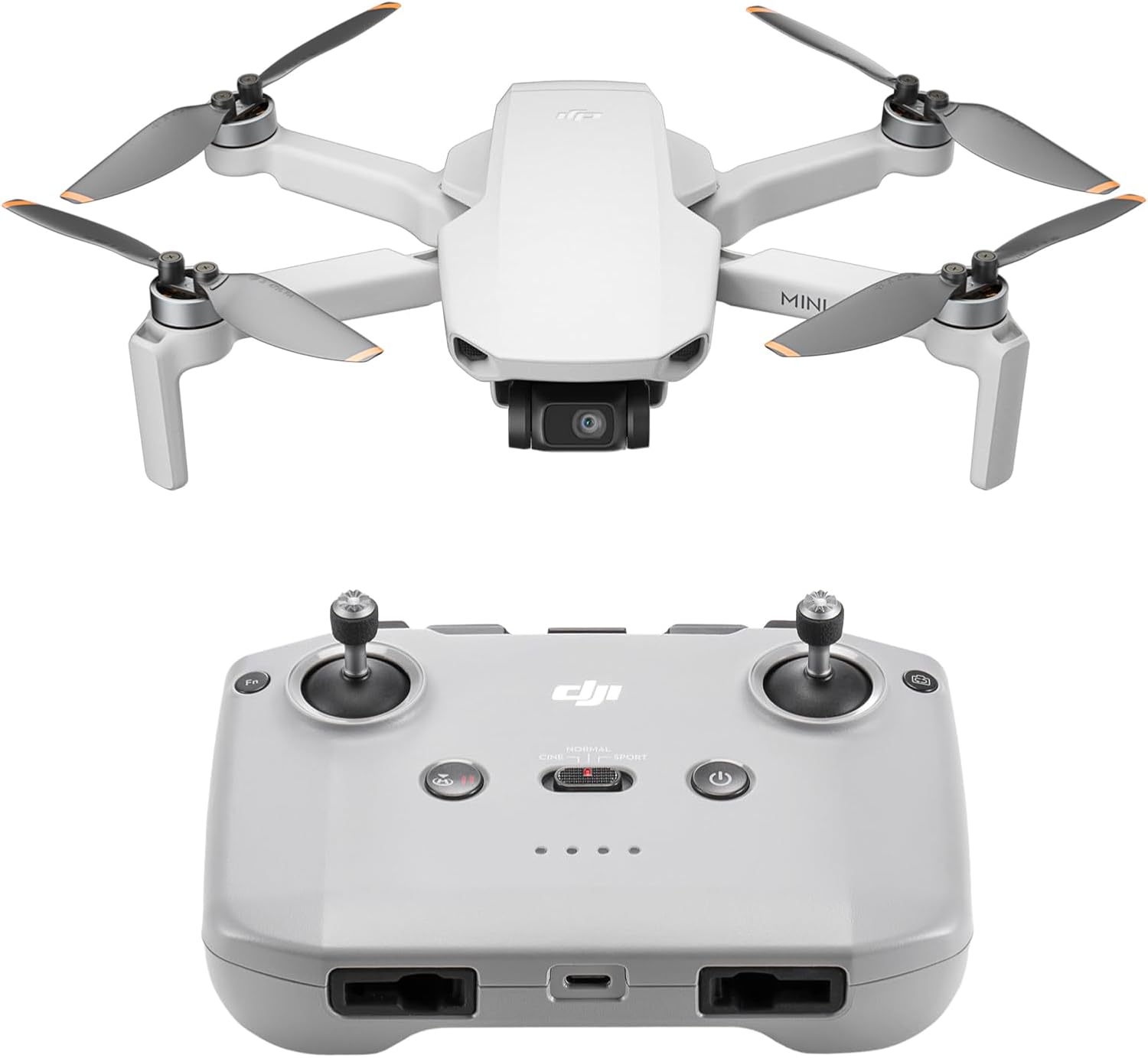
This is the drone I recommend to friends who ask what to buy with a normal budget. It comes in under 249 grams, so it stays in the lightest regulatory bucket in the US and in most of Europe, and it carries a 3-axis gimbal. That last part is the whole ballgame. Electronic stabilization is fine for casual clips, but a mechanical gimbal is what separates footage that looks professional from footage that looks like a phone taped to a kite.
The kit is the reason I point people here rather than at a bare airframe. Two batteries, a claimed 62 minutes of maximum flight time across the pair, 10km video transmission, and auto return. For a first drone that shoots 4K, this is the boring, correct answer. QuickShots handle the dolly and orbit moves with zero stick skill, and auto return means a beginner can panic and still get the aircraft home.
What frustrates me: it is light, so gusty afternoons push it around more than the spec sheet suggests, and the camera is good rather than great once the sun drops. If your goal is paid golden-hour real estate work, you will eventually want a bigger sensor. If your goal is learning to fly and shoot without losing money on a crash, start here.
Potensic ATOM SE: The Budget Pick That Still Flies Like a Drone
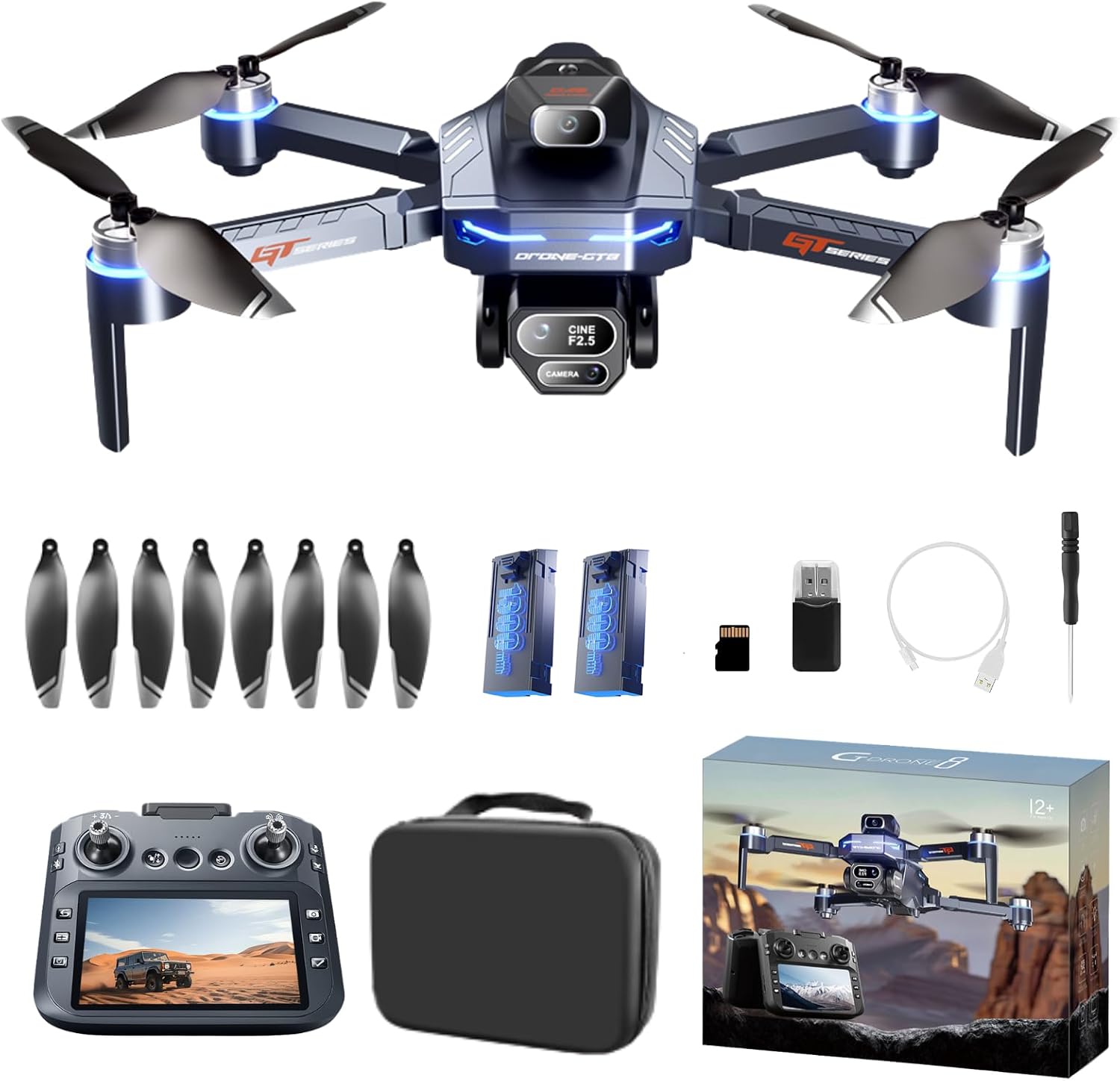
The ATOM SE is the pick for the person who wants to be in the air for the least money without dropping into toy territory. You get brushless motors, which is the line between a real drone and a disposable one, plus GPS with auto return, a folding airframe under 249 grams, 4K video, and a claimed 62 minutes of flight. Top speed is listed at 16 m/s, which is plenty for a beginner and honestly more than most people will ever use.
The tradeoff is in the letters: 4K EIS. That is electronic stabilization, not a gimbal, so the camera is doing the work with software and a crop. In calm air and decent light it looks fine. In wind, or in low light, it is not the Mini 4K, and no amount of settings will change that.
The other thing I would want to check before committing is the app. This is where budget brands have historically stumbled, and I have watched more than one promising airframe get ruined by an app that wanted an account before it would let me update firmware. The hardware here is honest. The software is the question mark, and it is the reason I would not buy this one sight unseen for commercial work.
DJI Neo: The One You Launch From Your Palm
The Neo is a different idea of a beginner drone. It weighs 135 grams, which puts it well under the 249g line, and it takes off from your palm. Subject tracking means it will follow you, and QuickShots give it the same automatic moves as the bigger DJI models. The built-in propeller guard is the detail I appreciate most, because the Neo is designed to fly close to people and close to the ground, and exposed props in that scenario are how beginners end up with stitches.
Notice what the spec sheet does not say. There is no 3-axis gimbal listed here, just stabilized video and subject tracking. That is a deliberate design choice for a drone this small and this cheap, and it means the Neo is a clip machine, not a cinematography machine. It is the drone you throw in a jacket pocket, launch at a trailhead, and let follow you down a bike path.
Controller-free is the other thing to understand. This listing ships without a controller, so you fly it from your phone or from the buttons on the aircraft itself. That is freeing for casual use and limiting if you want precise manual control. If you want a controller in the box, look at the Mini 4K instead.
DJI Avata 2 Fly More Combo: FPV for People Who Want to Feel It
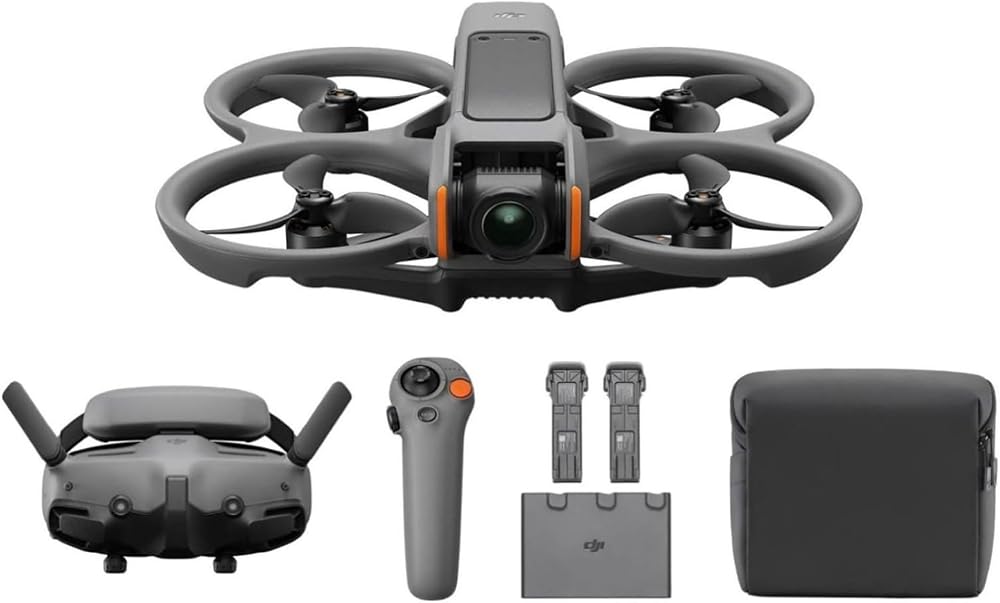
The Avata 2 is the odd one out on this list, and it is the most fun by a wide margin. It is an FPV drone, which means you fly it through Goggles 3 with an RC Motion 3 controller instead of watching it from the ground. The 4K camera, the built-in propeller guard, and the flip and roll moves make it a cinematic tool rather than a racing build, and the Fly More Combo includes three batteries, which is the correct way to buy any drone.
I want to be clear about who this is for. FPV flying is a different skill from camera drone flying. You are not framing a shot on a screen, you are inside the aircraft, and the first hour is humbling. The Goggles 3 and the motion controller soften that curve considerably compared to the old days of building your own quad and learning on a simulator, but it is still a curve.
It is also the priciest of the four and the one that needs the most airspace awareness, because you are flying with a view the people around you cannot see. Fly it legally, fly it low, and treat the propeller guard as a courtesy rather than a license.
The comparison table
Here is how the four stack up on the specs that actually change your day. Everything below comes from the manufacturer listings, and where a number is a claim, I have said so.
| Drone | Weight class | Camera and stabilization | Kit contents | Best for |
|---|---|---|---|---|
 Visit on Amazon → Visit on Amazon →DJI Neo |
135g, palm launch | 4K UHD, stabilized video, subject tracking, QuickShots | Controller-free, built-in propeller guard | Pocketable clips and follow shots |
 Visit on Amazon → Visit on Amazon →Potensic ATOM SE |
Under 249g, foldable | 4K EIS, no gimbal listed | Brushless motors, GPS auto return, 4KM FPV, 16 m/s claimed top speed | Tightest budget, still a real drone |
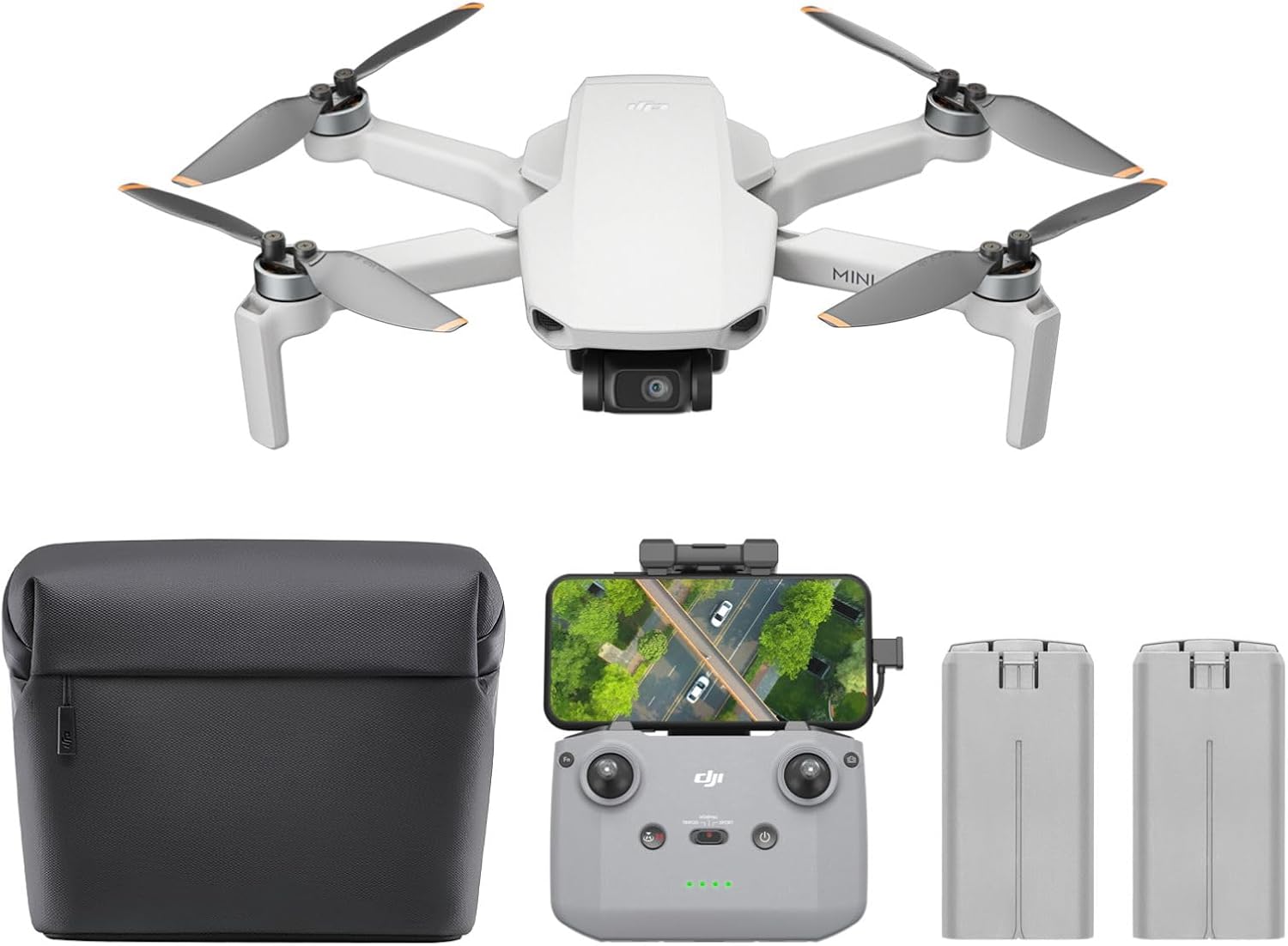 Visit on Amazon → Visit on Amazon →DJI Mini 4K Combo |
Under 249g | 4K UHD, 3-axis gimbal | 2 batteries, 10km transmission, auto return, QuickShots | First serious drone, best all rounder |
| <img src="/images/products/B0CS6HVW6P.jpg" alt="DJI Avata 2 Fly More Combo (3 Batteries), FPV Drone With Camera 4K | Includes Goggles 3 & RC Motion 3, Immersive Flight Experience, Built-in Propeller Guard, Easy Flip/Roll" width="340" style="border-radius:8px;max-width:340px;width:340px;height:auto;max-height:420px;object-fit:contain"> DJI Avata 2 Fly More Combo |
FPV, prop guards | 4K camera, cinematic FPV | 3 batteries, Goggles 3, RC Motion 3 |
What actually matters in this category
Weight is the first filter. Staying under 249 grams keeps you in the lightest regulatory bucket in the US and in most of Europe, which is exactly why this class exists. If you are a hobbyist who wants the fewest possible hoops, the number 249 is the most important number on the page. All four of these are built around it, except the Avata 2, which trades that convenience for the goggles experience.
Gimbal versus EIS is the second filter, and it is the one beginners get wrong most often. A 3-axis gimbal physically holds the camera still. EIS crops the frame and moves it in software. The Mini 4K lists a gimbal. The ATOM SE lists EIS. The Neo lists stabilized video. That difference shows up in wind and in low light, not in a sunny demo clip.
Battery count is the third filter, and it is the one that decides how much you actually fly. Two batteries is the minimum for a real session, three is comfortable, and one is a tease. This is also where I would spend extra money before I spent it on a fancier camera, because batteries are the part of this hobby that wears out first, especially in a place like Phoenix where heat shortens their life.
Transmission range is the fourth, and it is the spec people overpay for. A 10km transmission claim is not a 10km flight. It is a link budget under ideal conditions, and in a suburban neighborhood with trees and interference you will lose video long before that. Buy for the camera, the gimbal, and the battery count. Treat range as a nice-to-have.
Finally, the app. This is not a spec sheet line, but it is part of the product, and it is the part I cannot test for you in a paragraph. Download it, read the recent reviews, and check whether it asks for an account before it will let you do basic things. A drone you cannot update is a drone that will eventually stop flying the way you expect.
Should you buy the DJI Mini 4K Combo?
Yes, for most people. It has the gimbal, it has the two-battery kit, it stays under the weight line, and it comes from the company with the software everyone else is still chasing. It is the recommendation I give when someone asks me what to buy and does not want a lecture. If you want one drone to learn on and keep, this is the one.
Should you buy the Potensic ATOM SE?
Yes, if the budget is the deciding factor and you go in with clear expectations. You get brushless motors, GPS return, folding arms, and 4K video for the least money here. You do not get a gimbal, and you are betting on an app that is not DJI's. Check the app reviews, then decide. If the difference in budget is small, stretch to the Mini 4K.
Should you buy the DJI Neo?
Yes, if you want a drone that lives in your pocket and follows you. Palm takeoff, subject tracking, propeller guards, and 135 grams make it the least intimidating aircraft on this list, and the clips it gets are genuinely good in daylight. Just know that it ships without a controller and that its stabilization is not a gimbal. It is a companion, not a production tool.
Should you buy the DJI Avata 2 Fly More Combo?
Yes, if you want to fly FPV and you want to do it with a real kit. Goggles 3, the RC Motion 3, three batteries, prop guards, and a 4K camera make this the complete package, and the flip and roll moves are the payoff. It is the most expensive and the most demanding of the four, so buy it when you want the experience rather than just the footage. If you only want photographs, the Mini 4K will do more of what you need for a lot less.