Related: Drone Batteries in Desert Heat: What Survives a Phoenix Summer
I fly drones for a living in Phoenix, and that changes every recommendation I make. A mini camera drone that reviews well in a mild coastal test is a different machine over asphalt in July. I have watched "40 minute flight time" claims die at 22 minutes, watched gimbals throw errors once the body heat-soaks, and watched batteries swell at 80 percent health. None of that shows up in the marketing copy.
So this is not a spec sheet. It is how I sort four very different aircraft: a mini camera drone, an FPV kit with goggles, an older Phantom bundle, and a small indoor trainer. The wrong pick is rarely the wrong drone. It is the wrong drone for the job. An indoor toy teaches stick control and will never lift a usable camera. An FPV kit delivers a feeling no camera drone can match. A mini class camera drone is the one that eventually pays for itself.
Best Overall: DJI Mini 3 With DJI RC
If someone tells me they have one budget and they want the most useful thing in it, this is the answer. The Mini 3 is a mini class camera drone built around a 3-axis mechanical gimbal, and that gimbal is the single feature I care about most. Electronic stabilization crops your frame and fights you in wind. A mechanical gimbal just holds the horizon and lets the sensor do its job. When I shoot real estate, the difference between a level horizon and a slightly tilted one is the difference between a usable clip and a reshoot.
The DJI RC controller matters more than people expect. It has its own screen, so you are not strapping a phone into the sun where it will overheat and dim. In my summers, that alone is worth a lot. The app experience is the other half of the product, and this is where DJI has earned its reputation. Firmware updates, geofencing, transmission stability, all of it behaves the way you need it to when a client is standing next to you.
Two practical notes. First, buy spare batteries with the drone, not three months later, because the battery is the real cost of ownership. Second, budget for ND filters if you shoot video. A neutral density filter is how you get motion blur that does not look like a stutter. The airframe is small, the camera is real, and it is the drone I hand to someone who says they want to get serious.
Best Bundle for the Money: Phantom 3 4K Ultimate Kit
I started on a Phantom, so this bundle hits a nerve. Look at what is in the box: two extra DJI batteries, a 64GB card, snap-on prop guards, and a gimbal protector. That is the packaging format I wish every seller offered, because it answers the three things that actually break a beginner's week, which are flight time, storage, and gimbal protection between flights. The four thirds style body carries a 4K camera on a gimbal, and the prop guards let you practice close to obstacles without instantly destroying a prop set.
The catch is that this is an older airframe. Apps age out, spare parts dry up, and batteries that have been sitting in a warehouse are not the same as batteries that have been cycled properly. Heat is what kills these packs, and a used or long-stored pack can arrive soft. If you are comfortable tinkering and you want a large, stable platform to learn on with everything already included, the kit value is genuinely hard to argue with. If you want something to fly commercially this season, closer to a mini class camera drone is the smarter direction.
Best FPV Starter: FPV Drone Kit With Camera and VR Goggles
FPV is a different hobby wearing the same word. If what you actually want is the goggles-on sensation of flying rather than hovering and framing a shot, a kit like this is the cheapest honest way in. It ships as a brushless quadcopter kit with a camera and VR goggles, which means you are not assembling a parts list before your first flight.
Brushless motors matter here. They last longer and tolerate far more abuse than the brushed motors on toy grade quads, and on a kit at this level that is the difference between a season of flying and a month of frustration. The goggles are the part that sells the experience: you see what the aircraft sees, in real time, and your brain buys the illusion almost immediately.
Two boundaries from someone who has watched people get this wrong. First, this is a starter, not a racing build. Racing quads are a separate category with a separate skillset, and I do not pretend otherwise. Second, FPV in the United States means understanding line of sight rules and the hobbyist regulatory squeeze. Fly it like a responsible adult and it is one of the most fun things you can do with a battery. Fly it like a video game and you will get a letter.
Best Indoor Trainer: Holy Stone HS210 Mini Drone
This is the one I give to kids and to adults who have never touched a transmitter. It is a nano quadcopter with auto hovering, 3D flips, headless mode, and three batteries in the box. Headless mode is the feature that saves beginners, because you stop having to translate "the drone's left" into "my left" while it drifts toward a lamp.
Notice what the product name does not promise: a camera. That is honest, and it tells you exactly what this is. It is a trainer, not a camera platform. Any camera at this size and price is a novelty, and I would rather someone learn throttle control on a machine that cannot hurt anyone than buy a cheap camera quad, get disappointing footage, and quit.
Three batteries is the detail that makes it work. A nano quad flies short hops, and a single battery means most of your session is spent waiting at a USB port. Three packs means actual practice. If you are shopping for a gift for a kid, or you want to test whether you even enjoy flying before spending real money, start here. Then come back for the Mini 3.
What I look for before I recommend a drone
I do not start with megapixels. I start with the four things that decide whether the drone is still flying in month six.
Battery supply and price. Can you buy more packs, and are they reasonable? A drone with a proprietary pack you cannot replace is a paperweight. This is why bundle kits with extra batteries are worth a premium.
Heat behavior. In Phoenix, the airframe heat-soaks, the gimbal gets touchy, and everything drains faster. Claims measured in perfect conditions are useless to me. Cut every published flight time by 30 to 40 percent and plan around that number.
Gimbal type. A 3-axis mechanical gimbal is the dividing line between a camera drone and a flying camera phone. Everything below that line is a toy with a lens.
App quality. A drone with a buggy app is a drone that will not fly when a client is paying. This is the honest reason DJI keeps winning, and the honest weakness of most budget brands.
How these four sort out
The Phantom 3 kit and the Mini 3 are the two camera platforms, and they are a decade apart in software. The Mini 3 wins on portability, app stability, and the fact that you can carry it in a daypack to a shoot. The Phantom bundle wins on included accessories and on price per feature, but it asks you to accept an older app and older batteries.
The FPV kit and the HS210 are the two trainers, at opposite ends. The HS210 is indoor stick time with zero risk. The FPV kit is the real thing with real goggles, and it rewards a different kind of attention.
For stills and video, sensor size beats megapixels every time. For everything else, batteries beat everything.
The drone comparison table
This is the table I keep when people ask me what to buy. Where I do not have a number I trust, I say so rather than guess. Treat the "best for" column as the only column that really matters.
| Drone | Best for | Camera and gimbal | Batteries in the kit | Notes |
|---|---|---|---|---|
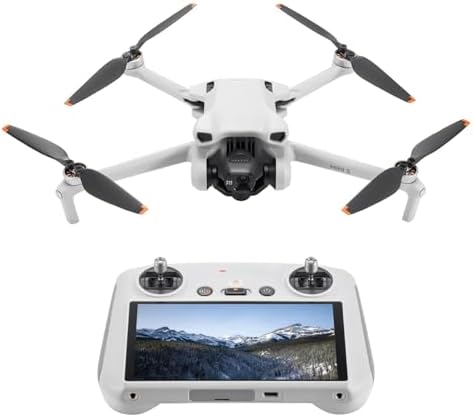 Visit on Amazon → Visit on Amazon →DJI Mini 3 with DJI RC |
Travel, real estate, everyday shooting | Camera on a 3-axis mechanical gimbal | See product | DJI RC controller has its own screen, no phone needed |
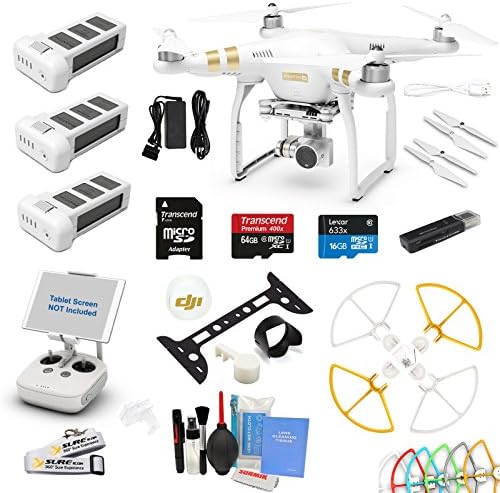 Visit on Amazon → Visit on Amazon →Phantom 3 4K Ultimate Kit |
Learning on a large, stable airframe | 4K camera on a gimbal | Two extra DJI batteries plus a 64GB card | Older app and older packs; prop guards and gimbal protector included |
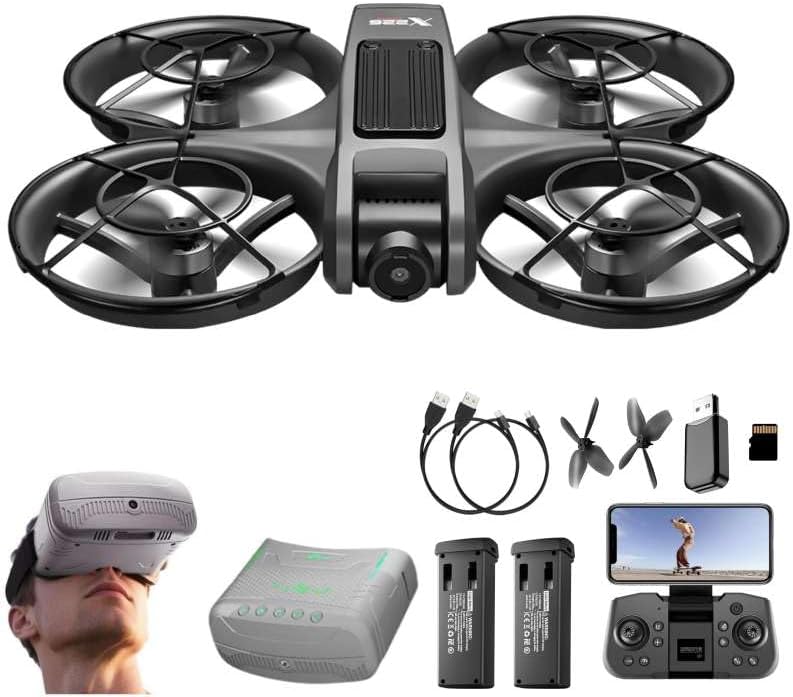 Visit on Amazon → Visit on Amazon →FPV kit with camera and VR goggles |
Trying FPV without building a racer | Camera plus VR goggles in the kit | See product | Brushless quadcopter; starter, not a racing build |
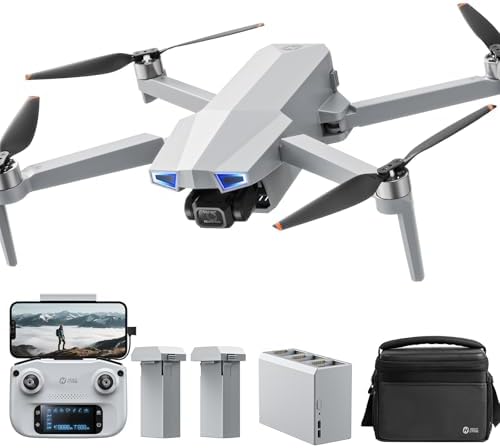 Visit on Amazon → Visit on Amazon →Holy Stone HS210 |
Kids, gifts, indoor first flights | No camera platform | Three batteries included | Auto hovering, 3D flips, headless mode |
Do you need the goggles?
No, but you do need to decide whether you want to fly or to film, because those are the two paths through this table. Goggles give you the sensation of flight and a completely different relationship with altitude. A gimbal gives you footage a client will pay for. Very few people are equally served by both, and the people who buy the wrong one are the ones who sell it by spring.
Batteries, not megapixels
The kit with extra batteries is almost always the better buy, because spare packs are where the money disappears over a season. Heat shortens their life, cold stops their charge, and a soft pack can swell at 80 percent health with no warning. Whatever you choose, buy spare batteries up front and store them around half charge. That single habit will outlast the drone.
Should you buy the DJI Mini 3 with DJI RC?
Yes, if you want a camera drone that can handle paid work without an enterprise budget. The 3-axis mechanical gimbal keeps horizons level when the wind picks up, and the DJI RC's built-in screen keeps your phone out of the sun. Buy a spare battery at the same time. The airframe is the purchase, but the battery is the cost.
Should you buy the Phantom 3 4K Ultimate Kit?
Only with clear eyes. The bundle is the attraction: two extra DJI batteries, a 64GB card, prop guards, and a gimbal protector, which is exactly the format I wish every seller used. But it is an older airframe with an older app, and stored batteries are a gamble. If you want a first camera drone for client work now, the Mini 3 is the better answer.
Should you buy the FPV kit or the Holy Stone HS210?
Buy the FPV kit if you want goggles and the sensation of flight, and you understand it is a first step rather than a racing build. Buy the HS210 if you are shopping for a kid, a rainy afternoon, or your own first hour of stick time. Auto hovering, headless mode, and three batteries make it easy to actually fly instead of charge. Both are trainers. Only one of them is a camera.