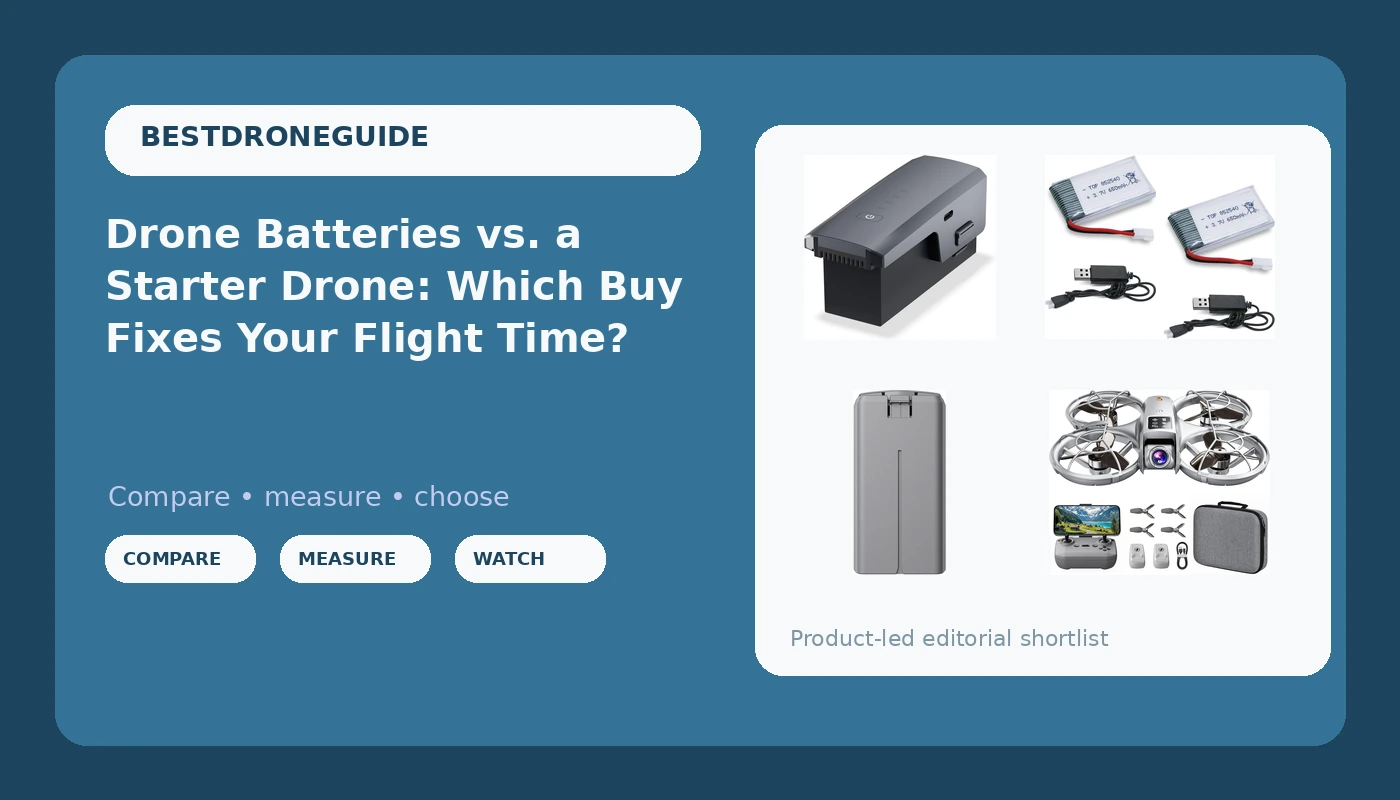
I have lost more money to drone batteries than to any other part of this hobby. Two packs swelled on me in a single Phoenix summer, both of them reading healthy on the charger right up until the plastic started to bow. I fly four or five days a week, often in triple digit heat, and that is why I read battery listings differently than most people do. The label numbers are a starting point. The aircraft they go into, the charger that fills them, and the temperature on the tarmac decide whether you got your money's worth. That is the lens I used for this comparison of drone batteries and one beginner quadcopter, because three of these four products are power packs and one is an entire aircraft, and that split matters more than any single spec.
If you already own one of the drones these packs fit, buy the pack that matches your airframe. If you do not own a drone yet, the starter quad is the only complete product in this lineup, and that is where a beginner's money belongs first.
Here is how the four stack up, with what each one is for and where each one falls short.
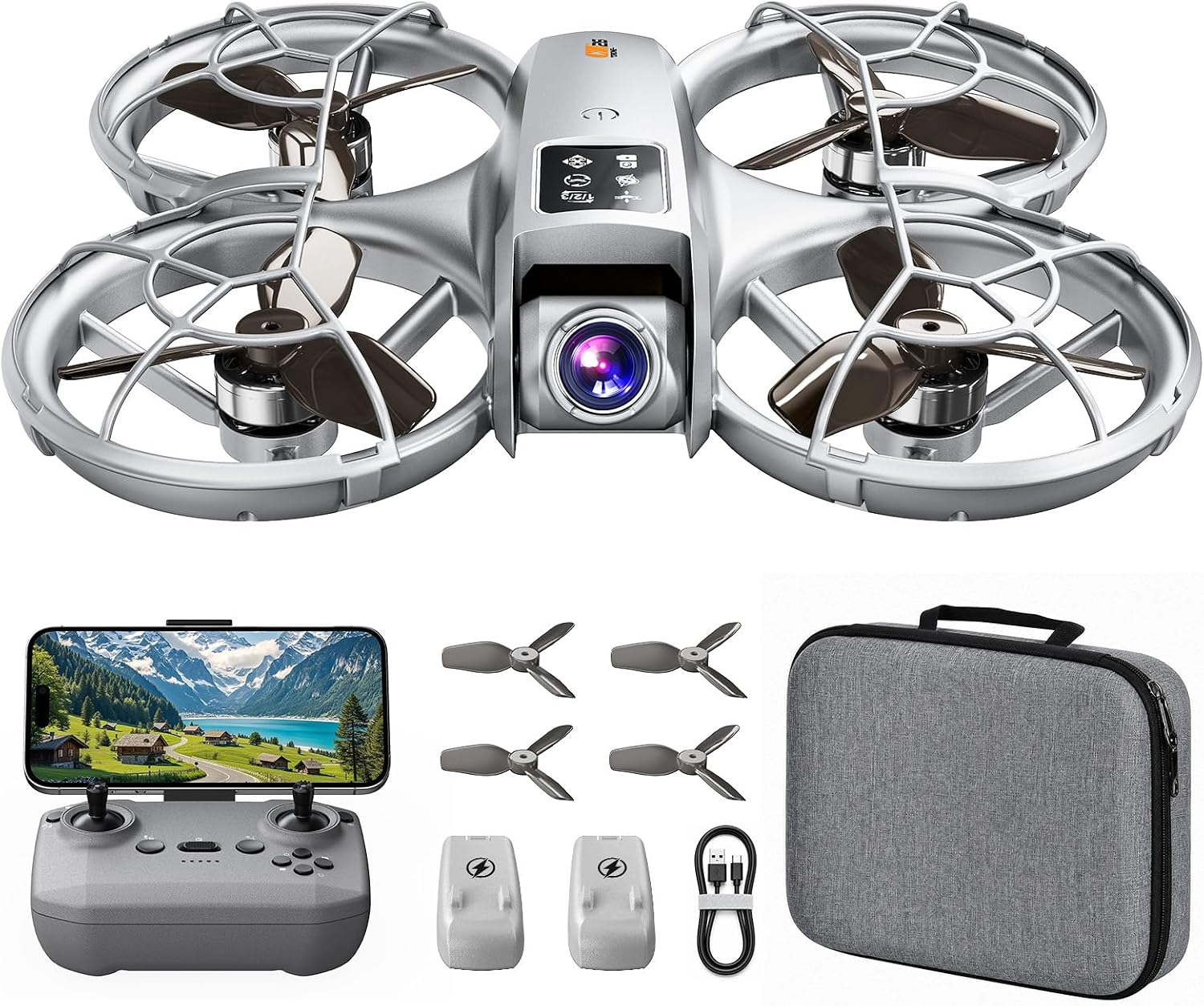
Mini Drone with HD FPV Camera, Beginner Friendly RC Quadcopter (Gray)
The only complete aircraft here: 90 degree tilt lens, altitude hold, one key takeoff, 3D flips, three speed modes, two batteries included
Toy grade camera, no GPS and no obstacle avoidance, and the 25 minute claim is a lab number
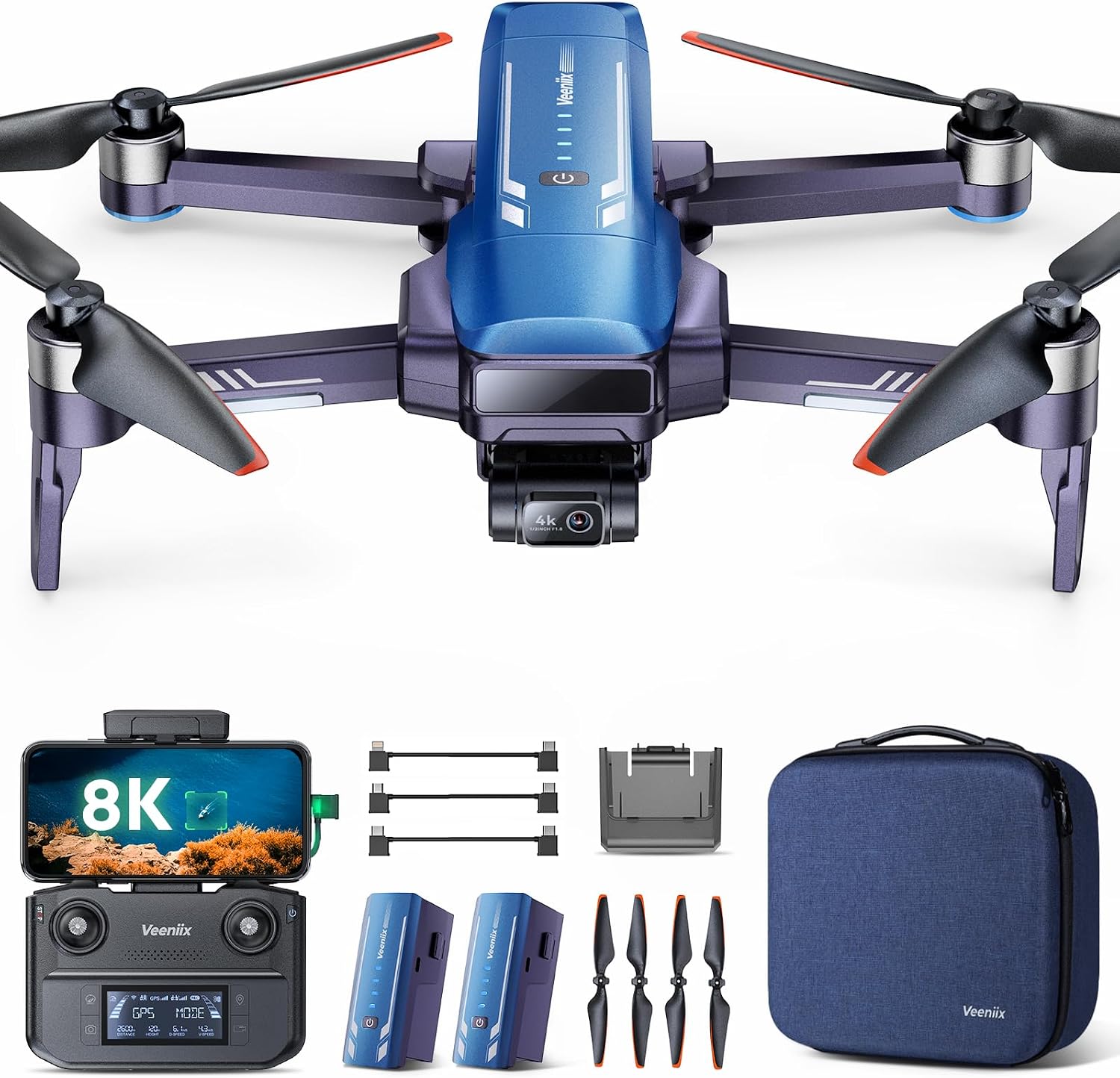
Contixo F33 Drone Battery, 11.1V 3500mAh Rechargeable Lithium Battery, 1 Pack
Real 3S capacity for a larger airframe, claimed 42 minutes of extra flight, one year warranty and US customer support
Fits the F33 and nothing else on this list, ships as a single pack, and a bigger battery is not a better drone
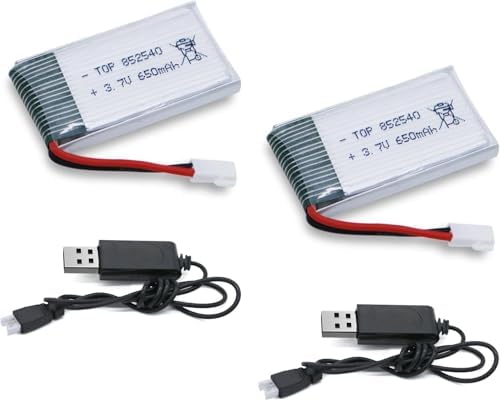
3.7V Drone Lipo Battery, 2 Pack 650mAh Rechargeable Batteries with 2 Chargers
Two packs and two chargers, MX2.0 connector, fits SYMA X5C, X5SW, X5SC, WLtoys V252 and XT Flyer
About 2.4 watt hours per pack, five to seven minutes of real flight, toy grade only
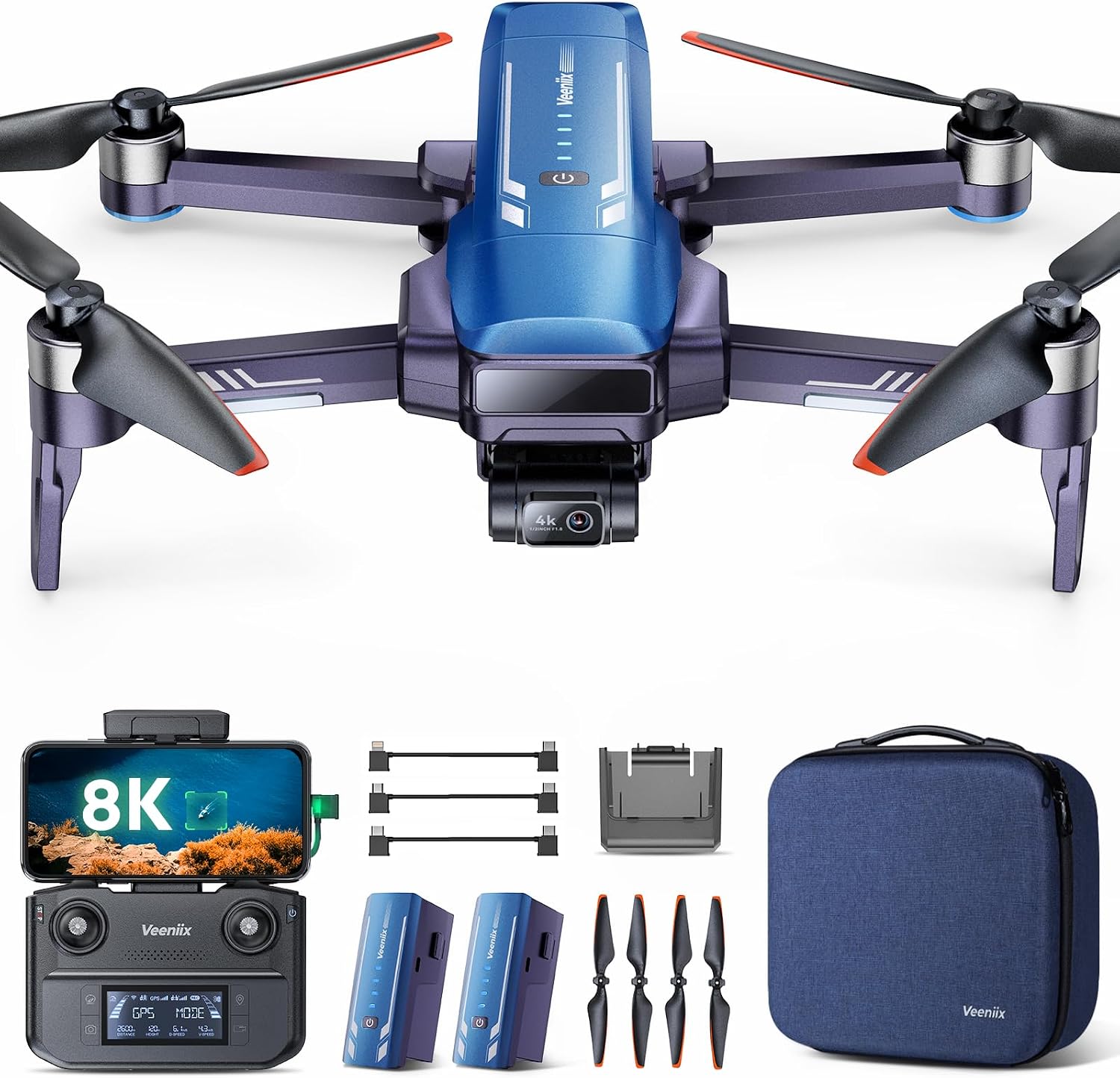
KUWATA Intelligent Flight Battery for DJI Mini 4K, Mini 2 SE, Mini 2, Mini SE, 2400mAh, 2026 Upgraded Edition
2400mAh pack for four popular DJI Mini models, 2026 revision, capacity in the same neighborhood as the stock pack
Not for SPECTA, third party firmware risk, and extra weight can push a Mini class drone over the registration line
Prices and availability were captured from Amazon Creators API and may change.
What is actually in this comparison
Three of these four products are drone batteries and the fourth is a complete beginner quadcopter. That is an unusual lineup, and it exists because the two things people search for when they get frustrated with flight time are a better battery and a drone with more batteries in the box. Both instincts are reasonable. Only one of them is a real upgrade, and which one depends on what you already own.
If you have a DJI Mini 4K, Mini 2 SE, Mini 2, or Mini SE sitting in a case, the KUWATA pack is the only product here that will even connect to your aircraft. If you have an old SYMA X5 series quad in a closet, the two pack with chargers is the cheapest way to get it flying again. If you own a Contixo F33, you need the 11.1 volt pack, and nothing else on this list will substitute. And if you own nothing yet, none of the three batteries are useful to you, which makes the starter drone the only rational starting point.
The flight time math, adjusted for real heat
Every listing here leads with minutes. Twenty five minutes for the starter drone. Forty two minutes of extra flight for the Contixo pack. Those numbers are measured the way I wish they were not: fresh pack, room temperature, gentle hovering, no wind, no camera work, land at 3.5 volts per cell. In Phoenix, in July, with a camera running and a light breeze, I plan on losing 30 to 40 percent of any claim before I even take off. A 25 minute toy drone is a 15 minute toy drone in the real world. A 42 minute claim on a 3S pack is closer to 26 or 28 minutes of useful work.
Capacity is the other number people misread. Milliamp hours only compare inside the same voltage, and these three packs live at different voltages, so convert to watt hours first. The little 3.7 volt, 650mAh pack is roughly 2.4 watt hours. A 2400mAh Mini class pack at 7.4 volts is roughly 17.8 watt hours. The 11.1 volt, 3500mAh Contixo pack is roughly 38.9 watt hours, which is why it can promise the longest flight of the group. It is carrying more than fifteen times the energy of the toy pack. Once you do that math, the marketing stops being confusing and starts being predictable.
The DJI Mini pack: the smart buy for the biggest group of owners
There are more DJI Mini owners out there than any other group in this article, and the KUWATA pack aims straight at them. The compatibility list covers Mini 4K, Mini 2 SE, Mini 2, and Mini SE, with a 2400mAh rating and a 2026 revision label. The listing also names one model it does not fit, SPECTA, which is the kind of detail I want to see, because it tells me the seller actually mapped the mount and the connector.
Two cautions before you buy any third party intelligent pack. First, read recent buyer feedback for your exact model and firmware version, because DJI has a history of tightening what its aircraft will accept, and a pack that worked on last year's firmware is not guaranteed to work on this year's. Second, weigh the thing. Mini class drones live under 250 grams in the United States, and that threshold is a registration line, not a marketing number. An aftermarket pack that runs heavier than the stock one can push you over it. Check the weight before you fly, not after.
If your Mini is your main camera drone and you fly paying jobs with it, the honest advice is to buy the manufacturer pack and keep a third party one as a backup. If you are a hobbyist flying weekends, the math changes, and this pack is a reasonable way to add flight time without adding a second aircraft to the bag. Visit on Amazon →
The SYMA two pack: cheap power for a toy grade quad
The 3.7 volt 650mAh two pack is the least glamorous product here and possibly the most useful for one specific person: someone with a SYMA X5C, X5SW, X5SC, WLtoys V252, or XT Flyer sitting in a drawer. It ships with two packs and two chargers, uses the MX2.0 connector, and it exists because those little quads eat batteries alive. The chargers matter as much as the packs, because a toy quad with one charger and four batteries is a toy quad that spends its afternoon on the bench.
What you should not expect is endurance. At 650mAh and 3.7 volts, each pack is about five to seven minutes of gentle indoor flight, less outdoors in any real wind. That is not a flaw, it is the category. Buy two packs and you get a genuine flying session out of a drone that would otherwise be a shelf ornament.
One practical note from someone who has killed small lithium packs: store these at roughly half charge if they are going to sit for weeks, and never charge a pack that has puffed. A swollen 650mAh cell is a fire risk inside a plastic toy, and the replacement cost here is low enough that there is no reason to gamble. Visit on Amazon →
The Contixo F33 pack: one airframe, one job
The Contixo pack is the specialist of the group. An 11.1 volt, 3500mAh lithium pack that fits the F33 and, realistically, nothing else on this list. It claims 42 minutes of extra flight time, comes with a one year warranty and US customer support, and ships as a single pack. The capacity is real for its class, and if you already own an F33, this is the difference between flying and not flying.
The problem is the ecosystem, not the pack. A battery that fits exactly one airframe is only worth buying if that airframe is worth keeping, and that depends on the camera and the app, not the power system. I have watched people spend real money on spare packs for a drone they were about to outgrow. Before you buy a second battery for any aircraft, ask whether you will still be flying it in a year. If the answer is no, that money belongs in a better drone instead.
The warranty and the US support are worth something, particularly if you have dealt with overseas returns on lithium cells, which is a slow and annoying process. Keep your order confirmation. Visit on Amazon →
The starter drone: the only complete product here
The mini drone with the HD FPV camera is the odd one out and, for a beginner, the obvious place to start. It is a beginner friendly quadcopter aimed at teens and adults, with a 90 degree tilt lens, altitude hold, one key takeoff, 3D flips, three speed modes, and two batteries for a claimed 25 minutes of total flight time. It is an indoor and outdoor gift grade aircraft with a gray shell and a camera that will be fine in daylight and disappointing at dusk.
Set expectations correctly and this is a good purchase. There is no GPS, so it will drift in wind and it will not hold a position on its own. There is no obstacle avoidance, so your thumbs are the only safety system. The camera is a toy camera, and no amount of tilt range turns it into a gimbal. What you get instead is a low stakes trainer: something that teaches throttle management, orientation, and the muscle memory every pilot needs before flying anything expensive. Two batteries in the box also means it follows my own rule, which is that a drone without spare batteries is a drone you fly once. Visit on Amazon →
Trade offs worth naming
Spare battery or new drone. If you own a compatible aircraft, a pack is the cheapest upgrade in this hobby. If you own nothing, a pack is a paperweight.
Capacity versus weight. More milliamp hours usually means more grams, and on sub 250 gram drones, grams are a legal matter, not just a performance one.
Compatibility versus flexibility. The SYMA two pack fits a wide list of toy quads, the Contixo pack fits one, and the Mini pack fits four DJI models with one exclusion. Read the compatibility list twice, then read it again for the word not.
Claimed minutes versus watt hours. Convert before you compare. Voltage times amp hours is the only honest way to rank these three packs against each other.
What I would buy
If you have a DJI Mini in the case and you want more air time per session, the KUWATA pack is the pick, with the caveat that you check firmware compatibility and weight first. If you have an old SYMA or WLtoys quad, buy the two pack and get it out of the drawer; it is the cheapest fun in this article. If you own a Contixo F33 and you fly it regularly, the 11.1 volt pack is the correct purchase, but only if that drone is still part of your plan next year.
And if you do not own a drone yet, skip all three batteries. The starter quad is the only complete product here, it comes with two packs, and it will teach you more in an afternoon than another month of reading spec sheets. Buy the aircraft first. The spare battery problem is a good problem to have later.