Related: Best Sub-250g Drones for Backyard Flying
I learned to fly on a $60 toy with no camera and no GPS, and I still think that is the right order of operations. But "beginner FPV drones" means two very different machines in 2026. One is a sub-250g camera quad you can hand to a teenager. The other is a real FPV kit with goggles, a motion controller, and enough power to teach you what a crash feels like.
I fly commercial work four or five days a week out of Phoenix, which means I fly in heat that kills batteries and wind that humbles small airframes. My logbook is full of swollen packs and gimbal failures, and none of that is theoretical to me. So when I look at a beginner kit, I am not looking at the spec sheet. I am looking at how many batteries are in the box, whether the app works on the first try, and what happens the first time you hit a wall.
What I check before I recommend a first drone
Four things decide whether a beginner drone is worth your money.
Battery count. Batteries are the real cost of this hobby. A kit that ships with one pack gives you twenty minutes of flying and an hour of waiting. A kit that ships with three gives you an afternoon. I would rather pay more up front than buy packs one at a time at retail.
A GPS return-to-home or a propeller guard. Camera drones need return-to-home, because the first time you lose orientation you will panic, and the drone should come home without you. FPV drones need guards, because you will hit something indoors within the first ten minutes.
Parts and props. Props are consumables. If a beginner drone uses a prop you cannot buy in a pack of four, it is a disposable toy.
The app. A drone with a buggy app is a drone that will not fly when you want it to. This is where the big brands still win, and where the no-name brands still lose.
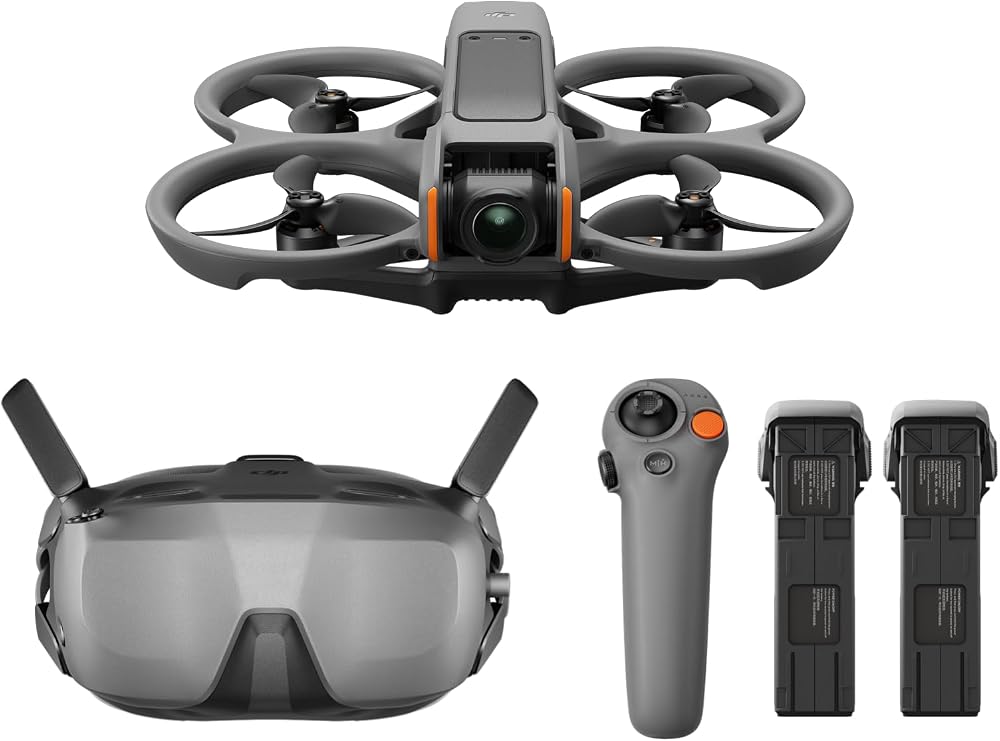
Best overall: DJI Avata 2 Fly Smart Combo
The headline here is not the 4K camera or the flip and roll moves. It is that this combo ships with three batteries. Three packs turns an FPV session from a fifteen-minute tease into a real afternoon, and it is the single most useful thing a beginner kit can include. DJI also puts the goggles and the motion controller in the box, so there is nothing else to buy before your first flight.
The built-in propeller guards are the other beginner-friendly choice. Guards mean a clipped doorframe is a bounce instead of a broken arm and a bent motor. And the RC Motion 3 changes how FPV is learned: instead of two sticks and a steep learning curve, you point and squeeze, which is why people who have never flown anything can get airborne in a single session.
Where it asks something of you: it is the most expensive kit on this list, it is not a sub-250g drone, and DJI's app wants an account before it will do much of anything. In Phoenix summer heat, treat every flight-time claim as fiction. Cut whatever number is printed on the box by a third, and land at 25 percent, not 5.
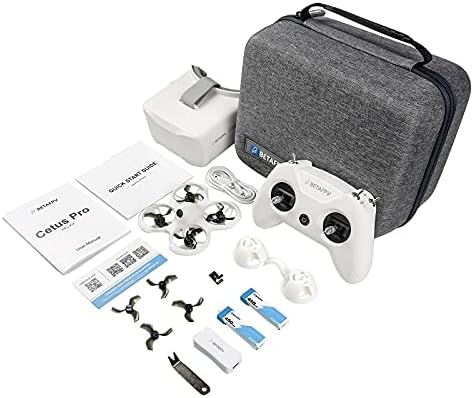
Best ready-to-fly FPV trainer: Tinyhawk 3 RTF Kit
This is the "learn to actually fly FPV" option. It is a 1S kit, which means small batteries, small props, and a drone light enough that bouncing off a couch is not a crisis. Everything you need is in the box: the quad, a controller, and 5.6G goggles, which is why it is sold as ready to fly.
The 1S class is a feature, not a limitation. A 1S quad indoors is genuinely safe, the batteries are the cheapest thing in this hobby, and you can fly it in a living room on a rainy day, which is how stick time actually accumulates. If your goal is to fly acro eventually, this is the honest path.
The trade-off is that you are buying a trainer, not a camera. The video feed exists so you can see where you are going, not so you can post it. This drone also has no business flying in wind. If you want footage, scroll down to the Holy Stone. If you want to learn to fly, start here.
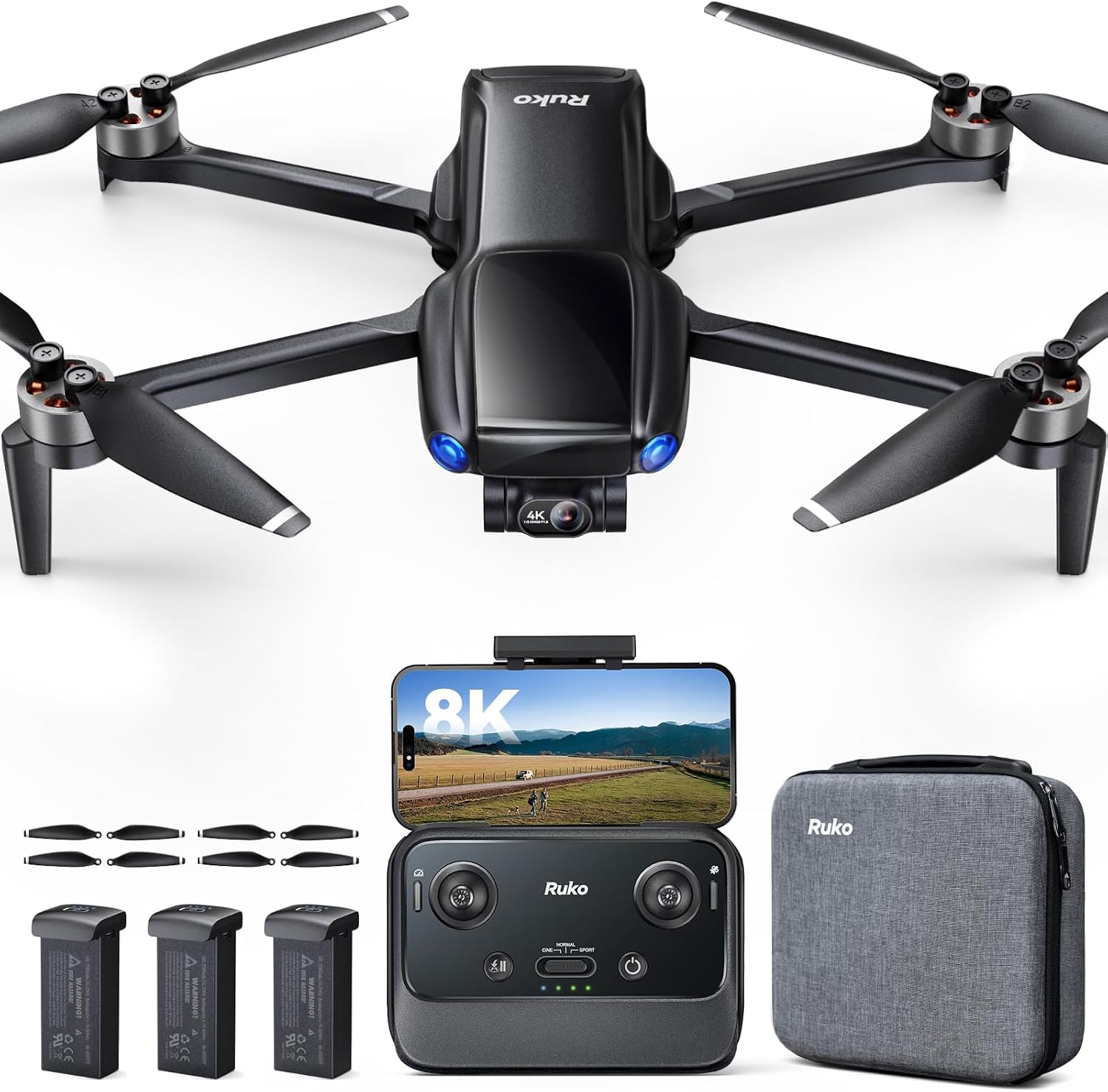
Best sub-250g camera drone: Holy Stone HS360S
At 249g this one sits right under the weight line that matters most to hobbyists, and that is not a coincidence. The regulatory squeeze is pushing everyone toward sub-250g airframes, and this is the category where the growth is. It folds, so it lives in a jacket pocket or a camera bag, and the brushless motors mean it will still be flying next season.
The feature list is what I would want a beginner to have: GPS with smart return home, follow me, and a 4K UHD camera with 5G transmission and a control range rated to 10,000 feet. Return home is the single most valuable beginner feature on any drone, because it is the difference between a bad landing and a lost aircraft.
Be honest about the camera, though. A 4K number on a small sensor is a daylight camera. It will look fine at golden hour and mushy at dusk, and no amount of resolution fixes a tiny sensor. Buy it for stable, GPS-assisted video and easy photos, not for commercial-grade footage.
Best cheap trainer: Mini Drone with Camera (INS+ Black)
This is the "find out if you like flying" drone, and there is real value in that. It is foldable, it comes with a carrying case, and it packs the beginner conveniences that keep a first flight from ending in frustration: one-key takeoff and land, altitude hold so you are not fighting the throttle, headless mode so left is left no matter which way the nose points, and a 360 degree flip when you want to show off.
Video goes over WiFi to your phone as HD FPV, which is fine for framing a shot and useless for precision flying. WiFi video lags, and lag plus a beginner equals a wall. Treat the camera as a bonus, not the reason to buy.
Where it fits: a first drone for a teenager, a gift for someone who has never flown, or a second drone to keep in the car. What it is not is a stepping stone to real FPV. If you already know you want goggles and stick time, put the money toward the Tinyhawk kit instead. Headless mode especially is a crutch you will have to unlearn later.
The beginner drone reference table
Same four drones, sorted by what they are actually for. Use the class column to match the drone to where you will fly it, and the camera column to set expectations before you buy.
| Drone | Class | Camera | Best for |
|---|---|---|---|
 Visit on Amazon → Visit on Amazon →DJI Avata 2 Fly Smart Combo |
FPV with propeller guards, three batteries included | 4K | Immersive FPV with software that keeps you out of trouble |
 Visit on Amazon → Visit on Amazon →Tinyhawk 3 RTF Kit |
1S FPV kit, goggles and controller included | FPV camera feed | Learning to fly indoors and in the backyard |
 Visit on Amazon → Visit on Amazon →Holy Stone HS360S |
249g GPS camera drone, foldable | 4K UHD, 5G transmission | Photos, stable video, follow me and return home |
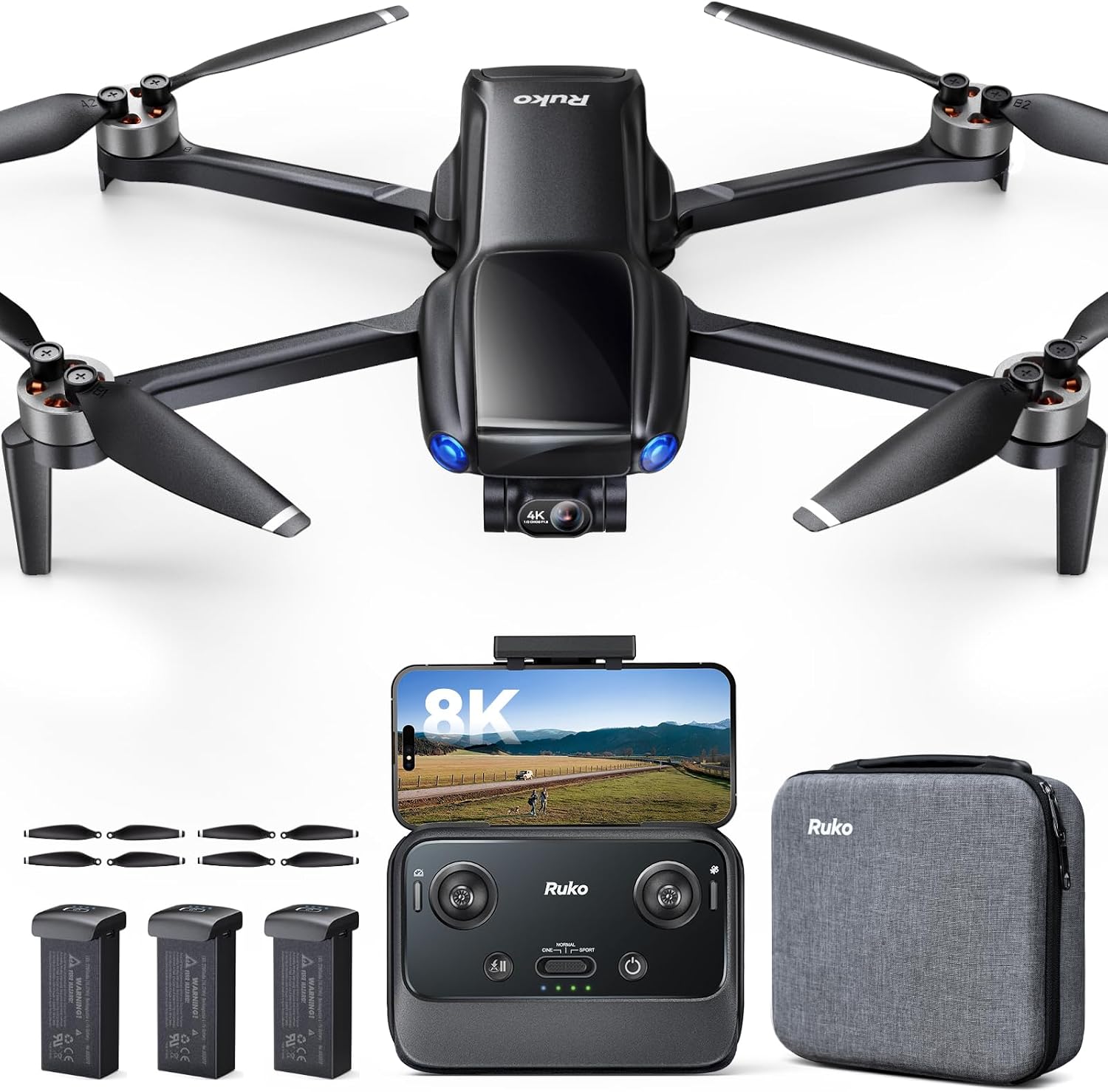 Visit on Amazon → Visit on Amazon →Mini Drone with Camera (INS+ Black) |
Toy-class mini, foldable with case | WiFi HD FPV to phone | A first flight and a gift that does not intimidate |
Two things this table cannot tell you, because no spec sheet can. First, the flight times on the box are measured in a lab, on a fresh pack, at room temperature, hovering. In real heat and wind, take 30 to 40 percent off. Second, the battery is the part that fails first. Buy the kit with extra packs, store them cool, and never charge a swollen one.
Should you buy the DJI Avata 2 Fly Smart Combo?
Yes, if you already know you want FPV and you want the software to catch your mistakes. Three batteries in the box, goggles and a motion controller included, propeller guards on the airframe, and DJI's app experience, which is still the reason the competition has not caught up. The motion controller means your first flight is fun instead of a fight.
What you are accepting: the highest price on this list, an app that wants an account before it will update firmware, and batteries that will hate an Arizona summer just like every other pack I own. Keep it out of the sun between flights and land early. If you want a camera drone for photos rather than an FPV experience, this is the wrong purchase, and the Holy Stone is the right one.
Should you buy the Holy Stone HS360S?
Yes, if you want stable video and easy photos without a learning curve. At 249g it folds small, the brushless motors are built for a longer life than toy-grade brushed motors, and GPS return home plus follow me gives a beginner the safety net that actually matters. The 10,000 foot control range is far more than you need, which is exactly the point.
The caveat is the camera. A small sensor with a 4K label is a daylight camera, so shoot in good light and judge it by what you see, not by the number on the box. And if you are buying this for a teenager who wants to race through the trees, save your money and get the Tinyhawk kit instead.
Should you buy the Tinyhawk 3 RTF Kit?
Yes, if your goal is to learn to fly rather than to film. Everything needed is in the box, the 1S class makes indoor crashes cheap, and the batteries cost less than any other pack in this hobby. This is the drone that builds stick time.
It is not a camera drone and it does not belong in wind. But if you put in the hours here, you will fly anything else on this list within a week.
Should you buy the mini drone?
Yes, as a first taste. One-key takeoff, altitude hold, headless mode, and a carrying case make it the least intimidating way to find out whether you enjoy this. Just know that WiFi FPV video lags, and that headless mode is training wheels you will want to take off as soon as you can.