Related: Drone Flight Time in Real Heat: What the Specs Leave Out
Most people shopping for beginner drones with 4K cameras are working from two numbers: the megapixel figure on the box and the flight time in the listing. I have been flying commercially since 2015, mostly real estate, weddings, and solar inspections around Phoenix, and I can tell you which of those two numbers lies harder. It is the flight time, every time. Heat and wind chew a claimed 40 minutes down to something you have to plan around, and a 110-degree Arizona afternoon is where those claims go to die.
This guide is built around the four things that decide whether a beginner drone gets flown twice a week or ends up in a closet: GPS hold, a stabilized camera, brushless motors, and enough batteries to make a session worth the drive. Everything here sits at the accessible end of the market, where the trade-offs are honest and the marketing is loud. I have grouped these four by the job each one does best, because pretending a single drone wins every category is how people end up disappointed.
Best Overall: Potensic ATOM SE GPS Drone
This is the drone I would hand a friend who has never flown anything with a stabilized camera and wants to shoot real footage on the first weekend. It is foldable, it sits under 249g, and it carries a 4K camera with electronic stabilization, GPS, auto return, brushless motors, and a claimed 4KM FPV transmission range with a 16 m/s top speed.
The under-250g detail is not trivia. That is the class the regulations keep pushing hobbyists toward, and it is also the weight where a drone stops being scary in a neighborhood park. The trade-off is wind. A light airframe gets pushed around, and electronic stabilization fights back by cropping the frame and by struggling once the light drops. That is the honest cost of the size.
The 62-minute flight figure is a kit number, not a single-battery number, and I would still trim it hard for heat and wind. Auto return is a safety net, not a pilot. I fly every drone like the return button does not exist, and you should too, because it depends on a GPS lock you may not have between buildings or in a canyon.
The 4KM transmission range is headroom, not a plan. Visual line of sight is the rule, and it is also the only way you can see conflicting traffic. Buy the range for a clean signal at 400 feet, not for a flight to the horizon.
Best Camera: Ruko F11PRO 2
Six thousand pixels wide is the biggest number on this page, and for stills it is the headline. The F11PRO 2 shoots 6K photos and 4K video at 30fps, which is the combination most beginners actually use: a sharp frame for a listing or a post, and a clip that does not judder when you pan.
Here is my problem with resolution as a selling point. Sensor size beats megapixels every time. A larger sensor at a lower count will out-resolve and out-dynamic-range a small sensor bragging about 6K, especially at golden hour when the sky is bright and the ground is dark. If your plan is paid client work, the resolution number will not save you. If your plan is good photos for yourself and clean 4K clips, this camera is more than enough.
It is also the pick here if you want a drone that feels like a serious piece of gear, and the listing leans into the gift angle for good reason. Just budget for spare batteries before you budget for filters, because batteries are the real cost of this hobby and the first thing to fail.
Best for Long Sessions: Ruko Drone with 4K Video and 8K Photo
The headline here is 96 minutes of flight time, the largest flight-time claim in this group by a wide margin, paired with 4K video and 8K photos. Read that number the way you should read every flight-time claim: as a total for the kit rather than a promise for one battery, and then discount it for heat and wind.
What I like about this one is the session length it is built around. Session length is the difference between a toy and a tool. If you can only carry one battery, you spend more time watching the voltage readout than composing a shot, and you drive home with half the footage you planned.
My rule on batteries is blunt. Buy the kit with extra batteries or do not buy at all. Heat is what kills them. I have lost two packs to Phoenix summers, both swelling and dying around 80 percent health, and no firmware update fixes chemistry. If a listing offers a version with two or three packs, that is the version to get. If it does not, price out spares before you check out.
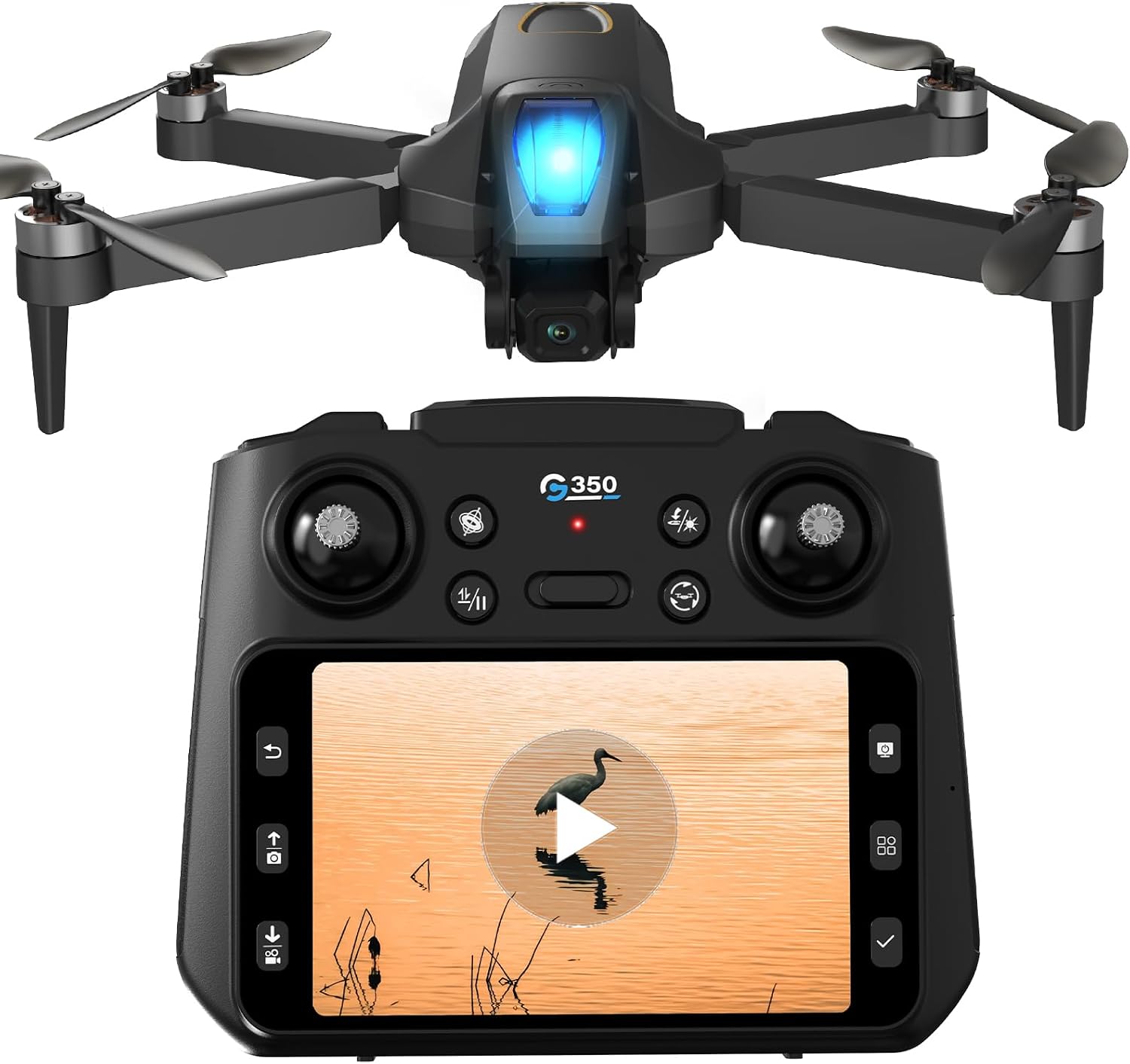
Best Budget: Drone with 1080P Camera and 4.5-inch LCD Remote
This is the cheapest way onto this list, and it is the one I would hand someone who is not sure they will stick with the hobby. The camera is 1080P, which is fine for learning and for sharing, and the remote has a built-in 4.5-inch screen for FPV. That means you fly without strapping your phone into a mount and without an app that wants an account before it will let you update firmware.
That last point matters more than it sounds. The app experience is part of the product. A drone with a buggy app is a drone that will not fly when you need it, and every beginner I know has lost an afternoon to a pairing screen. A self-contained remote sidesteps the whole problem.
What you give up at this price is camera quality. 1080P is a learning camera, not a client camera. Buy it to practice orientation, to learn how wind moves a light drone, and to find out whether you actually enjoy this at all. Then spend real money on the next one, with your own footage as the evidence.
How I judge a beginner drone
I have owned or flown more than twenty drones, from cheap toys to an enterprise rig, and my criteria for this category have not changed in years.
First, flight time under load. Every claim gets discounted 30 to 40 percent for heat and wind. A drone that promises 40 minutes gets treated as 25 in my logbook, and if that does not cover the job, the drone is wrong for the job.
Second, the camera's stabilization. A mechanical gimbal is not the same thing as electronic stabilization, and the difference shows up in every pan and every gust of wind. The Potensic uses EIS, which is a real compromise, and you should know that going in.
Third, battery economics. What do spares cost, are they in stock, and will they take a charge when it is cold? A drone with unavailable batteries is a paperweight with propellers.
Fourth, the app. If firmware updates require an account and a login, that is a strike against it.
Fifth, props and guards. Prop pricing is a tax on crashing, and you will crash. Budget for it the way you budget for batteries.
Analysis: where the specs hold up
Flight time is a lab number. The two Ruko listings advertise the biggest figures on this page, and the Potensic advertises 62 minutes in a sub-250g airframe. None of those numbers survive a hot afternoon at full speed, and none of them should be the reason you buy. The reason to buy is the camera and the flight controller, because those are what you live with every session.
Camera quality is the second place the marketing oversells. The 1080P drone is honest about what it is. The 6K and 8K labels are where you slow down. Resolution is the cheapest thing to add to a spec sheet and the least useful thing to have if the sensor is small and the stabilization is electronic.
Weight class is the third. The Potensic's sub-250g build is the most future-proof thing on this page, because the regulatory trend points clearly toward lighter aircraft. It is also the most wind-sensitive, and that is the deal you make.
The last thing I check before buying any of these is the app's update history and the battery listings. If the app was last updated two years ago, expect a 2019 experience. If spares are out of stock, you are buying a season, not a hobby.
Beginner drone reference table
Here is the short version. Flight times are the figures printed in each listing, not my numbers, and every one of them needs a heat and wind discount. Prices move constantly, so check the listing.
| Drone | Camera | Listed flight time | Best for | Price |
|---|---|---|---|---|
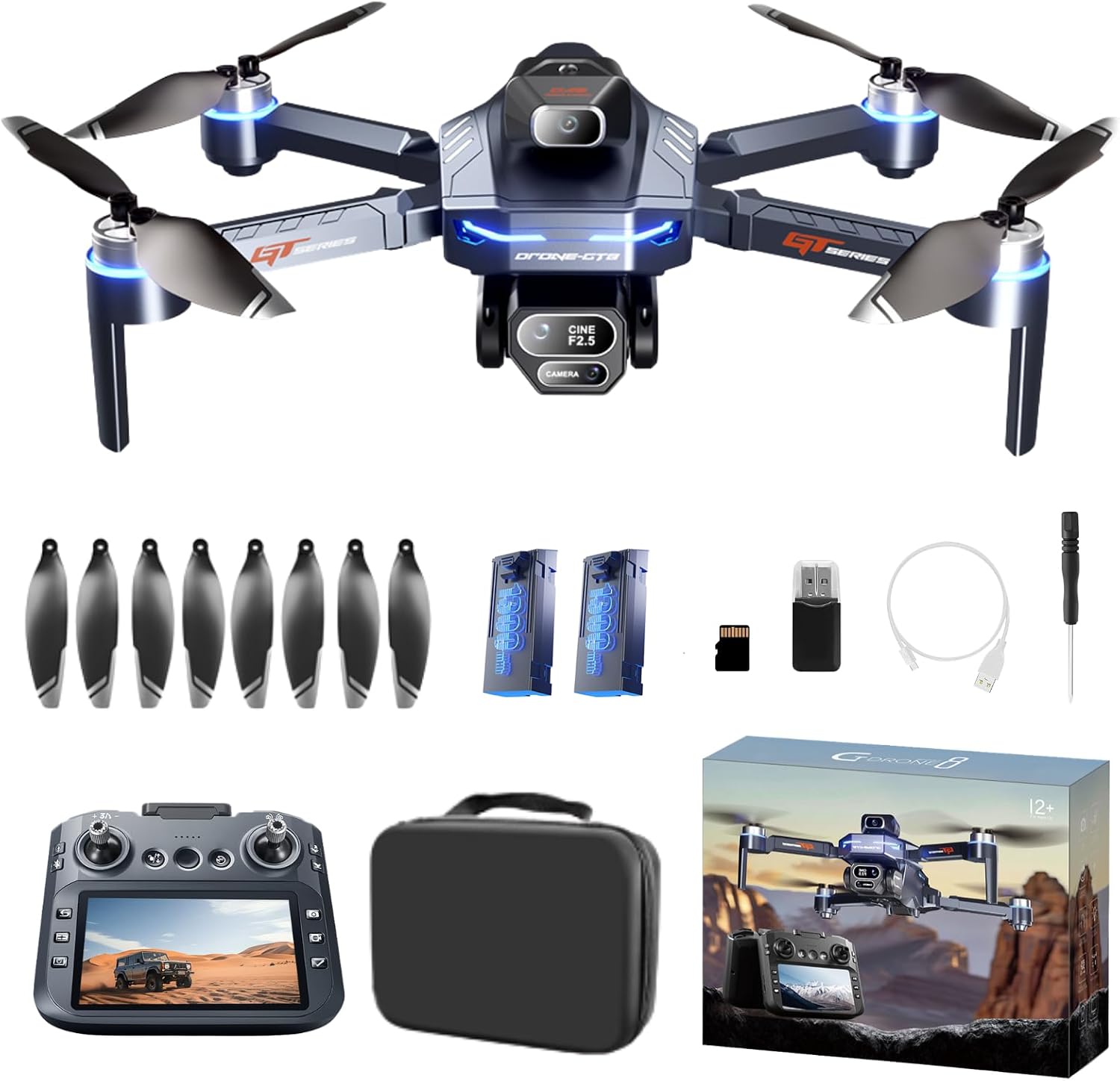 Visit on Amazon → Visit on Amazon →Potensic ATOM SE GPS Drone |
4K with EIS | 62 mins | First GPS drone, under 250g | $249.99 |
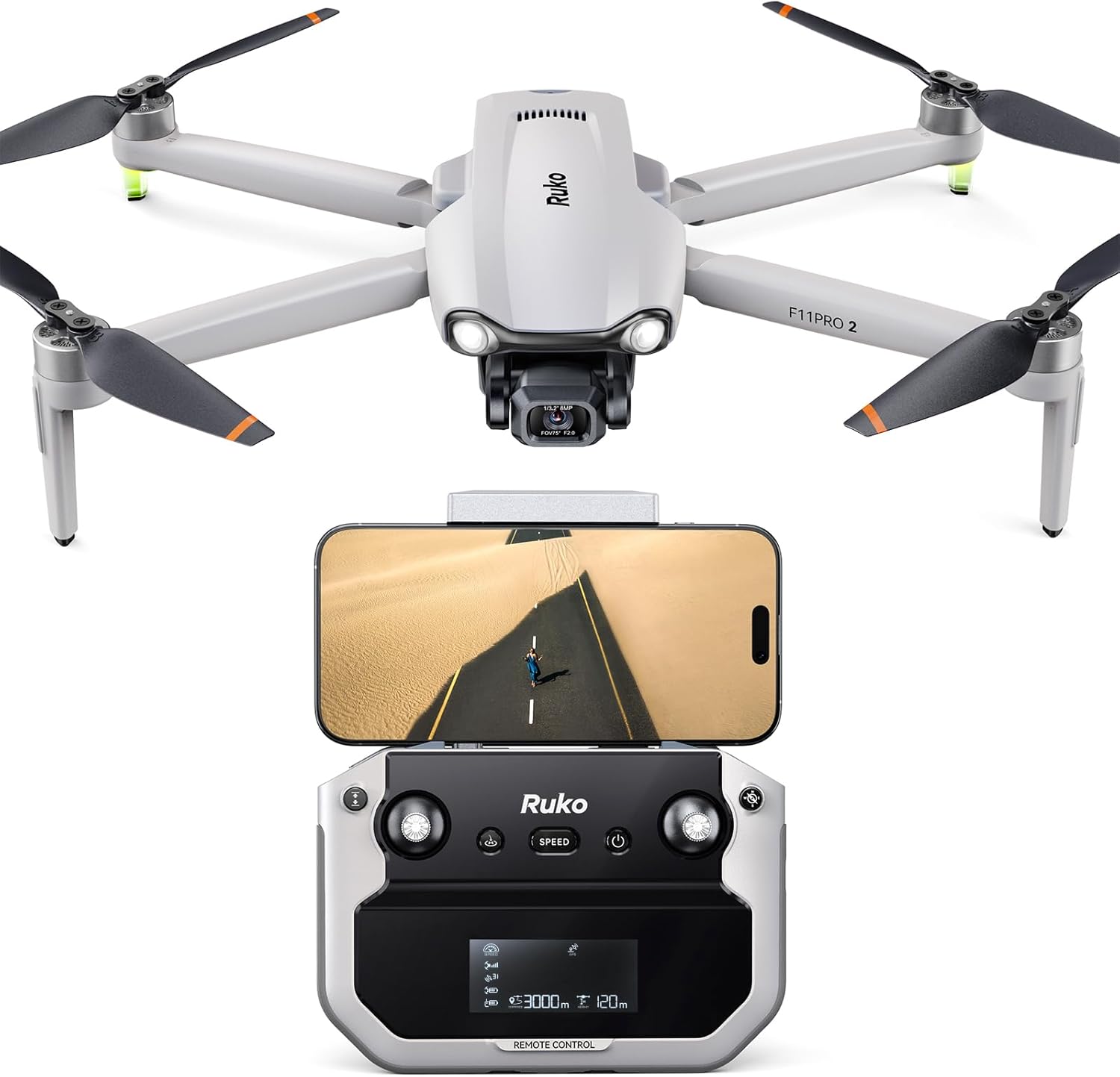 Visit on Amazon → Visit on Amazon →Ruko F11PRO 2 |
6K photos, 4K/30fps video | Not listed | Stills and a gift-ready kit | Check current Amazon price |
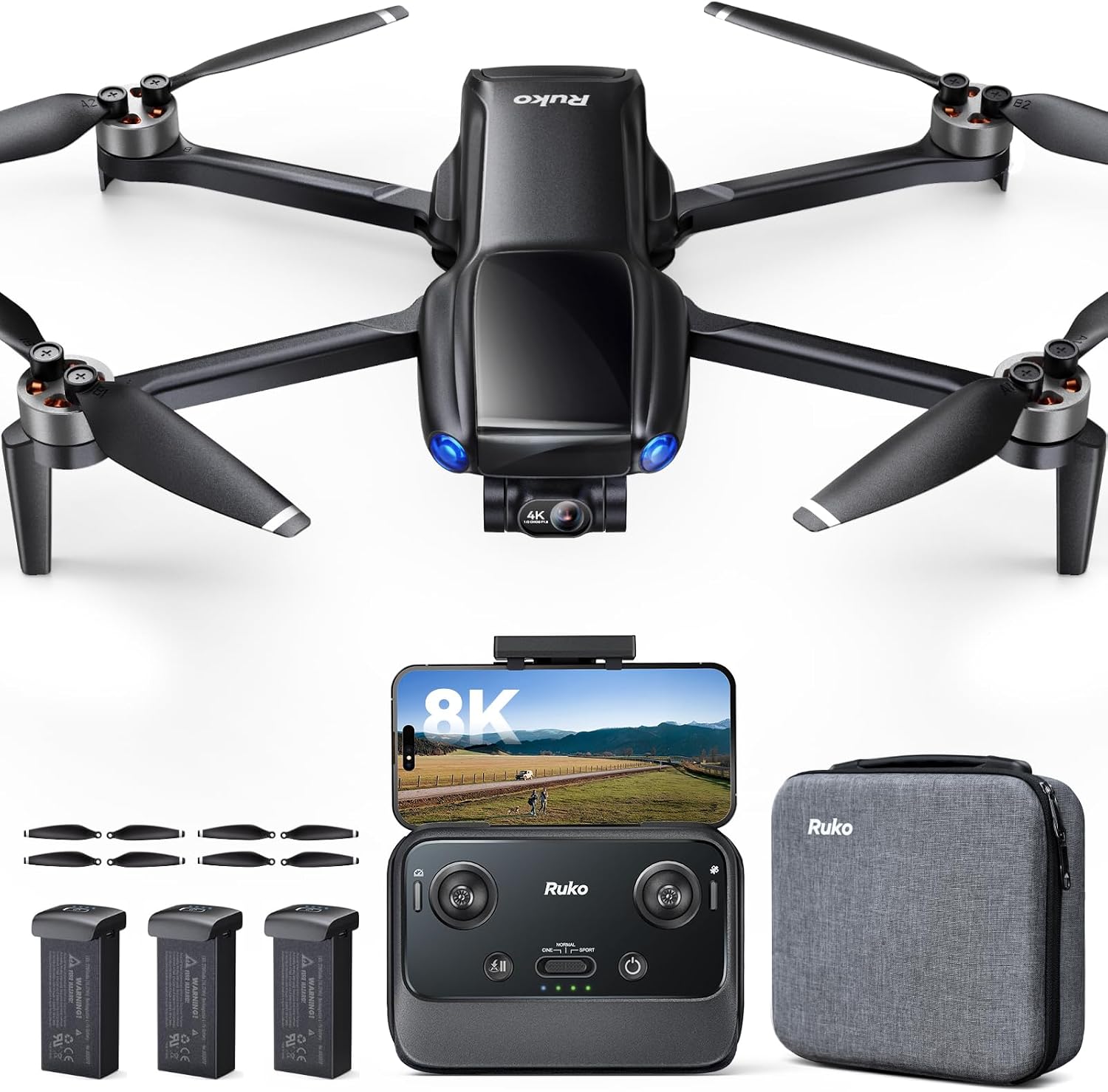 Visit on Amazon → Visit on Amazon →Ruko 4K Video and 8K Photo |
4K video, 8K photo | 96 mins | Long sessions | $349.98 |
 Visit on Amazon → Visit on Amazon →Drone with 1080P Camera |
1080P | Not listed | Learning to fly | $109.99 |
The table tells you the shape of the market. Flight time and resolution climb as you spend, and the sub-250g option trades raw numbers for portability and a lighter regulatory footprint.
Should you buy the Potensic ATOM SE?
Yes, if you want a first GPS drone you can actually travel with. It folds small, it comes in under 249g, it has auto return and brushless motors, and the 4K EIS camera is enough for real footage in decent light. The weaknesses are real: electronic stabilization instead of a gimbal, a light airframe that feels wind, and a flight-time claim that is a kit figure. None of that stops it from being the pick I would make with my own money for a beginner who wants video rather than a toy.
Should you buy the Ruko F11PRO 2?
Buy it if stills are the priority and you want the nicest-feeling package on this list. It shoots 6K photos and 4K at 30fps, and it is the most giftable box here. Just do not buy it expecting a large sensor, because you are paying for resolution and build, not for dynamic range. Order a spare battery in the same cart, because the second battery is what turns a demo into a tool.