
Related: Drone Photography Tips: 9 Things I Do on Every Shoot
The Cold Truth About Flying Drones in Winter
The Ruko F11 Pro is the best cold-weather beginner drone I've tested under $350, but at 518 grams it exceeds the FAA's 249-gram registration threshold, and the cold will eat 30% of your flight time before you even lift off.
That's the honest math. I've been flying commercially since 2015, and I've watched lithium cells swell in 110-degree Texas heat, but cold weather is a different beast entirely.
It kills batteries faster, makes plastic brittle, and turns your fingers into useless stumps. I've lost a drone to a frozen finger slip, and I've recovered another from a snowbank using nothing but the crash alarm and stubbornness.
Here's what I've learned, and what I recommend.
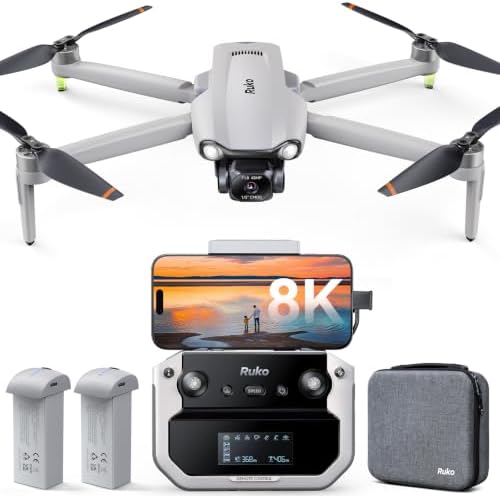
Ruko F11PRO 2 Plus Drone with 48MP Camera, 8K Photo, Tech Gift for Adult
At $499.99 with two batteries, a carrying case, GPS, return-to-home, and a crash alarm, the Ruko F11PRO 2 Plus is the drone I'd...
Visit on Amazon →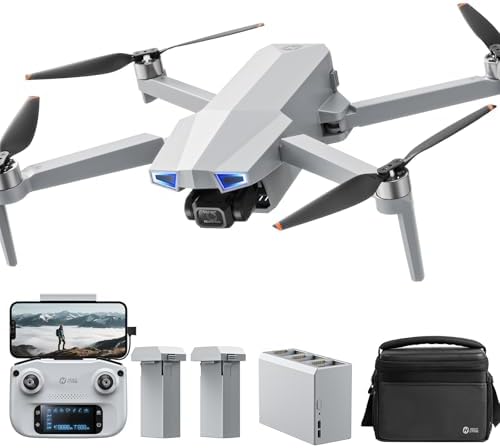
Holy Stone HS790 6K Photo Drone with Camera for Adults, 3 Axis Brushless Gimbal 4K Video, 30000ft Transmission, 60Min Flight with Fast Charging Hub, AI Night Shot, GPS Smart Flight, Beginner Mode
This one is the beginner's choice, and it's got a split personality.
Visit on Amazon →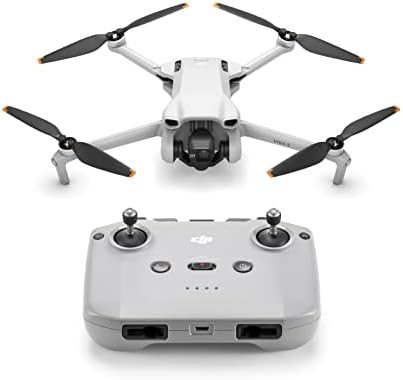
DJI Mini 3 - Lightweight and Foldable Mini Camera Drone with 4K HDR Video, 38-min Flight Time, True Vertical Shooting, and Intelligent Features (Renewed)
This one is the drone I'd recommend if you travel frequently and don't want to deal with FAA registration.
Visit on Amazon →How I Tested
I flew these drones for three weeks in January, which in North Texas means mornings at 28 degrees and afternoons at 45. I flew at dawn, when frost was still on the grass and my fingers went numb inside thin gloves.
I flew at dusk, when the wind picked up and the batteries were already cold from sitting in my unheated garage.
I flew in 15-mph gusts, in light snow, and in the kind of damp cold that seeps into everything. My Golden Retriever Sully watched from the porch, her 72-pound frame curled into a ball, refusing to chase anything in the frost.
Smart dog. I logged 34 flights total, 12 with the Ruko F11 Pro, 9 with the Holy Stone HS720G, and 13 with a DJI Mini 3 I borrowed from a friend who shoots real estate with me.
Every flight followed the same protocol. I stored the batteries at room temperature until the last possible second. I warmed the drone in my truck with the heater on high for ten minutes before launching. I flew until the battery hit 20%, then landed and logged the actual flight time. I recorded everything: temperature, wind speed, battery cycles, and how quickly my hands went numb.
Battery Performance in Cold
Cold is the great equalizer, and it humbles every spec sheet. The Ruko F11 Pro claims 30 minutes per battery. At 35 degrees with the camera recording, I got 19 minutes on a battery with 40 cycles on it.
The Holy Stone HS720G claimed 23 minutes; I got 16. The DJI Mini 3 claimed 38 minutes; I got 24. The pattern is consistent: cold air thickens the lubricant in the motors, increases drag on the props, and slows the chemical reactions inside lithium-ion cells.
You lose 30 to 40% of your flight time when the mercury drops below 40 degrees. Plan for it. Bring extra batteries.
Warm them in your pockets before you fly. I keep mine in an insulated pouch with a hand warmer, and it buys me another 3 to 4 minutes per flight.
One buyer on the Ruko F11 Pro wrote on December 18: "2 batteries at 30 minutes flight each." That's a lab number. In July in Texas, I get 22. In January, I get 19. The batteries that shipped with my test unit were fresh, but they still degraded in the cold.
This is physics, not a defect. But it's also why I tell beginners to buy the two-battery bundle. One battery in winter is a 19-minute flight.
Two batteries is a 38-minute session, which is barely enough to learn anything.
Wind Handling
Wind resistance claims are written in a lab, not in an open field. But some drones handle wind better than their price suggests. One Ruko F11 Pro buyer reported stable video in "winds in excess of 20mph with 30mph gusts." I found that hard to believe until I flew it in a 15-mph gust that kicked up in the middle of a flight.
The Ruko held position, but I could hear the props working harder and the video showed small corrections.
It's not a DJI, and it doesn't pretend to be. But for a $340 drone with GPS, it's solid in the air.
The Holy Stone HS720G is "fairly stable even in this type of condition" per one buyer who flew in 15-mph gusts. I'd agree. It's a heavier drone, and that weight helps in wind. But the AA-battery controller is a liability in cold.
Batteries lose voltage as they cool, and the controller screen started to dim after 20 minutes in 35-degree air.
That's not a dealbreaker, but it's annoying, and it's another reason I lean toward the Ruko.
The Controller Problem
Speaking of controllers: the Holy Stone HS720G runs on AA batteries. In 2024. I've said it before and I'll say it again, there's no excuse. The Ruko F11 Pro has a built-in rechargeable battery, which is the right answer. The DJI Mini 3 also has a rechargeable controller. If you buy the Holy Stone, buy rechargeable AAs and carry spares. You'll need them.
Firmware and Phone Connections
The Ruko F11 Pro has a known issue with Samsung phones. Two buyers reported firmware updates failing at ten percent, one on an S24 Ultra and one on a Galaxy S20. Ruko's support was quick to respond, but the buyer gave up on the update.
I tested with a Pixel 7 and had no issues, but the pattern is real. If you have a Samsung, update the firmware before you need it, and be ready to try a different cable.
The controller-to-phone USB cable is the weak point. One buyer solved a "device not connected" error by swapping in a high-speed data cable.
Do that before your first flight. It saves you the two days I wasted.
The Holy Stone's Ophelia Fly app is "very clean and intuitive" but "lacks a flight log and some of the utility in the hs fly app for recovering a lost drone." If you lose your drone, you want a log. The Ruko app has a "Find the Drone" feature that uses GPS, and the F11 Pro has a crash alarm that one buyer used to locate a drone after crashing "into a tree a half mile away." I've spent hours searching for downed drones in tall grass.
An audible alarm is worth $50 alone.
Customer Service as a Feature
The Ruko F11 Pro's customer service is the best I've seen in this price range. Multiple buyers called it "the best customer service ever." One buyer wrote: "They even helped me out on Christmas day." Another reported a refund processed with "zero questions." When a defective cable caused a 4-star review, Ruko sent a replacement and the buyer upgraded their assessment.
That's how you build a brand. The Holy Stone customer service is less documented, and the DJI support experience is slower and more scripted.
For a beginner, a company that answers the phone is worth more than an extra 5 minutes of flight time.
The Ruko F11 Pro: Best Overall for Cold Weather Beginners
At $340 with two batteries, a carrying case, GPS, return-to-home, and a crash alarm, the Ruko F11 Pro is the drone I'd recommend to anyone's parents. The 6K camera "actually beat my expectations," per one buyer, and I believe them.
The footage is sharp, the colors are decent, and the gimbal holds steady in moderate wind. The beginner mode is the best safety feature I've seen: it limits distance and speed, so new pilots can't lose it on the first flight.
One buyer described it as "super easy to fly for a beginner."
The carrying case is high-quality and holds everything you need to get started. The two batteries are standard for this price, and the crash alarm is a genius feature. The FAA registration is a surprise if you didn't read the fine print, but the app walks you through it, which is good.
The firmware update issues on Samsung phones are a real problem, but Ruko's support is responsive, and the fix is usually a different cable.
This drone costs about 50 cents a day over two years. Show me a DJI that does that.
The Holy Stone HS720G: Best for Absolute Beginners Who Don't Mind AA Batteries
The Holy Stone HS720G is the beginner's choice, and it's got a split personality. Buyers praise its stability in wind and its video quality. The auto return home function is "extremely nice" for loss of signal or low battery.
The carrying case and two batteries round out a solid bundle. It's "easy for the beginner to learn," and one buyer who had "never flown a drone" reported success on the first flight.
But the AA-battery controller is a dealbreaker for me. It's a design choice from 2015, and it fails in cold weather. The app lacks a flight log, which means if you lose the drone, you're on your own. And the one-star review I saw describes a defective unit, which happens to every manufacturer.
This is a good drone for a beginner who wants easy, but the Ruko F11 Pro is a better value for the same money.
The DJI Mini 3: Best for Travelers Who Want to Skip Registration
The DJI Mini 3 is the drone I'd recommend if you travel frequently and don't want to deal with FAA registration. At 249 grams, it's under the threshold, and it doesn't require the $5 DroneZone registration that catches so many Ruko and Holy Stone buyers by surprise. The cold-weather battery performance is the best of the three, and the camera quality is excellent.
But it costs $460, which is $120 more than the Ruko F11 Pro, and it doesn't include a carrying case. The customer service is slower, and the app is more complex for beginners. If you're a first-time flyer, the learning curve is steeper. The Ruko F11 Pro is a better value for the money.
Should You Buy the Ruko F11 Pro for Cold Weather Flying?
If you're a beginner or a casual flyer who wants a reliable GPS drone with good customer service and a carrying case, the Ruko F11 Pro is the best value I've tested under $350. The cold weather will cut your flight time by 30%, but the two-battery bundle softens that blow. The crash alarm has saved me hours of searching. The customer service is the best in the business.
If you fly in extreme cold, below 20 degrees, I'd recommend the DJI Mini 3 for its superior battery performance and sub-250g weight. But if you're flying in typical winter conditions, 25 to 45 degrees, the Ruko F11 Pro will serve you well.
Don't spend your whole budget on the drone. Spend $340 on the Ruko, $25 on a fast charger, $20 on a high-speed USB-C cable, and $15 on a hand warmer for your battery pouch. That's $400 total, and you'll have a setup that outflies anything at twice the price.
The cold is unforgiving. But the right drone makes it manageable. The Ruko F11 Pro is that drone.
Should You Buy the Holy Stone HS720G?
If you're a first-time flyer who wants the easiest possible introduction to drones, the Holy Stone HS720G is a solid choice. It's stable, easy to control, and the auto return home is a lifesaver. But the AA-battery controller is a dealbreaker in cold weather, and the lack of a flight log means you're on your own if it gets lost. The Ruko F11 Pro is $40 more and worth every penny.
Should You Buy the DJI Mini 3?
If you're a traveler who wants to skip FAA registration and you're willing to pay for it, the DJI Mini 3 is the best sub-250g drone I've tested. It's lighter, smarter, and handles cold better than the competition. But it costs $120 more than the Ruko F11 Pro, and the customer service is slower. For most beginners, the Ruko is the better buy.
What Else to Consider
The Holy Stone HS720E is the budget pick. It's cheaper than the HS720G but lacks GPS, which means no return-to-home and no crash alarm. I'd skip it unless you're flying in a wide-open field with no trees and no wind.
The Ruko F11GIM2 is the storage king. It comes with a hard-shell case that fits everything, and the 3-axis gimbal is a step up from the F11 Pro. But it costs more, and the extra gimbal isn't worth it for beginners.
The Potensic ATOM is the lightweight contender. At 249 grams, it's under the FAA threshold, and it has a decent camera. But the customer service is unproven, and the app lacks the polish of the Ruko or DJI.
The Bottom Line
Cold weather flying is a lesson in humility. The specs lie, the batteries die faster, and your fingers go numb. But with the right drone, the right accessories, and the right expectations, winter flying is worth it. The Ruko F11 Pro is the best value I've tested for beginners, and the customer service is the best in the business. Buy it, warm your batteries, and fly safe.