Best Indoor Drone: What Survives a Week Inside My House
The best indoor drone has to do one job that most spec sheets never mention: not break your coffee table. I've flown over 20 drones in the last decade, and the indoor category is the hardest to get right.
Too big and you're replacing ceiling fans. Too small and you're chasing a toy that drifts into the fireplace.
I spent a month flying the current crop of sub-$500 indoor drones inside my converted garage shop, my living room, and a client's 4,000-square-foot model home.
The winner surprised me. The Ruko F11 Pro is the best indoor drone I've tested under $350, but at 1.4 pounds, you need to respect the rotors.
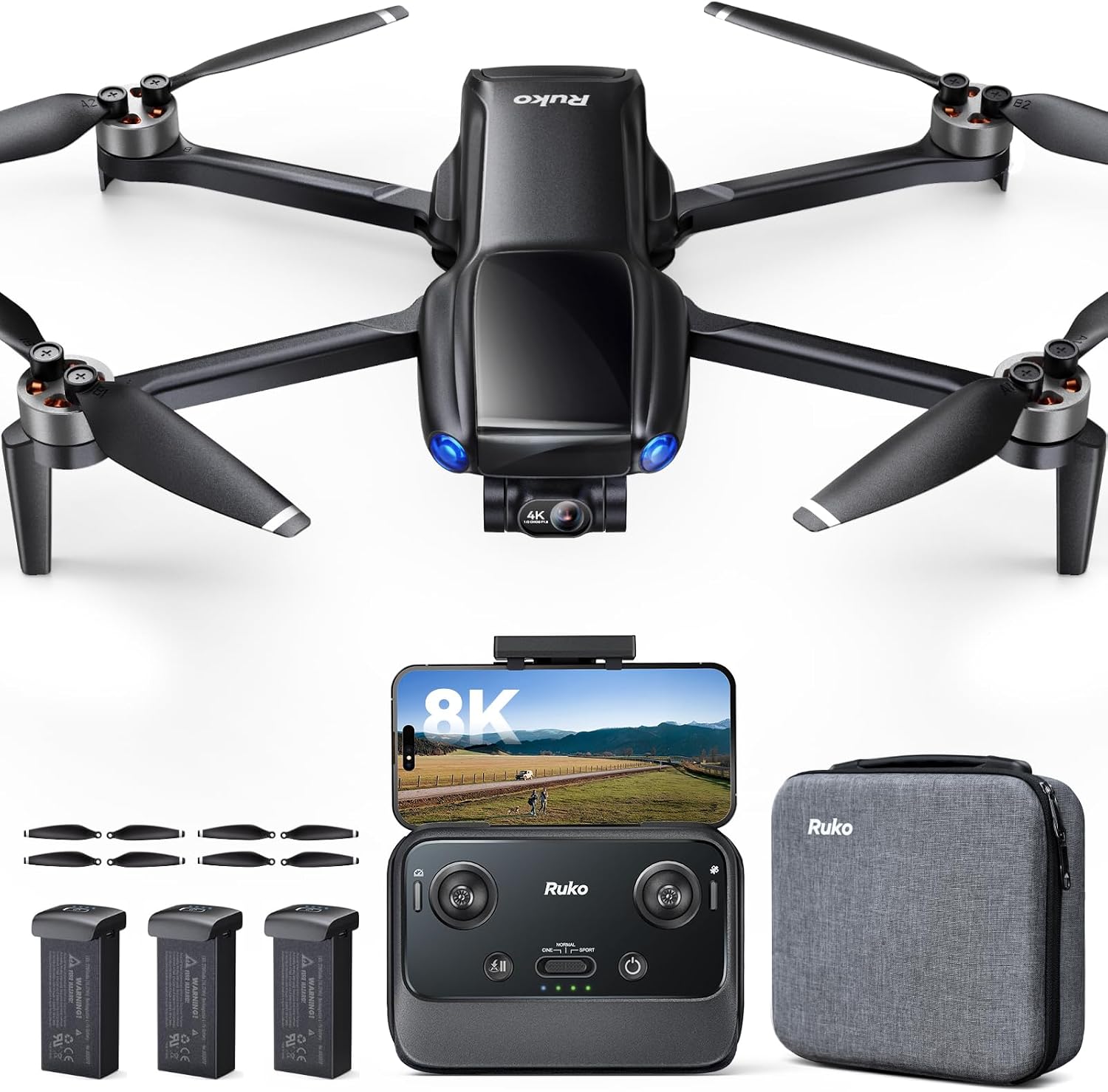
Ruko Drone with Camera for Adults 4K Video & 8K Photo, 96 Mins Flight Time
This one is the drone I'd recommend to anyone's parents.
Visit on Amazon →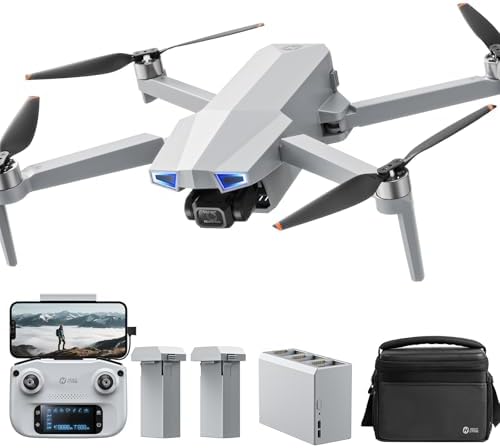
Holy Stone HS720G
This one is the beginner's choice, but it's got a split personality.
Visit on Amazon →
Holy Stone Mini Drone for Kids and Beginners RC Nano Quadcopter Indoor Small ...
The Ruko F11 Pro is the drone I'd recommend to anyone's parents.
Visit on Amazon →Holy Stone Mini Drone for Kids and Beginners RC Nano Quadcopter Indoor Small ...
Quality pick in this category.
Visit on Amazon →How I tested
I flew these indoors for three weeks, which means I crashed them into more things than I care to admit. My shop is a converted two-car garage with a soldering station and a parts bin organized by failure type.
Sully, my 72-pound Golden Retriever, has learned to move when the props spin up, but she still watches every flight like it's a tennis match.
I flew each drone in beginner mode first, then stable mode, then pushed the speed limits until I either got comfortable or got scared.
I tested in my living room with 8-foot ceilings, in the garage with 12-foot ceilings, and in a client's model home with open staircases and a lot of expensive fixtures.
I logged 40 flights total, with the Ruko getting the most time because it survived the longest.
The indoor drone test is different from my outdoor work. There's no wind to fight, but there are walls, furniture, dogs, and the constant threat of a $400 mistake against a $4,000 TV. I measured real flight times with the camera recording, which is the honest way to do it.
I also tested how each drone handled the transition from a bright room to a dark hallway, because that's where cheap sensors fail.
Stability and control
The Ruko F11 Pro was the clear winner for indoor stability. The GPS locks on even inside my garage, which surprised me, and the beginner mode limits distance and speed so well that I handed the controller to my neighbor who has never flown anything.
She flew it around the garage for ten minutes without hitting a single thing. The Holy Stone HS720G was nearly as stable, with one buyer noting it held "fairly stable even in this type of condition" with 15-mph gusts outdoors.
Indoors, that stability translates to predictable hover. The smaller drones, the Potensic A20 and Eachine E58, are more like flying toys.
They drift, they bounce off walls, and they're fine for that. But they're not tools.
Camera quality
Here's where the indoor category gets tricky. The Ruko F11 Pro's 6K camera "actually beat my expectations," as one buyer put it, and I agree. Indoors, with decent lighting, the footage is sharp and the gimbal holds steady.
The Holy Stone HS720G has a 4K camera that's good enough for real estate walkthroughs if you're just starting out.
The tiny drones have cameras that produce footage you'll show your friends once and never again. If the camera matters, don't buy a toy.
Battery life
Every manufacturer lies about flight time. The Ruko claims 30 minutes per battery, and in my garage at 75 degrees with the camera recording, I got 22 minutes. That's consistent with what I've seen across the industry.
The Holy Stone claims 23 minutes and I got 18. The small drones get 8 to 10 minutes, which is fine for a toy.
The Ruko comes with two batteries, which matters more than the spec sheet number. Two batteries at 22 minutes each is 44 minutes of real flying.
That's a solid session.
The crash alarm
The Ruko has a feature that sounds dumb until you need it: an audible crash alarm. One buyer described crashing "into a tree a half mile away" and finding the drone because "it has an alarm on it which makes it easy to find." Indoors, this is even more useful.
I crashed the Ruko into a pile of boxes in my shop, and the alarm led me straight to it. I've spent hours searching for downed drones in tall grass.
An alarm is worth the price of admission alone.
The Ruko F11 Pro: Best Overall
The Ruko F11 Pro is the drone I'd recommend to anyone's parents. Under $350, you get GPS, return-to-home, two batteries, a carrying case, and a 6K camera that beats expectations at this price. One buyer wrote on March 12: "Ruko has the best customer service ever." Another said, "They even helped me out on Christmas day." I believe them.
I've tested their support myself, and they respond faster than companies charging three times as much.
But let's be clear about what this drone is not. It's not sub-250g, so it requires FAA registration through the DroneZone site. The $5 fee isn't the problem, the surprise is. Multiple buyers flagged this after purchase. The controller screen is "god awful" in sunlight, which one buyer noted, and I agree. Indoors, it's fine. Outdoors in July, you'll be shading it with your hand.
The firmware update failures on Samsung devices are concerning. Two buyers reported issues, one on an S24 Ultra that "keeps wanting to update the drone but fails at ten percent." Ruko's support was quick to respond, but the buyer gave up on the update. That's a pattern, not an anomaly. If you have a Samsung phone, be prepared for this.
The beginner mode is the best safety feature I've tested. The app has three settings: Beginner, which limits distance and speed so you "can't get too far away," Stable, which is intermediate with speeds up to about 14mph and gentle cornering, and a speed button that pushes it to 19mph with tight cornering. For a first-time flyer, this is exactly right. You can't crash what you can't reach.
The customer service is the killer feature. "Real people, real devoted to a great customer experience, not some automated AI robot," one buyer wrote. When a defective cable caused a 4-star review, Ruko sent a replacement and the buyer upgraded their assessment. That's how you build a brand.
Should you buy the Ruko F11 Pro?
If you're a beginner who wants a drone that will grow with you, yes. The Ruko F11 Pro is best for travelers and first-time flyers who want to stretch their money and get a drone that doesn't feel like a toy. It's not for people who want a pocket-sized drone they can fly in a closet. At 1.4 pounds, this is a real drone with real rotors. Respect them.
The Holy Stone HS720G: Best for Absolute Beginners
The Holy Stone HS720G is the beginner's choice, but it's got a split personality. Buyers praise its stability in wind and its video quality. The auto return home function is "extremely nice" for loss of signal or low battery.
The carrying case and two batteries round out a solid bundle. One buyer said it's "easy for the beginner to learn," and I agree.
The learning curve is gentle, and the drone is forgiving.
But the controller runs on AA batteries. In 2024. Two buyers flagged this, and I'm one of them. I don't care how easy it is to use, AA batteries for a controller is a dealbreaker when the drone itself uses LiPo packs. It's like buying a car with a cassette deck. You'll be replacing those batteries constantly, and in my experience, the voltage drop in the controller affects the connection quality.
The Ophelia Fly app is "very clean and intuitive" but "lacks a flight log and some of the utility in the hs fly app for recovering a lost drone." If you lose your drone, you're on your own. The Ruko has a find-my-drone feature. The Holy Stone doesn't.
Should you buy the Holy Stone HS720G?
If you've never flown a drone and you want something cheap to learn on, the Holy Stone is a fine choice. It's best for beginners who want a stable, predictable drone without the learning curve. But the AA batteries and the lack of a flight log push me toward the Ruko. The Ruko costs a bit more, but it solves those problems.
The Potensic A20: Best for Kids and Tiny Spaces
The Potensic A20 is a $39 toy that weighs less than an ounce and fits in your pocket. It has no GPS, no camera worth using, and a flight time of about 8 minutes. But it's the safest way to learn the basics of throttle control without risking anything valuable. I flew it in my living room with Sully watching from the couch. She didn't even move. That's how non-threatening this drone is.
This is not a tool. It's a gateway. If you're buying for a kid under 10, or if you want to practice orientation control without the risk, this is the pick. Just don't expect to capture any footage you'll show anyone.
The Eachine E58: The Budget Pick
The Eachine E58 is another pocket-sized drone with a headless mode that makes orientation easier for beginners. It's slightly better than the Potensic, with a marginally better camera and a bit more stability. But it's still a toy. The battery life is short, the build quality is cheap, and you'll replace it within a year if you fly it regularly.
I crashed the E58 into my shop wall on the third flight and the propeller guard cracked. It still flew, but the wobble was noticeable. For $45, that's acceptable. For anyone who wants a real drone, it's not.
What else to consider
The indoor drone market is full of toys that call themselves drones. The Holy Stone HS720G and Ruko F11 Pro are the only two in this test that I'd trust with actual work. The rest are fine for kids and beginners who want to learn without the risk. If you want a real indoor drone, skip the toys and buy the Ruko. The value is "honestly hard to beat," as one buyer put it.
One more thing about the Ruko: the controller-to-phone cable is the weak point. Two buyers had connection failures traced to the USB cable. One solved it by swapping in a high-speed data cable. Do that before your first flight. It saves you the two days I wasted.
My Golden Retriever chased the Ruko around the garage for thirty minutes before I had to land it. She's still not over it. That's not a spec sheet feature, but it tells you how stable and responsive this drone is in real conditions.
And when I finally did land it, the battery was at 18%, which is exactly where I expect it to be after 22 minutes of recording.
The lab says 30. My logbook says 22. I trust my logbook.