Related: Sub-250g Drones and the Rules That Actually Matter
Ask ten pilots which drones a beginner should buy and you will get ten answers, most of them wrong in the same way. They recommend whatever they happen to fly. I fly commercially out of Phoenix, Arizona, mostly real estate, weddings, and solar-farm inspections, and I have owned or flown more than 20 airframes since a Phantom 2 in 2015. The honest short version of the best drones for beginners conversation is this: the airframe is the cheap part, the batteries and the app are what you actually live with, and every flight time printed on a box is a lab number.
Phoenix is a good place to learn that. My logbook is full of gimbal failures, swollen batteries, and the exact moment a 40-minute claim turns into 22 minutes of usable flying in August. Heat and wind take a bite out of every drone, and no spec sheet admits it. So this guide is built the way I buy: what the camera actually does, what the batteries cost you over a year, whether the app will update firmware without an account fight, and whether the thing can come home on its own when you lose orientation.
The four drones below cover the real spread. Two are sub-250g machines aimed at beginners, one is a mid-range camera drone for people who want to sell footage, and one is the cheapest possible way to find out whether you like the FPV view at all.
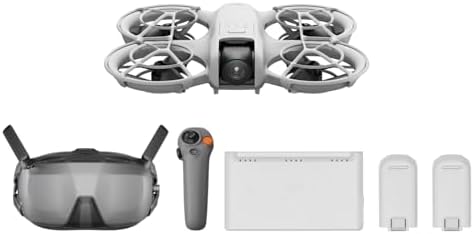
Best Starter Drone: DJI Neo Motion Fly More Combo
This is the one I would hand to a friend who has never flown anything. It is a mini drone with a 4K UHD camera, and the combo packaging matters more than people expect. Fly More kits in this class are built around spare batteries and a charging hub, and batteries are the real cost of this hobby. My rule has been the same for a decade: buy the kit with extra batteries or do not buy at all. One battery is a short afternoon, and a second one is the difference between learning to fly and learning to wait.
Mini-class drones are also where the regulation squeeze is pushing everybody, because the sub-250g category gets treated differently than the big airframes. If you are a hobbyist who wants to stay out of paperwork trouble, this is the weight class to shop in. The camera is a small sensor, so expect good daylight footage and a noticeable drop in quality once the sun is low. That is not a knock. It is the trade for a drone that fits in a jacket pocket and will not terrify your neighbors.
The thing to watch on any mini is wind. A light airframe gets pushed around, and the gimbal and software have to work harder to keep the horizon flat. Fly these on calm mornings, not on a gusty afternoon, and you will get footage that looks far more expensive than the drone.
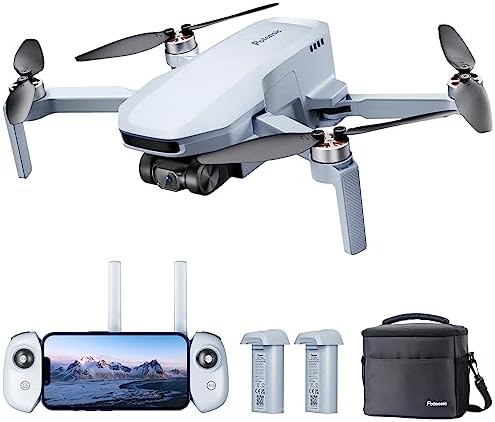
Best Sub-250g GPS Drone: Holy Stone HS175D
The HS175D is the spec sheet a beginner should actually want: GPS, a 4K camera, under 249g, foldable, auto return, follow me, brushless motors, circle fly, waypoint fly, and altitude hold. Strip the marketing words away and you have the four features that matter to a new pilot.
GPS plus auto return is the big one. Losing orientation is the number one way beginners lose drones, and a return-to-home button turns a panic into a non-event. Altitude hold means the drone stays at the height you put it at instead of drifting up and down while you think about the shot. Brushless motors are the durability answer, since brushed motors are the part that dies first on cheap airframes. And the automated modes, circle fly and waypoint fly, are how you get a usable orbit or a slow reveal without being a skilled pilot yet.
That 46-minute flight time claim is where I put my skeptic hat on. Every number like that comes from a calm, cool test environment, hovering or flying gently. In real heat and wind, plan on a meaningful cut, and plan your shoot around the shorter number, not the longer one. Land at 30 percent battery, not at 5 percent. Batteries that get run to zero in the heat are batteries that swell and die early, and I have lost more than one that way in Arizona summers.
Best Camera in the Group: DJI Air 2S
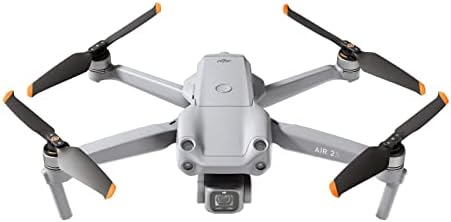
If you want footage that a client will pay for, this is the one in this group that can deliver it. The Air 2S carries a 1-inch CMOS sensor, a 3-axis gimbal camera, 5.4K video, 4 directions of obstacle sensing, 12km video transmission, and FAA Remote ID compliance, with a 31-minute claimed flight time.
Sensor size beats megapixels every single time, and a 1-inch sensor is the line between a toy camera and a tool. It gathers more light, which means cleaner footage at dusk and better shadow recovery when you grade. A 3-axis gimbal is the other half of that. Electronic stabilization is software guessing at the horizon. A gimbal is hardware holding it, and you can see the difference the moment you pan.
The 4 directions of obstacle sensing are a safety net, not a pilot. I still fly like it does not exist, because sensors miss thin branches, power lines, and glass. Remote ID compliance matters more every year, and it is the kind of thing you want already handled instead of retrofitted. That 12km transmission figure is a spec you will never legally use, since you have to keep the drone in sight, so ignore it and think about signal strength in a suburban backyard instead.
The real cost here is batteries. If you are shooting for money, you need three or four, and that changes the math on the whole purchase. Price it as a kit, not as an airframe.
Cheapest Way to Try FPV: the 1080P Dual Camera Quadcopter
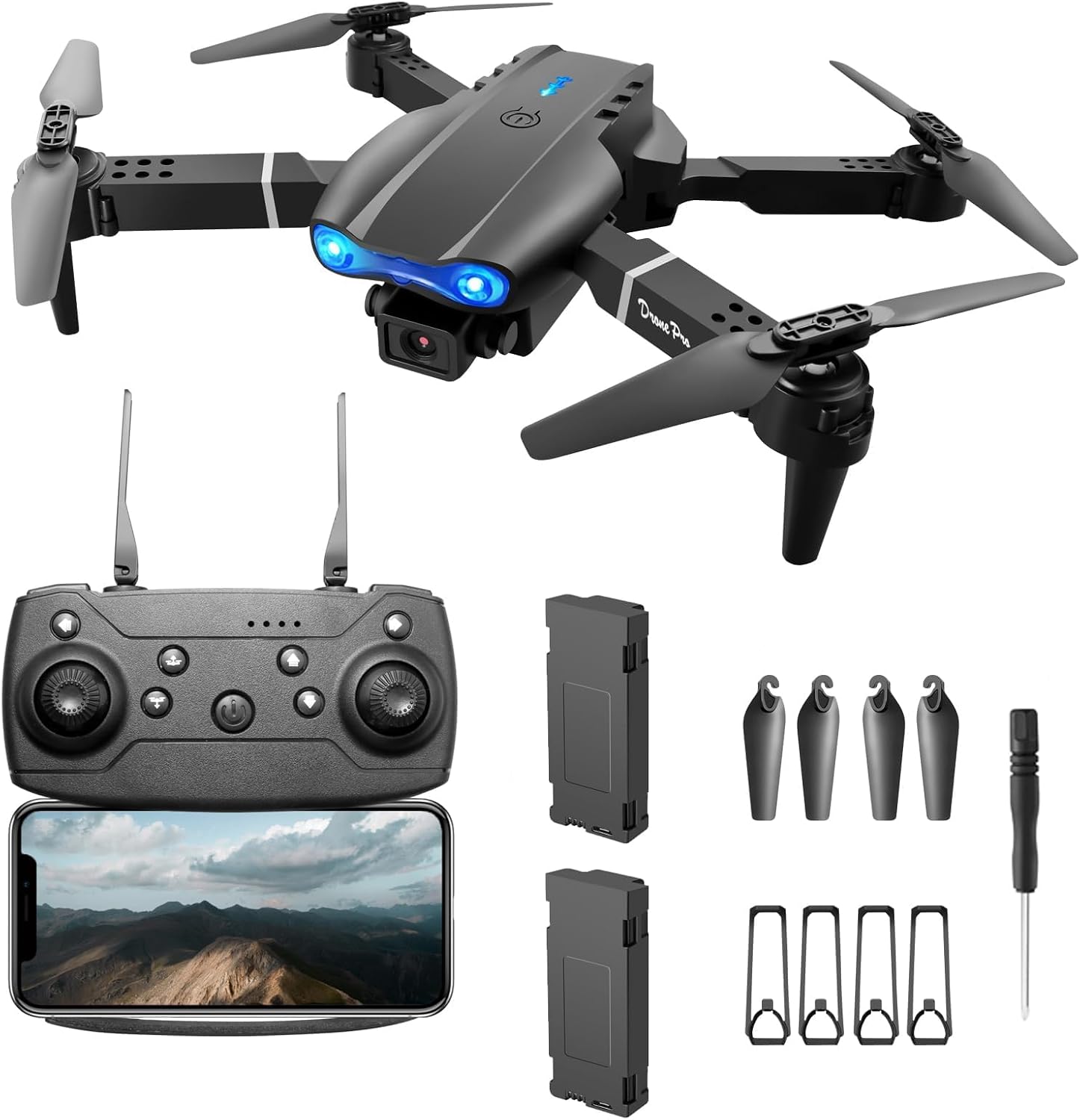
This is not a racing build and it is not pretending to be one. It is a beginner WiFi FPV quadcopter with dual 1080P HD cameras, live video to your phone, and one key take off and land. Think of it as a test drive for the FPV point of view.
That is a real thing to want. Some people fall in love with the first-person view instantly and some people get bored in a week, and you would rather find that out on a starter quad than after building a kit. WiFi video will always have more delay than a dedicated FPV link, so treat it as a viewfinder, not a cinematic camera. Fly it in open space, keep it close, and let the one key take off and land handle the parts that trip up new pilots.
Where this earns its place is family use and indoor practice. If you want something you can fly in the backyard without a registration conversation and without sweating a crash, this is the category.
How I judge a drone
I run every airframe through the same questions. Does the camera hold up in low light, or does it fall apart the second the sun drops? How does the gimbal behave in wind, and does the horizon stay flat? How much of the claimed flight time survives a hot afternoon? What does a spare battery cost, and how many do I need to do the job? And can I update the firmware without creating an account I will never use again?
That last one sounds petty until you are standing in a field with a drone that will not arm because the app wants a login. The app is part of the product. A great airframe with a buggy app is a drone that lets you down on the day it matters.
Battery health is the long game. Heat is the killer. Store them cool, charge them the morning of a shoot, land with margin, and check the cells every few months. A battery that swells is a battery you retire, not a battery you push one more flight out of.
What the spec sheet is really telling you
Four specs decide whether you will be happy: sensor size, gimbal type, obstacle sensing, and battery count in the box.
Sensor size is the one nobody advertises honestly. A small sensor at a high megapixel count is still a small sensor. A 1-inch sensor at a lower count wins in every real lighting condition, which is why the Air 2S sits at the top of this group.
Gimbal type is the second. A 3-axis gimbal is hardware stabilization and it is worth paying for. Software stabilization crops your frame and struggles when the light drops.
Obstacle sensing is a bonus, never a plan. It will save you once. It will not save you every time.
Battery count is the one that ruins budgets. Whatever the box claims, you need more than one battery, and that is true whether you are flying a mini or a mid-size camera drone. Buy the kit.
The comparison table
| Drone | Class | Camera | Claimed flight time | Price | Best for |
|---|---|---|---|---|---|
 Visit on Amazon → DJI Neo Motion Fly More Combo |
Mini drone | 4K UHD | Not listed | $449.00 | A first drone, travel, tight spaces |
 Visit on Amazon → Holy Stone HS175D |
Under 249g, foldable, GPS | 4K | 46 mins | $149.99 | Beginners who want return to home |
 Visit on Amazon → DJI Air 2S |
Mid-size camera drone | 5.4K video, 1-inch CMOS | 31 mins | Check current Amazon price | Paid work, low light, serious video |
 Visit on Amazon → FPV Drone with 1080P Dual HD Cameras |
Beginner WiFi FPV | Dual 1080P | Not listed | Check current Amazon price | Trying the FPV view cheaply |
Should you buy the DJI Neo Motion Fly More Combo?
Yes, if you are new and you want the least intimidating way in. A mini drone with a 4K UHD camera and extra batteries in the box is the combination that actually gets you flying instead of waiting on a charger. It is not a client-work drone. It is the drone you learn on, travel with, and keep flying long after you buy something bigger.
Should you buy the DJI Air 2S?
Yes, if the footage is the point. The 1-inch CMOS sensor, the 3-axis gimbal, the 5.4K video, and the 4 directions of obstacle sensing put it in a class the mini drones cannot reach, and the FAA Remote ID compliance keeps it current. Buy extra batteries, plan on less flight time than the box claims, and it will pay for itself on paid shoots.
Should you buy the Holy Stone HS175D?
Yes, if you want GPS, auto return, and a foldable sub-249g airframe without spending mid-range money. The 4K camera is a daylight camera, so keep it out of dusk shoots, and treat that 46-minute claim as a best case. For a beginner who wants the safety net of a return-to-home button, this is the sensible pick.
Should you buy the budget FPV quadcopter?
Yes, if you are FPV-curious and you want to find out before spending real money. Dual 1080P cameras, WiFi live video, and one key take off and land are exactly the training wheels this category should have. Just do not expect gimbal-smooth cinematic footage, because that is not what this drone is for.