Related: Drone Battery Care in Extreme Heat
I have one rule for anyone who asks me which drone to buy, and it has nothing to do with megapixels: pick the camera and the battery kit first, then argue about everything else. If you are shopping for the best camera drones for beginners, that rule will save you more money than any spec sheet ever will.
I fly four or five days a week around Phoenix, mostly real estate, weddings, and solar farm inspections. My logbook is full of battery degradation notes and gimbal failures. The "40 minute flight time" printed on the box is a lab number, measured in still air at room temperature with a fresh battery and nothing draining the system. In 110 degree heat with any wind at all, cut every claim by 30 to 40 percent. That is not cynicism. That is a Tuesday in July.
So here are four drones I would actually put in someone's hands, sorted by what they are for. Two of them are starter aircraft, one is a genuine step up into real camera work, and one is the drone I would buy if I were spending my own money at the top of this list.
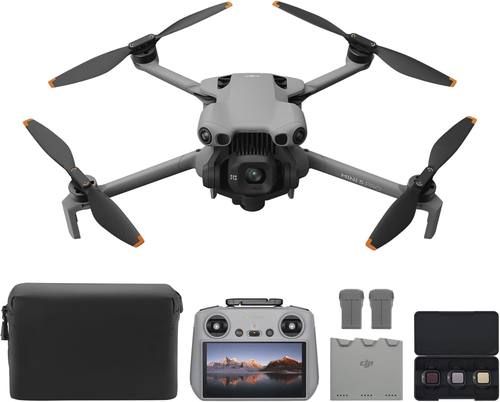
Best Overall: DJI Mini 5 Pro Fly More Combo
The Mini 5 Pro Fly More Combo is the pick here because of four words in the name: 1-inch CMOS. That sensor is the difference between footage a client pays for and footage that looks like it came off a phone strapped to a ceiling fan. A 1-inch chip gathers dramatically more light than the tiny sensors in everything else on this page, and more light is what buys you clean shadows, usable color at golden hour, and highlight detail that does not blow out into a white smear over a bright roof.
The DJI RC 2 controller is the second reason. It has a screen built into it. That sounds like a small thing until you have spent a summer afternoon with your phone maxed out at full brightness, cooking in the sun, dropping frames because it is thermally throttling. A dedicated screen means your phone stays in your pocket, and the app experience is part of the product. DJI still owns this market because the software is that good.
The Fly More Combo designation is not marketing fluff. Those kits are built around spare batteries, and batteries are the real cost of flying. A single battery is a twenty minute errand. Three batteries is an afternoon of work. If you are going to buy this drone, buy the version that comes with the batteries, because buying them separately later always stings more.
One more thing that matters if you fly anywhere near people: the Mini line is DJI's light class, the one regulators treat most gently. That is worth more than any camera spec when you are trying to get a job done in a city.
Best Value: Bwine F7GB2 Pro
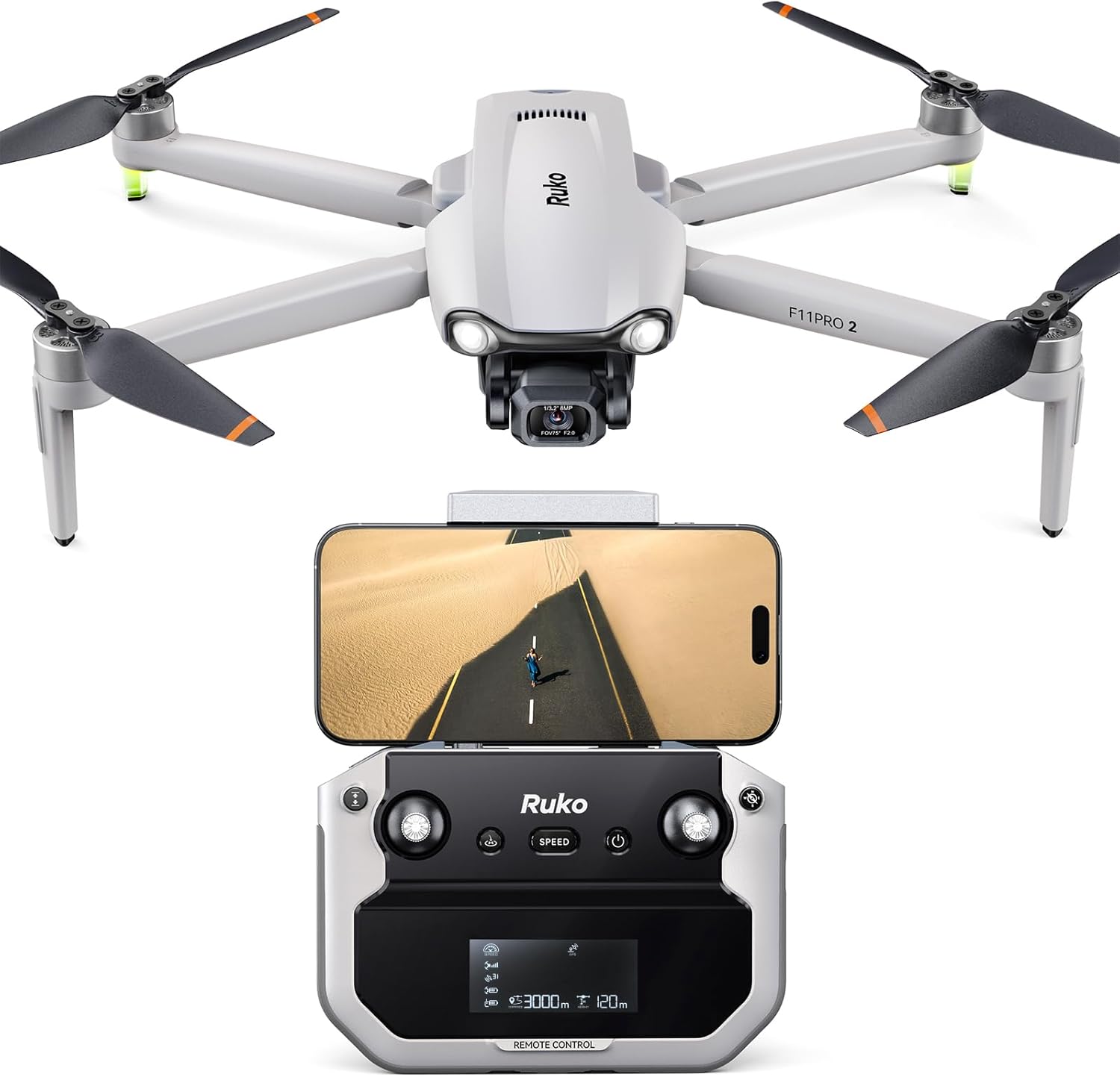
This is the drone I recommend to people who want to shoot real footage but cannot justify the DJI. The headline spec is the 4K UHD camera, but the spec that actually changes your footage is the 3-axis gimbal. That is the line between a camera drone and a flying camera.
Here is what I mean. Cheap drones stabilize with software, cropping the frame and wobbling the horizon every time the aircraft banks. A mechanical gimbal physically holds the camera level, so a gust of wind becomes a slight drift instead of a lurch, and a slow yaw becomes a smooth pan instead of a stair-step. Once you have shot with a real gimbal, you cannot go back. It is also the reason you can put an ND filter on the lens and shoot at a slower shutter for that smooth, cinematic motion blur instead of the crisp, video-game look.
The honest caveats are the ones that apply to every brand that is not DJI. The app is the weak point. Firmware updates can be fussy, the connection is not as bulletproof, and the software polish is not there. I still fly like obstacle avoidance does not exist, and on a drone in this class you should assume it barely does. But as a first serious aircraft, with a real gimbal and a 4K camera, it earns its place.
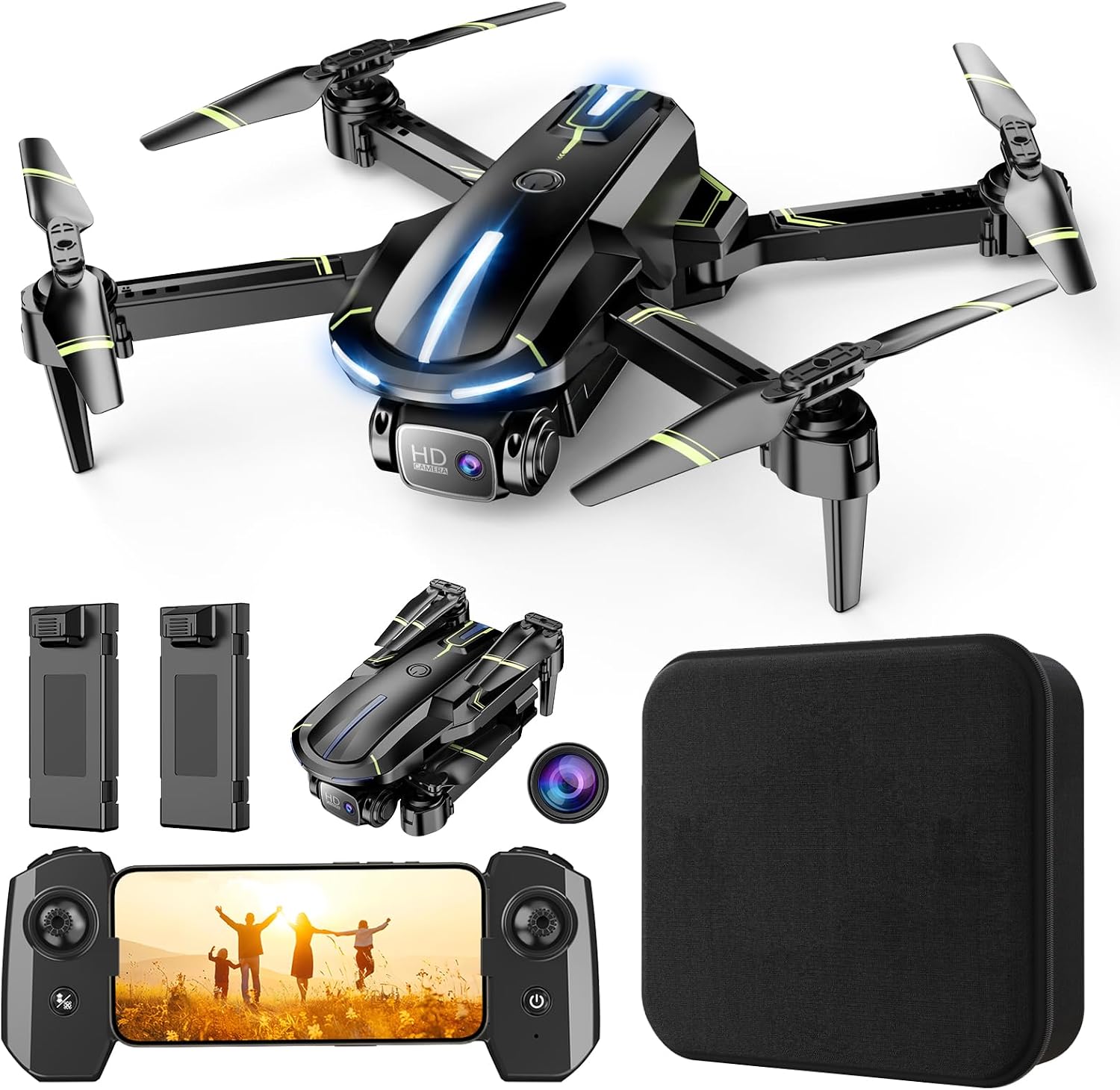
Best Starter Kit: 2K HD FPV Drone for Beginners
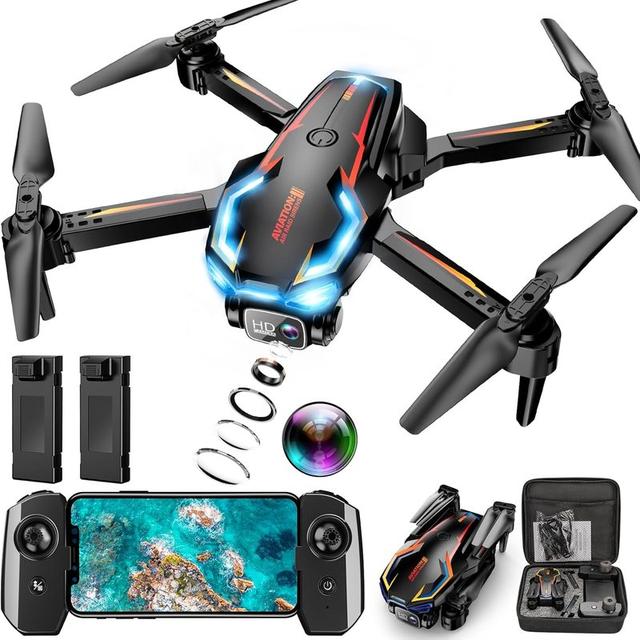
If you are buying a first drone for a teenager, or for yourself and you have never touched a controller, this is the sensible entry point. Altitude hold keeps the aircraft at a fixed height so you are not fighting the throttle stick while you learn to steer. Headless mode removes the single most confusing thing about flying, which is that the controls flip when the drone faces you. One-key take off and landing means the scariest part of the flight is handled by the drone.
Speed adjustment is more useful than it sounds. Beginners fly in the slow mode, and it keeps the drone from getting away from you in the first ten minutes. The two batteries in the box are the real value here. One battery is a toy you fly once. Two batteries is a toy you actually learn on, because you get a second flight while you still remember what you did wrong on the first one.
Set expectations on the camera. In this tier, a 2K label is a marketing number more than a sensor specification, and there is no mechanical gimbal. The footage is fine for flying around the park and sending clips to your friends. It is not footage you would hand a client. For a beginner, that is the correct trade, because you are buying stick time, not a camera.
Best Budget Pick: Screen-on-Controller FPV Drone
This is the cheapest way to get a screen in your hands. The controller has the display built in, which means no phone mount, no cable, no app permissions, and no battery drain on the device you need for everything else. For a kid, or for anyone who wants to fly FPV without turning it into a project, that simplicity is the entire appeal.
Be clear about what it is. This is the least capable aircraft on this list: no gimbal, a camera built for framing rather than image quality, and flight characteristics that will feel twitchy the moment there is any wind. It is a first-flight machine and a backyard machine. It is not the drone you take on a job.
But as a gift, or as a way to find out whether you actually enjoy flying before you spend real money, it does its job. I have watched more than one person discover they love this hobby on a drone in this class and then upgrade within a year. That is money well spent, not wasted.
How I evaluate a camera drone
I do not publish a flight time I did not fly, and I do not publish a camera verdict from a spec sheet. The checklist I run any drone through looks like this.
Camera first. I want to know the sensor size, whether the stabilization is mechanical or electronic, and how the footage holds up in contrast. High noon over a bright roof with deep shade underneath is the hardest test there is, and it tells you more than any resolution number.
Battery reality second. I log every cycle. Heat is the killer here in Arizona. I have lost batteries to Phoenix summers, and they do not fail dramatically, they just swell slightly and quietly drop to 80 percent health and stop holding a charge. If the drone you are considering only takes one battery per flight, price the spares before you buy.
The app third, because the app is part of the product. I want to know how firmware updates work, whether the connection holds at range, and whether it demands an account just to get the thing in the air. A drone with a buggy app is a drone that will not fly when you need it.
Wind and heat fourth. Everything flies beautifully in the spring. The question is whether it holds a hover in a gust and whether the electronics throttle back after twenty minutes in the sun.
And obstacle avoidance last, because it is a safety net, not a pilot. I still fly like it does not exist, and so should you.
What the specs actually mean
There are three real tiers in this group, and the specs line up with them cleanly.
At the top, the 1-inch CMOS sensor is the entire argument. A bigger sensor means bigger pixels, and bigger pixels mean better low light, better dynamic range, and more room to grade in post. A 1-inch sensor at a modest resolution beats a 48 megapixel phone sensor every single time. Pair that with a screen controller and a battery kit and you have a machine that can do paid work.
In the middle, a 3-axis gimbal is the upgrade that changes your footage more than any resolution bump. It is also the spec most often faked in marketing copy, so read carefully. If the product name does not say gimbal, assume electronic stabilization and expect the horizon to wobble.
At the bottom, you are buying flight time and durability, not image quality. Altitude hold, headless mode, and one-key take off are training wheels, and good ones. Two batteries in the box is worth more than any camera claim in this tier.
Across all three, the pattern holds: the camera and the batteries decide whether you keep flying, and the app decides whether you enjoy it.
The comparison table
| Drone | Camera and stabilization | Best for | Price |
|---|---|---|---|
 Visit on Amazon → Visit on Amazon →DJI Mini 5 Pro Fly More Combo |
1-inch CMOS, DJI RC 2 screen controller, spare batteries | Enthusiasts and paid work | $1,099.00 |
 Visit on Amazon → Visit on Amazon →Bwine F7GB2 Pro |
4K UHD camera, 3-axis mechanical gimbal | First serious camera drone | $339.88 |
 Visit on Amazon → Visit on Amazon →2K HD FPV beginner drone |
2K FPV camera, altitude hold, headless mode, two batteries | Teens and first flights | $39.98 |
 Visit on Amazon → Visit on Amazon →Screen-on-controller FPV drone |
FPV camera, screen built into the controller | Cheapest way to fly without a phone | $59.96 |
Should you buy the DJI Mini 5 Pro Fly More Combo?
Yes, if you want the best camera in this group. The 1-inch CMOS sensor is the reason, and it is not a subtle difference. Sensor size beats megapixels every time, and that chip is what separates footage you can sell from footage you post. The RC 2 controller with the built-in screen means your phone stays charged and cool, and the Fly More Combo solves the battery problem before you have it, which is the correct way to buy into this hobby.
It is the drone I would hand a friend who wants to shoot real estate, travel, or wedding footage without stepping into enterprise pricing. It is also the drone that will still be worth flying in three years, which is not something I can say about anything else on this page.
Should you buy the Bwine F7GB2 Pro?
Yes, if the DJI is out of reach. The 4K UHD camera on a 3-axis gimbal is a real camera rig, and the gimbal is what makes it one. You give up the 1-inch sensor, the screen controller, and the polish of DJI's app, and you should go in knowing that the app is the weakest part of the package.
For a first serious drone, though, that trade is honest. You get the one feature that actually changes your footage, at a price that leaves room for spare batteries and a case, and you find out whether you love aerial work before you commit serious money to it.
And if neither of those fits, the two budget drones are not consolation prizes. A 2K beginner kit with two batteries, or a screen-on-controller FPV quad, is how most people in this hobby got started. Buy the one that matches how you will actually fly, keep the batteries cool, and ignore the flight time on the box.