Related: Drone Battery Care in Extreme Heat: What Actually Kills a Pack
Search for the best drones for beginners and you will drown in spec sheets that promise the same three things: 4K video, long range, and 30-plus minutes of flight. I fly four or five days a week out of Phoenix, mostly real estate, weddings, and solar-farm inspections, and my logbook says most of those numbers are fiction the moment the temperature crosses 100°F.
The question is not which drone is best. It is which drone is best for the job you actually have. A guarded-prop FPV machine, a sub-250 g travel camera ship, a GPS safety-net quad with a touchscreen controller, and a cheap trainer are four different products that happen to share the word drone.
So here are the three questions I ask before I recommend anything. First, do you want to fly FPV with goggles, or do you want a camera that hovers while you frame a shot? Second, do you want GPS return-to-home and follow modes, or are you flying close and manual? Third, does weight matter where you fly? Under 249 grams sits in the gentlest regulatory class in most places, and that alone decides it for a lot of travelers.
What follows is four drones covering four jobs and budgets, plus the comparison table I would want if I were spending my own money. Where I have not flown a specific unit, I say so, and I stick to what the listing actually claims.
Best Overall: DJI Mini 4K Fly More Combo
This is the one I would hand to most people who ask me what to buy. It is a foldable drone under 249 grams with a 12MP camera on a three-axis mechanical gimbal, and the listing claims 31 minutes of flight time. The Fly More Combo adds the accessories you would otherwise buy one at a time: a 64GB card, a backpack, a landing pad, a card reader, and more.
Start with the weight. Under 249 grams is the class most regulators treat most gently, and it is also the class that survives a hike. A drone you leave in the car because it is a hassle is a drone you do not use.
Then the camera. A 12MP sensor on a real mechanical gimbal beats a 48MP sensor on electronic stabilization every single time, and it is not close. The gimbal is what makes footage look professional, not the megapixel count on the box. If you are shooting real estate exteriors or travel footage in good light, this is the right tool. Add an ND filter and you can hold a sane shutter speed instead of letting the camera crank it up and smear the motion.
The flight time claim is where I get blunt. I do not fly claims, I fly packs. Whatever the box says, subtract 30 to 40 percent for heat, wind, and the fact that you will not land at exactly zero. In a Phoenix summer, 31 minutes is a lab number.
The limits are the same as every sub-250 g drone: a small sensor that struggles at dusk, and light weight that wind pushes around. That is the trade you make for a drone that fits in a jacket pocket.
Best for FPV: DJI Avata 2 Fly More Combo
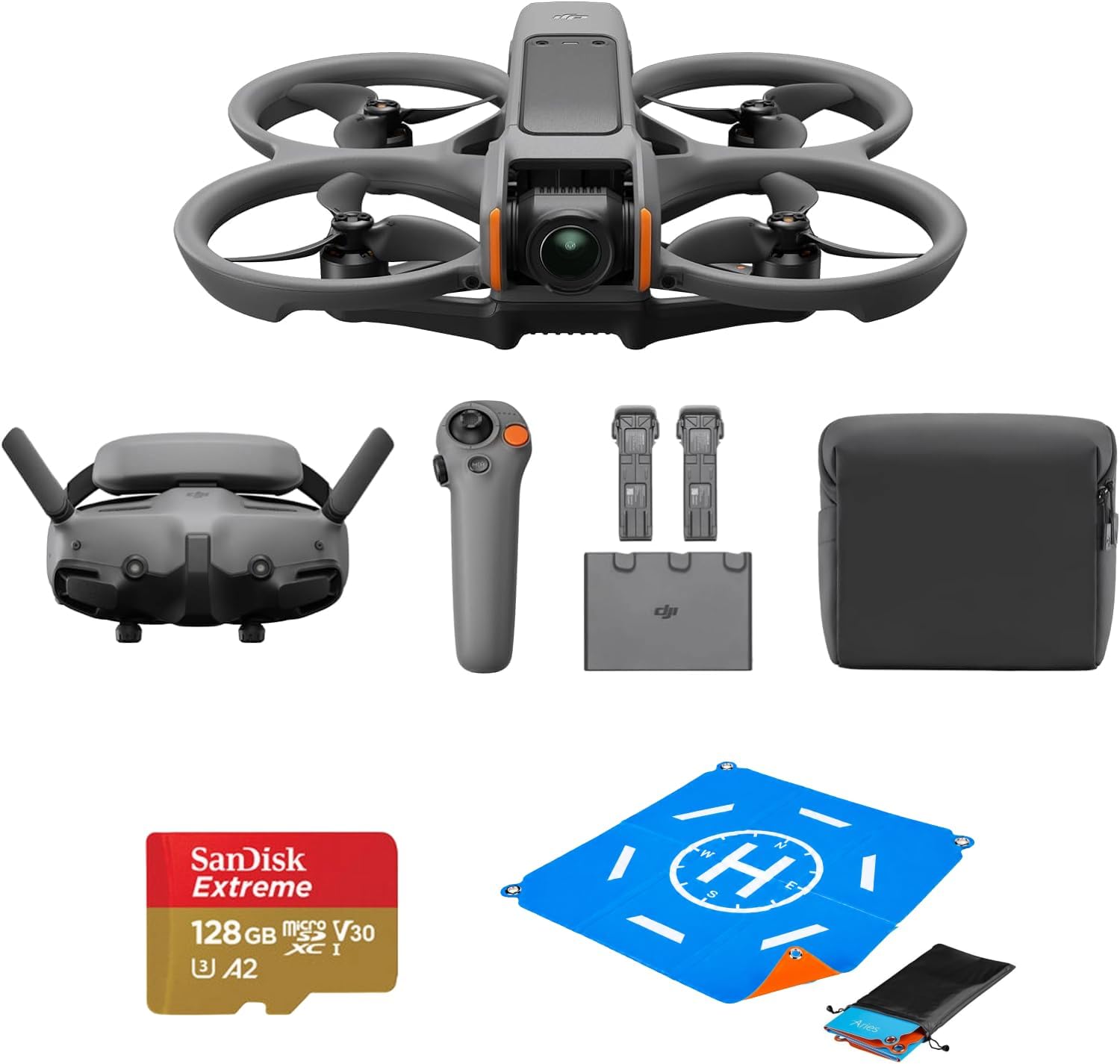
FPV is a different category, and I want to be clear about that boundary: this is not a racing build. It is a guarded-prop, cinewhoop-style machine with a 4K camera, a 155-degree field of view, and propeller guards, which means you can fly it around people and structures without the one-mistake-costs-me-a-prop-and-a-scar math of a racing quad.
The interesting part of this listing is the beginner framing. One-push acrobatics means you get the flips and rolls without learning manual mode, which is the skill that eats most beginners' first month. The combo ships with three batteries, Goggles 3, the RC Motion 3 controller, an SD card, and a landing pad. Three batteries is the number that matters here. FPV packs drain fast, and a combo with one battery is a combo you will not use on a shoot day.
What nobody tells you: goggles flying is a physical adjustment. Some people take to it instantly, some need a few sessions before their inner ear stops arguing. The motion controller lowers that barrier a lot compared to a manual radio, and the propeller guards mean your first crashes are cheap.
If you want cinematic motion, flying through gaps, and footage that does not look like every other hover-and-pan real estate clip, this is the pick. If you want to hover and frame a still, buy the Mini instead.
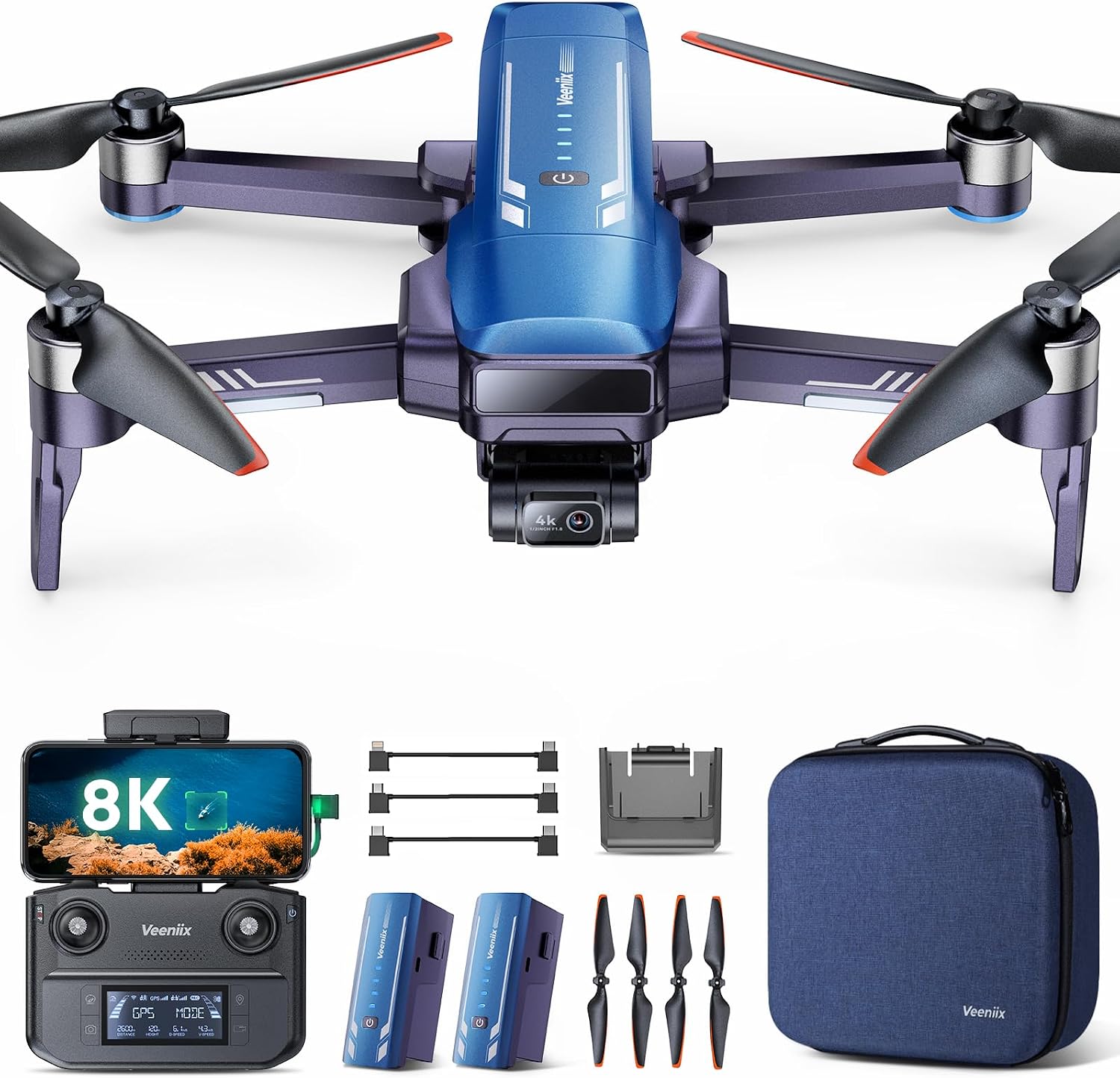
Best Feature List on Paper: DealPrice Touch Screen Remote Drone
Here is a listing that promises almost everything: a 4K camera on a three-axis gimbal, obstacle avoidance, GPS auto return home, follow me, long range, high wind resistance, rainproof, time-lapse, flash lights, zoom, and an SD card in the box, all controlled from a touchscreen remote instead of your phone.
On paper that is a lot of drone, and some of it is genuinely useful. GPS return to home is the single most valuable safety feature for a solo operator, because the day the video feed drops, that button is the difference between a drone and a story. Follow me is real for hiking and biking. A touchscreen remote means no phone mount, no notifications interrupting your flight, and no app crash taking the flight down with it.
My skepticism is warranted on the rest. Obstacle avoidance is a safety net, not a pilot, and I still fly like it does not exist. Rainproof is not waterproof, and no rainproof claim survives a real monsoon. Flash lights are for finding the drone in tall grass, not for filming. Zoom is digital cropping, not optics. Long range means nothing without knowing the link standard and the line-of-sight rules where you fly.
And the honest part: with an unfamiliar brand, the app is the product. A drone with a buggy app is a drone that will not fly when you need it, and parts and firmware support are the risk you accept in exchange for that feature list.
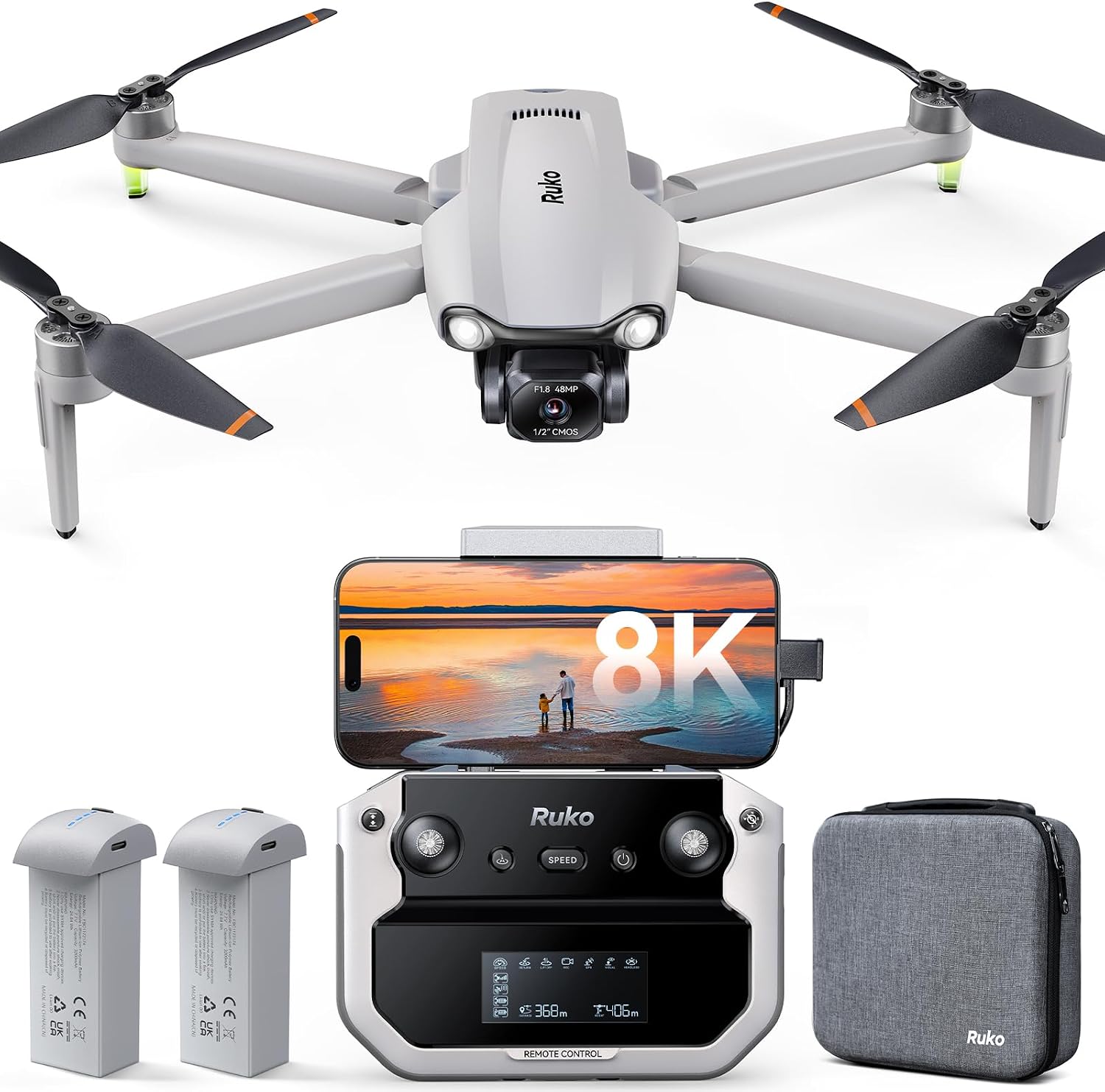
Best First Drone: 2K Mini Drone with Two Batteries
Someone has to say it: this is a trainer, not a camera ship. A 2K camera on a mini airframe will not produce footage you can sell. It will produce footage you can learn on.
That is still a real job. The first twenty flights are about stick feel, orientation, and learning that the controls reverse when the nose points at you. Wrecking a cheap drone teaches you more than babying an expensive one. This listing includes two batteries, which is the one accessory that matters, because a single pack means a short flight and a long wait.
Buy it as your first set of sticks, or as a gift for a kid who has never flown. Do not buy it expecting commercial footage.
How I judge a beginner drone
Five things, in this order.
Flight time in real conditions, not the box number. Heat, wind, and payload all cut into it, so I assume 30 to 40 percent loss before I plan anything.
The camera and gimbal. Mechanical stabilization and sensor size beat megapixel counts, every time.
The batteries. How many are in the box, what replacements cost, and how the packs handle heat and cold. I have lost packs to Phoenix summers, and I have watched batteries refuse to charge below 50°F. Cycle life is the hidden cost of this hobby.
The app. Firmware updates, account walls, and how it behaves when the phone rings. If the app is bad, the drone is bad.
Parts and support. Props should not cost like jewelry, and a gimbal guard that does not fit with the case is a guard that ends up in a drawer.
The reference table
Same data, side by side. Every row links to the listing so you can check the details yourself.
| Drone | Best for | Camera and gimbal | In the box | Price |
|---|---|---|---|---|
 Visit on Amazon → DJI Mini 4K Fly More Combo |
Most beginners, travel, real estate exteriors | 12MP on a three-axis gimbal | 64GB card, backpack, landing pad, card reader, more | Visit on Amazon → |
 Visit on Amazon → DJI Avata 2 Fly More Combo |
FPV motion, gap flying, cinematic shots | 4K with a 155-degree field of view and guarded props | Three batteries, Goggles 3, RC Motion 3, SD card, landing pad | $1,149.00 |
 Visit on Amazon → DealPrice touch screen remote drone |
GPS safety features and a phone-free controller | 4K on a three-axis gimbal | SD card, touchscreen remote | Visit on Amazon → |
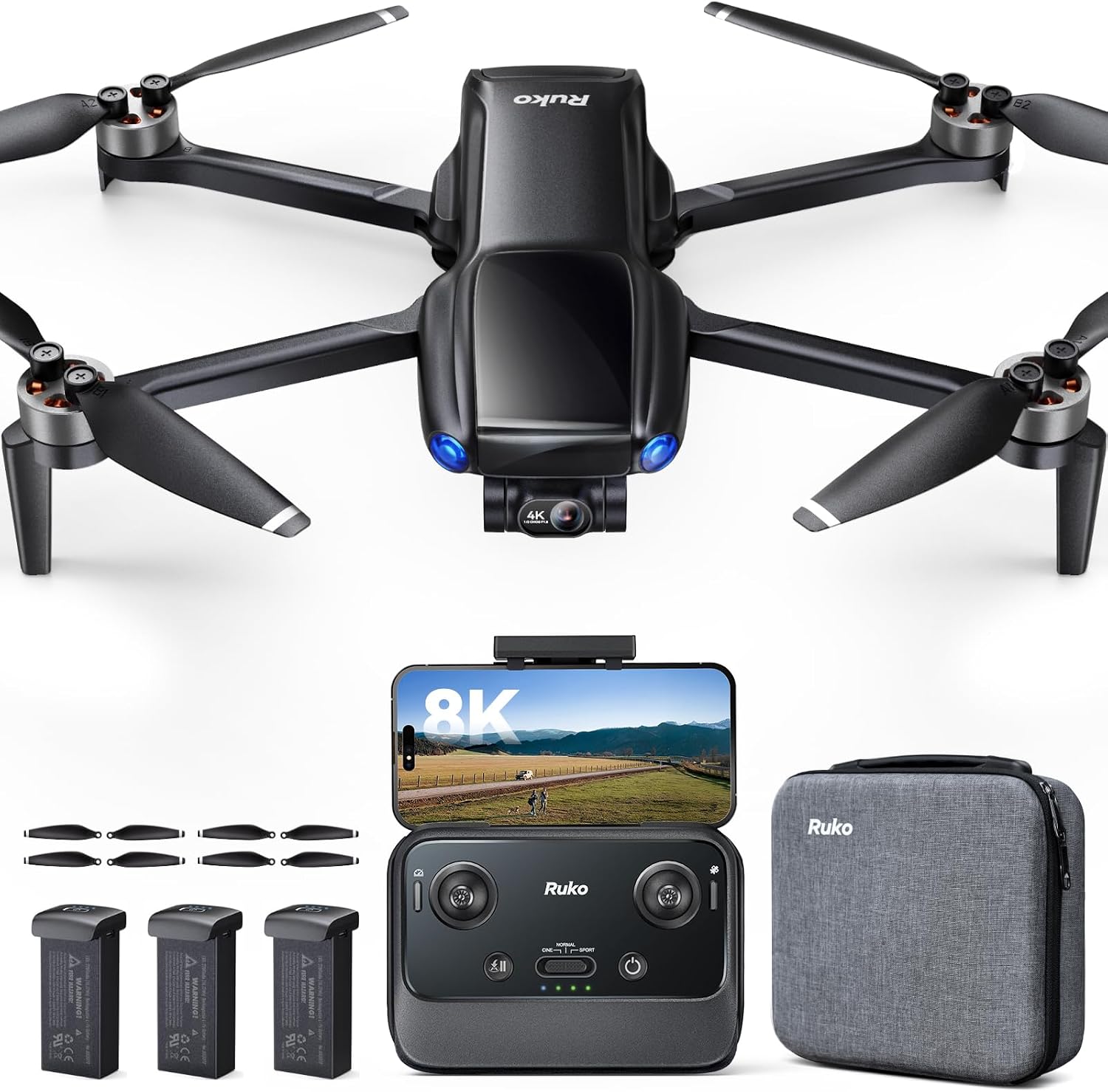 Visit on Amazon → 2K mini drone with two batteries |
First stick time, gifts for beginners | 2K camera | Two batteries | $39.99 |
What the specs will not tell you
Long range is a marketing number until you know the link standard and what your local rules allow. The distance on the box is about the radio, not about whether your video feed survives a treeline.
Rainproof and waterproof are different words, and only one of them means you can fly in weather. Treat any rain claim as splash resistance.
Digital zoom is cropping. On a small sensor, cropping costs you resolution fast, so frame with the aircraft, not the zoom button.
Weight decides paperwork. Under 249 grams is the class most beginners should stay in, and it is also the segment I expect to keep growing as rules tighten around heavier aircraft.
Finally, the app is part of the product. Firmware updates behind an account wall, a controller that needs your phone, a companion app that crashes at the worst moment: all of that is the difference between a tool and a toy.
Should you buy the DJI Mini 4K Fly More Combo?
Yes, for most people. It is the safest first camera drone here: light enough to travel with, stabilized well enough to sell footage from, and bundled with the accessories that nickel-and-dime you later. Just plan your flights around 30 to 40 percent less time than the box claims.
Should you buy the DJI Avata 2 Fly More Combo?
Yes, if you want FPV motion rather than stills and slow pans. The three batteries, goggles, and motion controller make it a complete kit on day one, and one-push acrobatics means you do not need manual mode to get interesting footage. Budget a few sessions to adjust to goggles.
Should you buy the DealPrice touch screen remote drone?
Maybe. The feature list is strong, and GPS return to home plus a phone-free controller is a genuinely good combination for a solo operator. Go in knowing that obstacle avoidance is a net, not a pilot, and that app support and parts availability are the unknowns you cannot test from a listing.
Should you buy the 2K mini drone?
Yes, as a trainer. Two batteries in the box is the right call for a beginner, and the price of a mistake is low. Just do not expect client-ready footage out of a 2K mini camera.
The bottom line
Match the drone to the job. For travel and client stills, the sub-250 g DJI Mini 4K Fly More Combo is the one I would buy with my own money. For cinematic FPV motion, the Avata 2 combo is the complete kit. For GPS safety features on a budget, the touchscreen DealPrice is worth a look with clear eyes about support. And for a first twenty flights, the 2K mini drone with two batteries is exactly what it should be: cheap, capable of teaching you, and not pretending to be a production camera.