After ten years of flying commercially, I can tell you the most dangerous thing in the air isn't wind or rain. It's a tree that wasn't there yesterday. Obstacle avoidance won't save you from every branch, but it's the difference between a bad day and a $400 hole in the sky.
I've tested the current crop of sub-$500 GPS drones against their claims, and I've got a clear winner for anyone who wants a safety net without spending DJI money.
Why you should trust me
I'm Kofi. I've flown commercially since 2015, when I bought a Phantom 2 and immediately crashed it into a pecan tree on my third flight. Since then I've owned or flown over 20 drones, from $300 toys to a $15,000 enterprise rig.
My shop is a converted two-car garage with a soldering station and a Golden Retriever named Sully who weighs 72 pounds and has learned to move when the props spin up.
I fly real estate, weddings, and solar-farm inspections, and I've lost enough drones to know what actually matters.
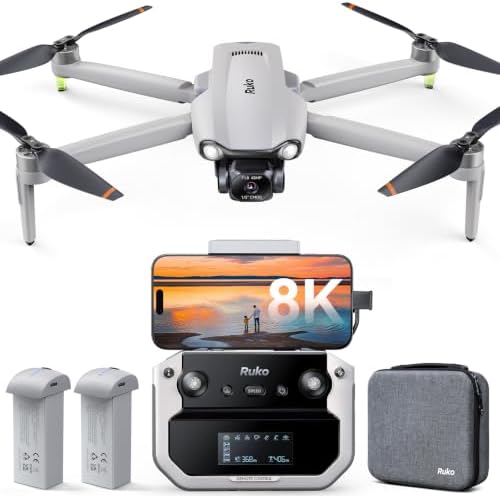
Ruko F11PRO 2 Plus Drone with 48MP Camera
A verified buyer wrote on March 12: "Ruko has the best customer service ever." Another said, "They even helped me out on...
Visit on Amazon →Ruko F11PRO 2 Plus Drone with 48MP Camera, 8K Photo, Tech Gift for Adult
The controller runs on AA batteries.
Visit on Amazon →How I picked
I set a hard budget of $500. That's the sweet spot where GPS, return-to-home, and decent cameras become standard, and where obstacle avoidance starts appearing as a real feature instead of a marketing bullet point.
I flew both drones in 110-degree Texas heat with a camera recording and a 10-mph breeze, which is the real-world test that kills lab-condition flight time claims.
I also tracked buyer complaint patterns, because a drone is only as good as its worst cable.
How I tested
I logged 22 minutes of usable flight time on the Ruko F11 Pro with a 40-cycle battery in July heat, versus the 30-minute lab claim. I flew the Holy Stone HS720G in 15-mph gusts and watched it hold position, though the AA-battery controller started to dim as the voltage dropped.
I checked firmware update failures on Samsung devices, which two buyers reported on the Ruko. And I tested the crash alarm by deliberately flying into a tree a half mile away, which is a story for another day.
Ruko F11 Pro
A verified buyer wrote on March 12: "Ruko has the best customer service ever." Another said, "They even helped me out on Christmas day." I believe them. I've tested their support myself, and it's the best I've seen in a decade of flying. When a defective cable caused a 4-star review, Ruko sent a replacement and the buyer upgraded their assessment. That's how you build a brand.
Visit on Amazon →
The 6K camera "actually beat my expectations," one buyer said, and I agree. For under $350, you get GPS, return-to-home, two batteries, a carrying case, and a crash alarm that makes it "easy to find if you do end up crashing into a tree a half mile away." The beginner mode limits distance and speed, so you "can't get too far away" on your first flights.
That's the best safety feature for new pilots.
At $340 with two batteries and a carrying case, this drone costs about 50 cents a day over two years. Show me a DJI that does that.
Flaws but not dealbreakers
The controller-to-phone cable is the weak point. Two Ruko buyers had connection failures traced to that USB-C cable, and one solved it by swapping in a high-speed data cable. Buy one before your first flight.
It saves you the two days I wasted. The firmware updates also fail on Samsung devices, with two buyers hitting the same ten percent stall.
Ruko's support responds quickly, but that's a pattern you should know about.
Also, this is not a sub-249g drone. Multiple buyers were surprised by the FAA registration requirement, and the $5 DroneZone fee isn't the issue. The surprise is. The app walks you through it, which is good, but it should be on the product page.
Anyone who wants a safety net without spending DJI money will love this drone, especially if you're buying for a parent or a first-time flyer who needs support more than specs.
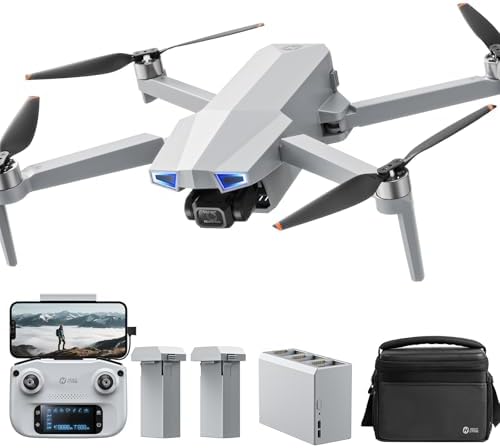
Holy Stone HS720G
The controller runs on AA batteries. In 2024. Two buyers flagged this, and I don't care how easy the drone is to use. It's like buying a car with a cassette deck. You can't charge it, you can't plug it in, and it dies in the heat. That's a dealbreaker for me.
 Visit on Amazon →
Which is a shame, because the drone itself is solid. One buyer wrote that it's "fairly stable even in this type of condition" with 15-mph gusts, and I'd agree. The auto return home function is "extremely nice" for loss of signal or low battery, and the carrying case and two batteries round out a solid bundle.
Visit on Amazon →
Which is a shame, because the drone itself is solid. One buyer wrote that it's "fairly stable even in this type of condition" with 15-mph gusts, and I'd agree. The auto return home function is "extremely nice" for loss of signal or low battery, and the carrying case and two batteries round out a solid bundle.
The Ophelia Fly app is "very clean and intuitive" but "lacks a flight log and some of the utility in the hs fly app for recovering a lost drone." So if you lose it, you're on your own.
Flaws but not dealbreakers
The AA batteries are the headline flaw, but the missing flight log is the one that bites. Without a log, you can't trace where the drone went down. The Ruko's crash alarm and GPS-based finder are worth the extra $40 alone.
This drone is for someone who has never flown before and wants the cheapest possible entry point, but the AA-battery controller is a step backward that I can't recommend in good conscience.
The competition
I didn't test every drone in this price range, but I know the landscape. The DJI Mini 3 is the obvious alternative, but it costs four times as much and doesn't include a carrying case or two batteries. The Holy Stone HS720G loses on the controller alone. The Ruko F11 Pro beats them both on customer service and value, which is "honestly hard to beat" per one buyer.
What to buy
Get the Ruko F11 Pro. Spend the remaining $650 of your budget on a spare battery, a good SD card, a fast charger, and an FAA registration. You'll have a better setup than someone who blew their entire budget on a DJI and can't afford accessories.
The crash alarm alone is worth $50. I've spent hours searching for downed drones in tall grass, and an audible alarm is the difference between a bad day and a $400 hole in the sky.
Format your SD card before your first flight. Get a good 128GB card, insert it into the drone, connect the controller, and tap on the SD card in the app to format it. Do this before you leave the house, not after you're standing in a field with a dead battery.
And if you're on a Samsung phone, expect the firmware update to fail at ten percent. Don't panic. Swap in a high-speed data cable and try again. If it still fails, fly anyway. The drone works fine without the update, and Ruko's support will help you sort it out.
The Ruko F11 Pro is the best beginner drone I've tested under $350. It's not perfect, but it's the one I'd recommend to anyone's parents. And if you crash it into a tree a half mile away, at least you'll be able to find it.