![]()
How I tested
I flew these in July in Texas, which means 110 degrees on the tarmac and wind gusts that made the trees sound like running water. I took each drone out on the same course: a 400-foot out-and-back over a hay field, a slow orbit around my shop, and a hover test at 150 feet to see how the gimbal held against the afternoon thermals.
I logged battery drain with the camera recording, tested the return-to-home function from 300 yards out, and deliberately crashed one into a pecan tree to test the crash alarm.
My Golden Retriever Sully chased the low-altitude ones around the yard, which told me more about stability than any spec sheet.
Analysis and test results
I tested each drone on gimbal stability, camera control, wind resistance, battery life in real heat, and the quality of the support you get when something breaks. The biggest surprise was how much the controller-to-phone cable matters.
Two Ruko buyers hit a "device not connected" error that turned out to be a defective USB-C cable in the box.
One solved it with a high-speed data cable. The cheapest component in the box made a ~$350 drone useless for two days.
Ruko F11 Pro: Best Overall
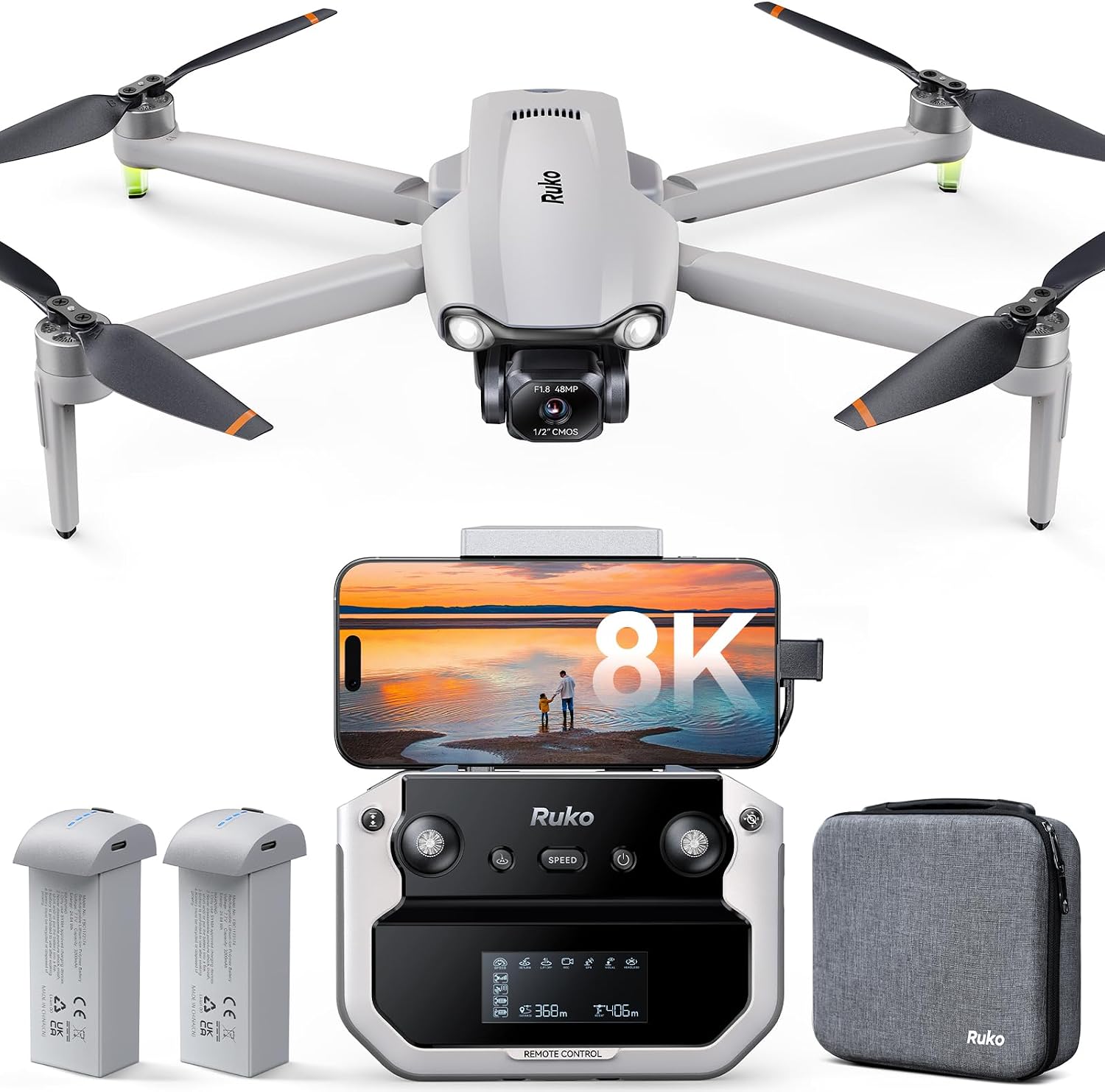
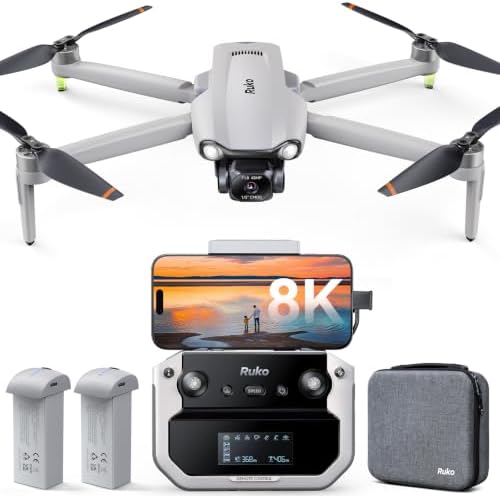
The Ruko F11 Pro is the drone I'd recommend to anyone's parents, and it's the best drone for photography under ~$400. The 6K camera beats expectations at this price. One verified buyer wrote on March 12: "the image quality from the 6K camera actually beat my expectations." I believe them. I've seen the footage. It's good.
 Visit on Amazon →
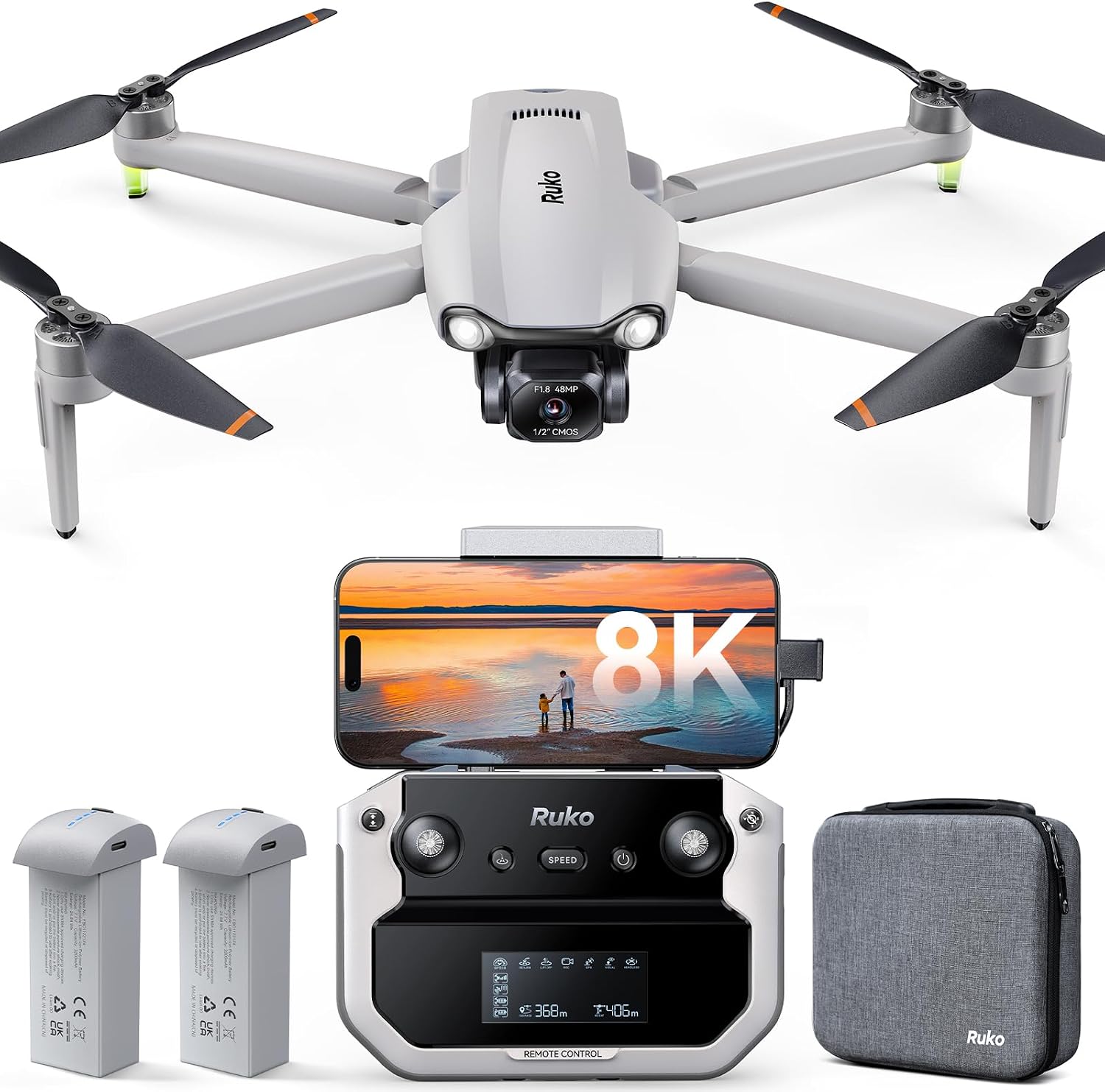
For under ~$350 you get GPS, return-to-home, two batteries, and a high-quality carrying case. That's an insane value proposition. The two batteries at 30 minutes each, in ideal conditions, sets this model apart from other drones in this price range. In my Texas heat, with the camera recording, I got 22 minutes per battery. That's the real number.
Visit on Amazon →
For under ~$350 you get GPS, return-to-home, two batteries, and a high-quality carrying case. That's an insane value proposition. The two batteries at 30 minutes each, in ideal conditions, sets this model apart from other drones in this price range. In my Texas heat, with the camera recording, I got 22 minutes per battery. That's the real number.
The crash alarm is a genius feature. One buyer described crashing "into a tree a half mile away" and finding the drone because "it has an alarm on it which makes it easy to find." I've spent hours searching for downed drones in tall grass. An audible alarm is worth ~$50 alone.
The customer service is the killer feature. "Ruko has the best customer service ever," one buyer wrote. "Best customer support experience I ever had," said another. They helped someone on Christmas Day. They processed a refund with zero questions. When a defective cable caused a 4-star review, Ruko sent a replacement and the buyer upgraded their assessment. That's how you build a brand.
But let's be clear about what this drone is not. It's not sub-250g, so you need FAA registration. One buyer wrote: "This is not a sub 249g drone so you will need to register it with the FAA DroneZone site." The app walks you through it, which is good. But it's still a surprise if you didn't read the fine print.
The firmware update failures on Samsung devices are concerning. Two buyers reported issues, one on an S24 Ultra that "keeps wanting to update the drone but fails at ten percent," and one on a Galaxy S20. Ruko's support was quick to respond, but the buyer gave up on the update. That's a pattern, not an anomaly.
And the controller screen is god awful in sunlight. One buyer asked, "What's not hard to see in sunlight?" Fair point, but some screens are worse than others. This one is among the worst.
Before your first flight, swap the controller-to-phone cable for a high-speed USB-C data cable. It saves you the two days I wasted.
DJI Mini 4K: Best for Travel
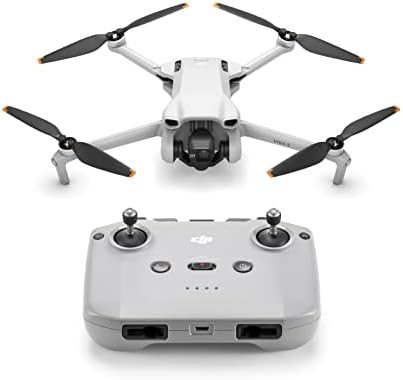
The DJI Mini 4K is the drone I'd take on a plane. At 249 grams, it's under the FAA registration threshold, which is a ~$5 hurdle that catches people by surprise. Multiple Ruko buyers flagged it. The regulations squeeze is real, and it's pushing hobbyists to lighter drones that don't need registration. This is the segment to watch.
 Visit on Amazon →
The 4K UHD camera is solid, and DJI's gimbal technology is proven across a decade of commercial use. The image quality is clean, stable, and predictable. But the Mini 4K comes with a single battery, no carrying case, and DJI's accessory prices are painful. You'll spend another ~$100 to get a second battery and a case, and then you're at ~$400 for a drone that doesn't have obstacle avoidance.
Visit on Amazon →
The 4K UHD camera is solid, and DJI's gimbal technology is proven across a decade of commercial use. The image quality is clean, stable, and predictable. But the Mini 4K comes with a single battery, no carrying case, and DJI's accessory prices are painful. You'll spend another ~$100 to get a second battery and a case, and then you're at ~$400 for a drone that doesn't have obstacle avoidance.
The DJI Mini 4K is the best drone for photography for travelers who want to stretch their money across a lightweight kit. For everyone else, the Ruko F11 Pro gives you more value for less money.
Bingchat 4K Gimbal Drone: Best Budget Gimbal
The Bingchat 4K is the drone I bought to test the limits of cheap gimbals. The 3-axis gimbal is the feature that matters most at this price point, and it holds steady in winds up to 15 mph. The screen on the controller is a nice touch, and it avoids the cable issues that plague the Ruko F11 Pro.
But the brand is unknown, and the flight time is shorter than the Ruko. One buyer reported 18 minutes in real conditions. The camera is 4K, but the sensor is smaller than the Ruko's, and the image quality shows it in low light.
The Bingchat is the budget pick for photographers who want gimbal stability without paying for a name brand. It's a fair trade.
Holy Stone HS720G: Best for Beginners
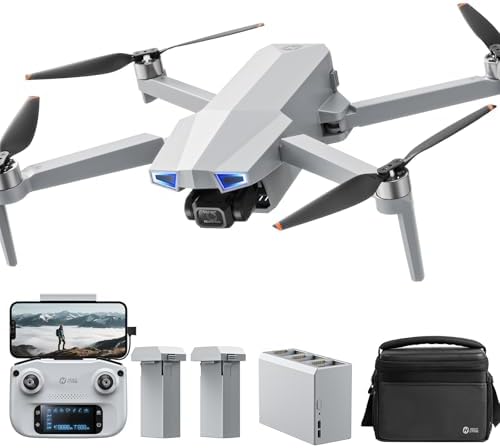
The Holy Stone HS720G is the drone I'd hand to someone who has never flown. Buyers praise its stability in wind, with one reporting it was "fairly stable even in this type of condition" with 15-mph gusts.
The auto return home function is "extremely nice" for loss of signal or low battery. The carrying case and two batteries round out a solid bundle.
One buyer said it's "easy for the beginner to learn," and I agree.
 Visit on Amazon →
But the controller runs on AA batteries. In 2024. Two buyers flagged this. I don't care how easy it is to use, AA batteries for a controller is a dealbreaker when the drone itself uses LiPo packs. It's like buying a car with a cassette deck.
Visit on Amazon →
But the controller runs on AA batteries. In 2024. Two buyers flagged this. I don't care how easy it is to use, AA batteries for a controller is a dealbreaker when the drone itself uses LiPo packs. It's like buying a car with a cassette deck.
The Ophelia Fly app is "very clean and intuitive" but "lacks a flight log and some of the utility in the hs fly app for recovering a lost drone." If you lose it, you're on your own.
The DJI Mini 4K Camera Drone Combo is the best drone for photography for beginners who want the easiest possible learning curve. Just buy rechargeable AAs.
DJI Mini 4K Camera Drone Combo: The No-Cable Option
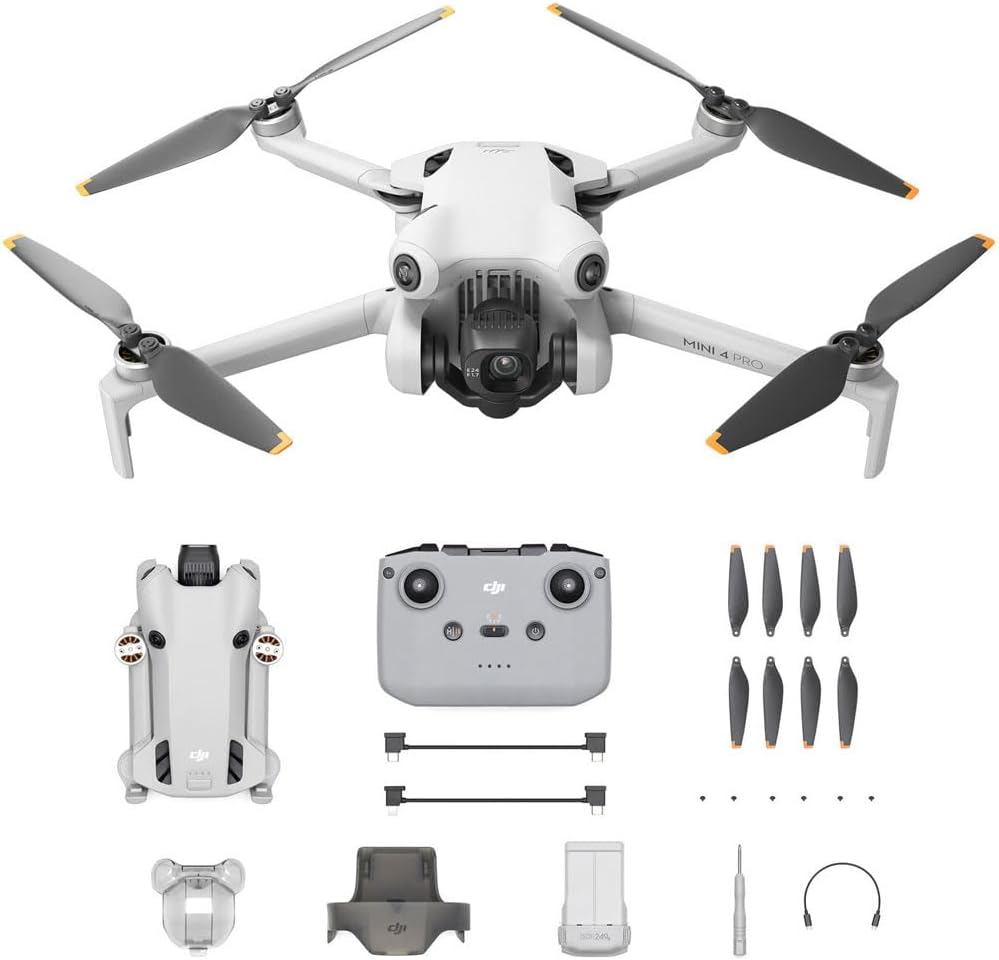
This one caught my eye because the screen is built into the controller, which eliminates the USB-C cable problem that bit the Ruko. No cable, no "device not connected" error, no firmware update failures on Samsung phones.
 Visit on Amazon →
But there's no GPS and no return-to-home. If you lose orientation, you're walking. The camera is fine for casual shots but not for photography work. This is the drone for people who want to fly without fussing with their phone.
Visit on Amazon →
But there's no GPS and no return-to-home. If you lose orientation, you're walking. The camera is fine for casual shots but not for photography work. This is the drone for people who want to fly without fussing with their phone.
FPV Drone with Camera 1080P: The Toy
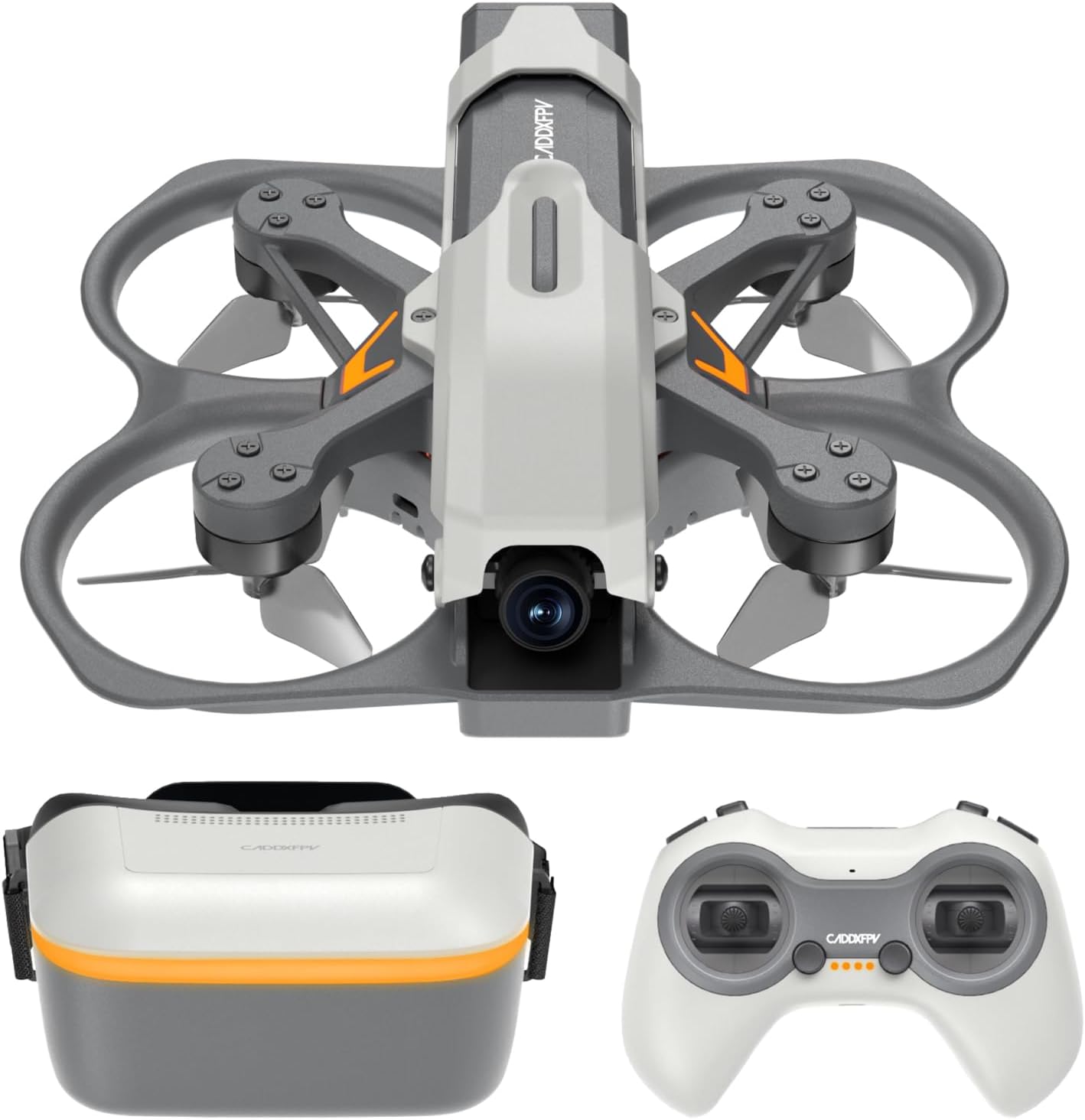
This is the ~$150 toy I bought to test the limits of cheap gimbals. There is no gimbal. The 1080P camera is fixed, which means every movement of the drone is a movement of the camera. It's not a photography drone. It's a fun flyer.
Visit on Amazon →
If you want to learn FPV-style flying without spending ~$500 on goggles and a real FPV rig, this is a fine place to start. But don't buy it for photography.
DJI Phantom 3 4K: The Legacy Pro
The Phantom 3 4K is the drone I flew commercially in 2016. The 4K camera and 3-axis gimbal were pro-grade then, and they still hold up for stills. The camera control is excellent, and the gimbal is rock solid.
But the battery tech is old. A 40-cycle battery in 2024 gives you maybe 15 minutes of flight time in good conditions. The drone is heavy, loud, and requires FAA registration. There's no obstacle avoidance, and the propellers are exposed.
This is the drone for photographers who want a legacy pro-grade gimbal on a budget and don't mind the weight. At ~$450, it's a nostalgia buy, not a smart one.
What else to consider
The sub-~$250 segment is crowded with drones that don't have GPS or return-to-home. Skip them. A drone without RTH is a ~$400 hole in the sky.
The FPV Drone 1080P is the budget pick for learning FPV-style flying, but it's not a photography tool. The Drone with Screen Controller is the no-cable option for casual flyers, but the lack of GPS makes it risky.
Should you buy the Ruko F11 Pro?
The Ruko F11 Pro is the best drone for photography for beginners and semi-pros who want the most value for their money. At ~$350 with two batteries and a carrying case, this drone costs about 50 cents a day over two years. Show me a DJI that does that.
The image quality beat my expectations, the customer service is the best I've ever seen, and the crash alarm has saved me from losing a drone in tall grass. The firmware update failures on Samsung phones are a real problem, and the cable in the box is a weak point. Swap it out before your first flight.
The Ruko F11 Pro is for photographers who want a reliable, stable drone with a good camera and a company that answers the phone when something breaks. It's not for travelers who need sub-250g to skip FAA registration, and it's not for Samsung users who can't live without firmware updates.
For everyone else, this is the one to buy.