The gap between a $70 toy and a drone that shoots footage a client will actually accept has never been smaller, and that is exactly what makes shopping for beginner 4K camera drones so confusing. Two listings can look nearly identical in the product photos and still differ completely in the parts that decide whether your video is watchable: how the camera is stabilized, what transmission system carries the signal, how many batteries come in the box, and whether the app is stable enough to trust on a shoot day.
This guide looks at six products a new pilot is likely to run into, five flying cameras and one printed guide, and compares them on the things that survive contact with real use. It covers camera stabilization, weight and the registration threshold that follows from it, what actually ships in each bundle, control range ratings, and the app and support ecosystem around each model. Prices move constantly, so nothing here quotes one; every card links to the retailer so you can confirm the current figure, availability, and return terms yourself.
Related: Sub-250g Drone Rules: What Beginners Should Know
Quick answer
The DJI Mini 4K Fly More Combo is the strongest fit for first-time pilots who want stabilized 4K footage and a kit that is ready on day one because it stays under 249 g, stabilizes the camera on a 3-axis gimbal, is rated for 10 km video transmission with auto return, and ships with three batteries in the combo. Choose the Potensic ATOM SE instead when the budget is tighter and you still want a Fly More bundle with a parallel charging hub.
Beginner 4K camera drones worth comparing
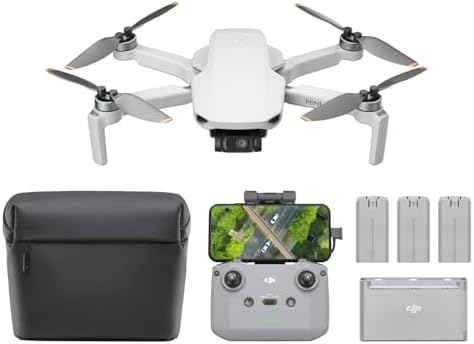
DJI Mini 4K Fly More Combo, Drone with 4K UHD Camera for Adults, Under 249 g, 3-Axis Gimbal Stabilization, 10km Video Transmission, Auto Return, 3 Batteries for 93-Min Max Flight Time, QuickShots
Under 249 g with a 4K UHD camera on a 3-axis gimbal, 10 km video transmission, auto return, and a combo that includes three batteries for up to 93 minutes of combined flight time plus QuickShots automated modes.
Visit on Amazon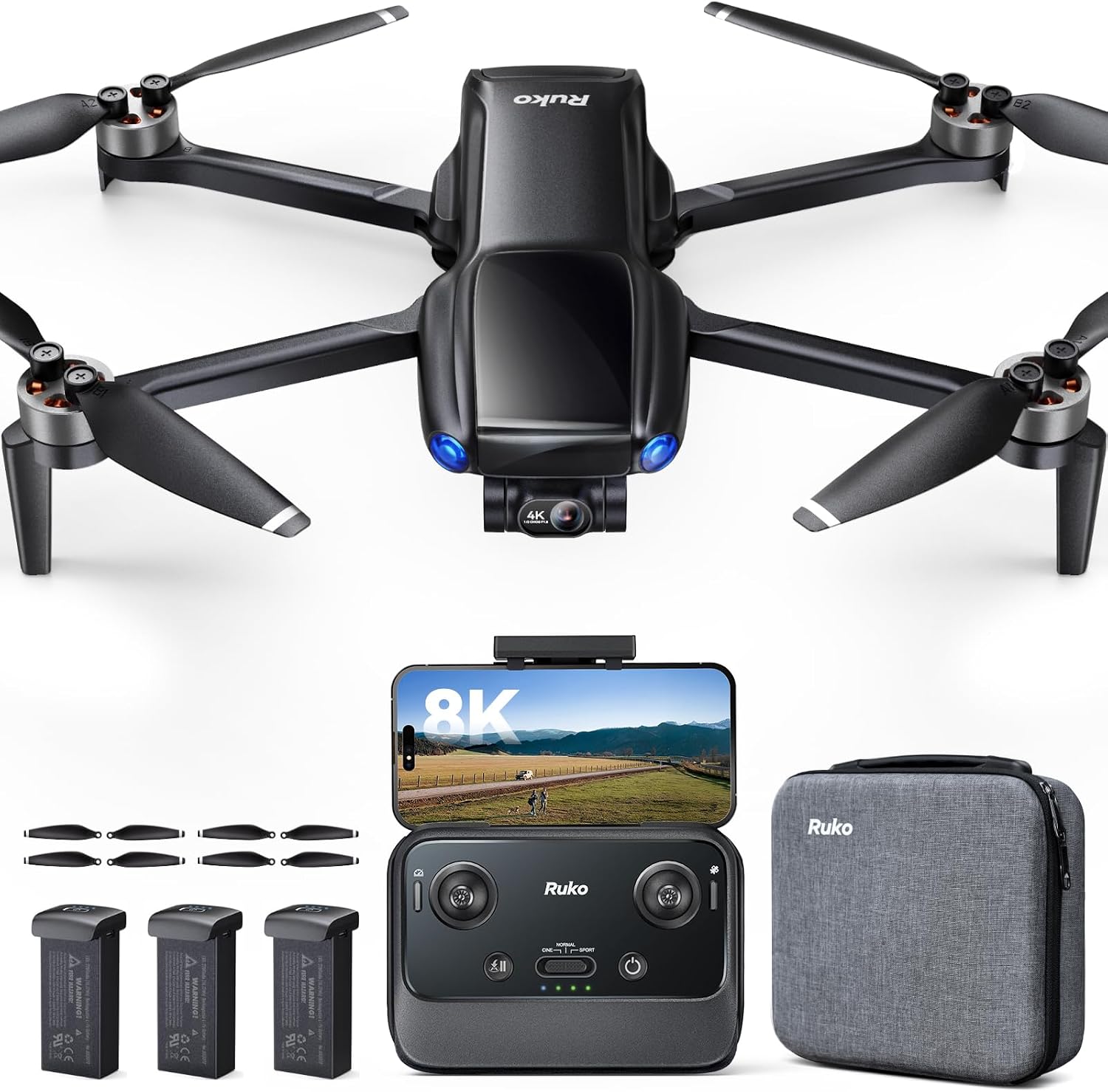
Holy Stone GPS Drone with 4K UHD Camera for Adults Beginner; HS360S 249g Foldable FPV RC Quadcopter with 10000 Feet Control Range, Brushless Motor, Follow Me, Smart Return Home, 5G Transmission
A 249 g foldable GPS quadcopter with a 4K UHD camera, a rated 10,000 ft control range, brushless motors, Follow Me subject tracking, and Smart Return Home.
Visit on Amazon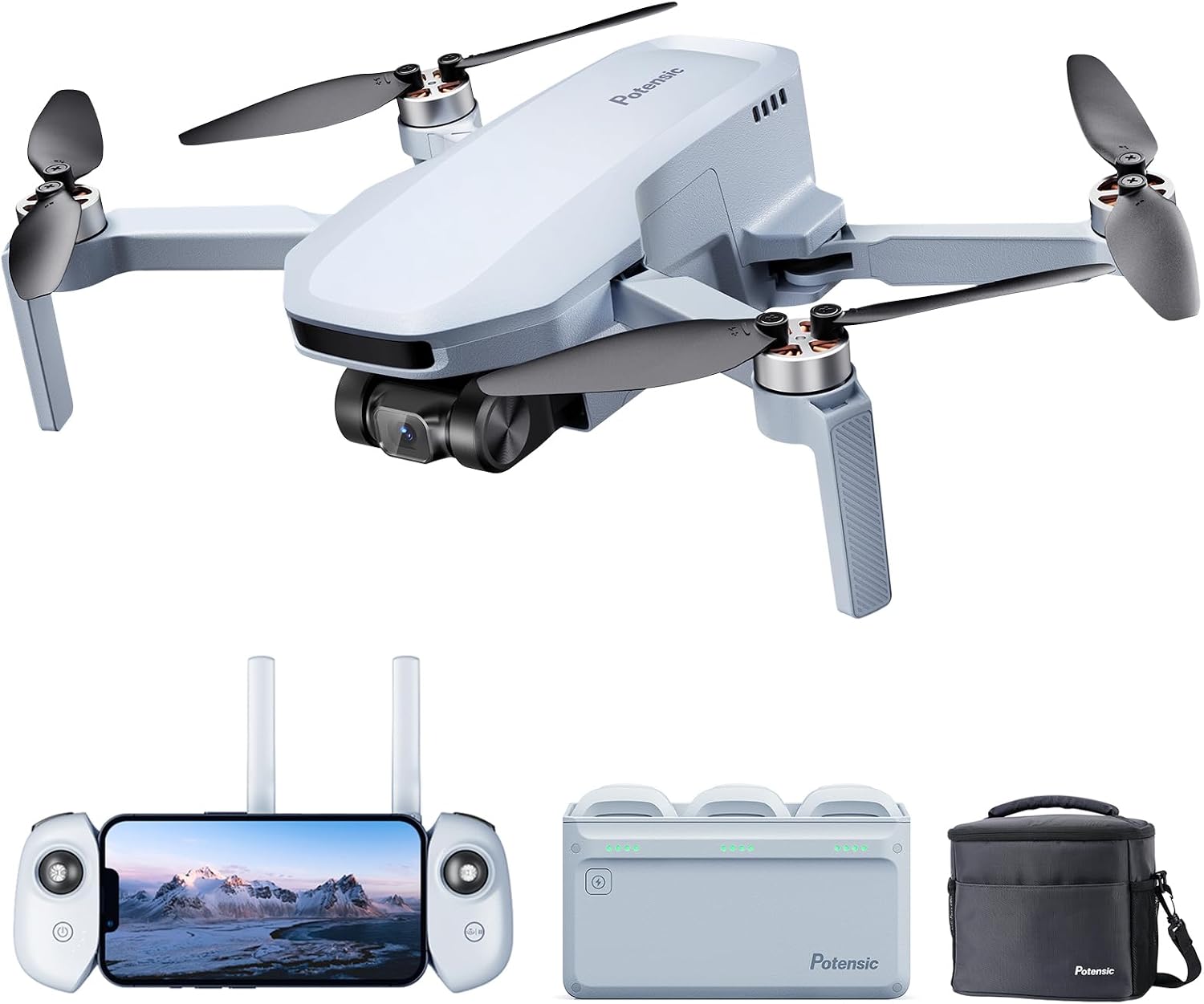
Potensic ATOM SE GPS Drone with 4K EIS Camera, Under 249g, 93 Mins Flight, 4KM FPV Transmission, Brushless Motor, Max Speed 16m/s, 60W Fast Parallel Charging Hub, Fly More Combo
Under 249 g with a 4K EIS camera, 4 km FPV transmission, brushless motors, a rated 16 m/s top speed, and a Fly More Combo built around a 60 W parallel charging hub.
Visit on Amazon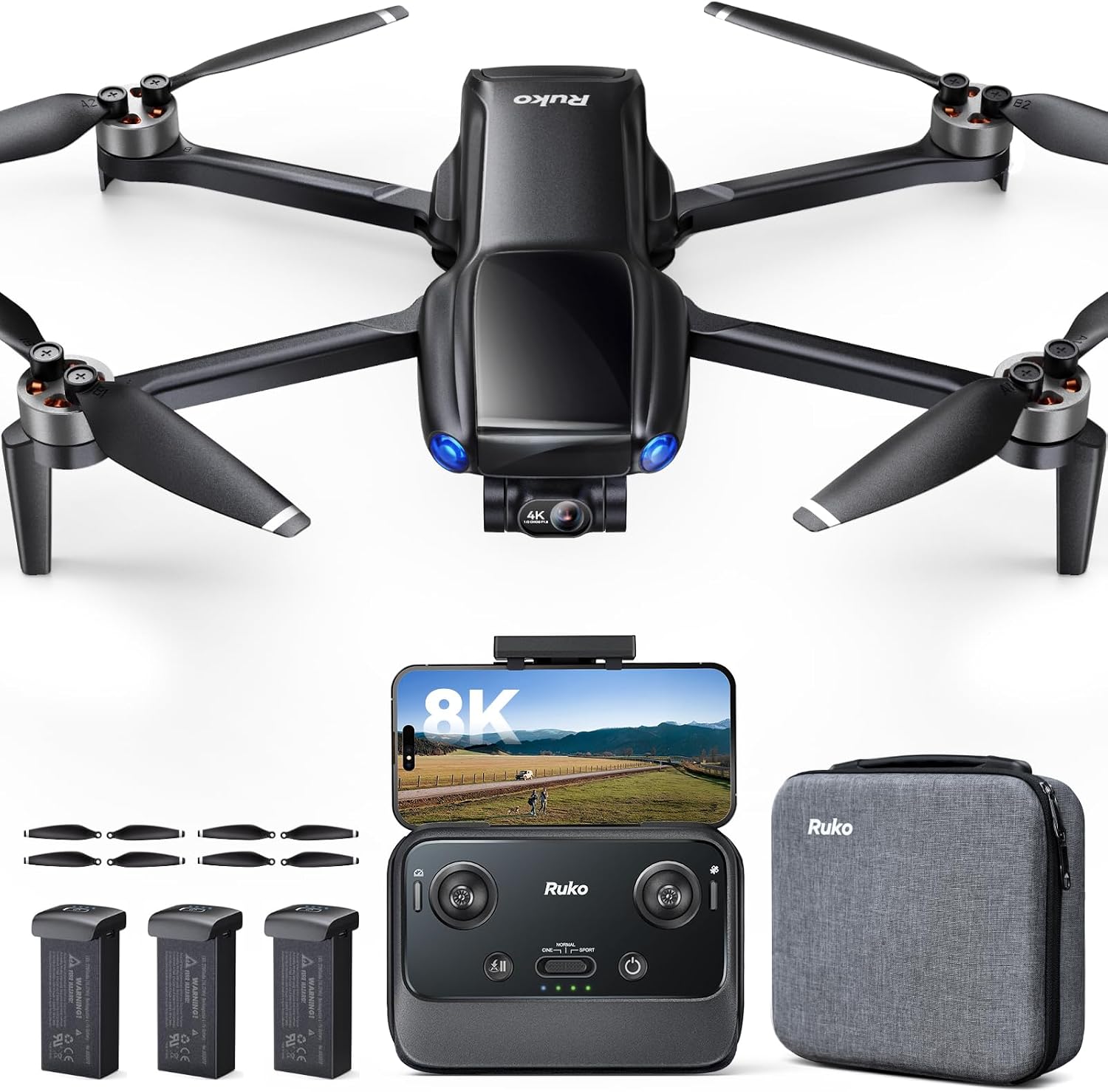
Oddire Mini Drone with Camera - 1080P HD Foldable Drone with Stable Hover, Gravity Control, Auto-Follow, Trajectory Flight, 90° Adjustable Lens, One Key Take Off/Land, 3D Flip, Drones for Adults
Check current price
A foldable 1080P camera drone with stable hover, gravity control, auto-follow, trajectory flight, a 90 degree adjustable lens, one key take off and land, and 3D flip.
Visit on Amazon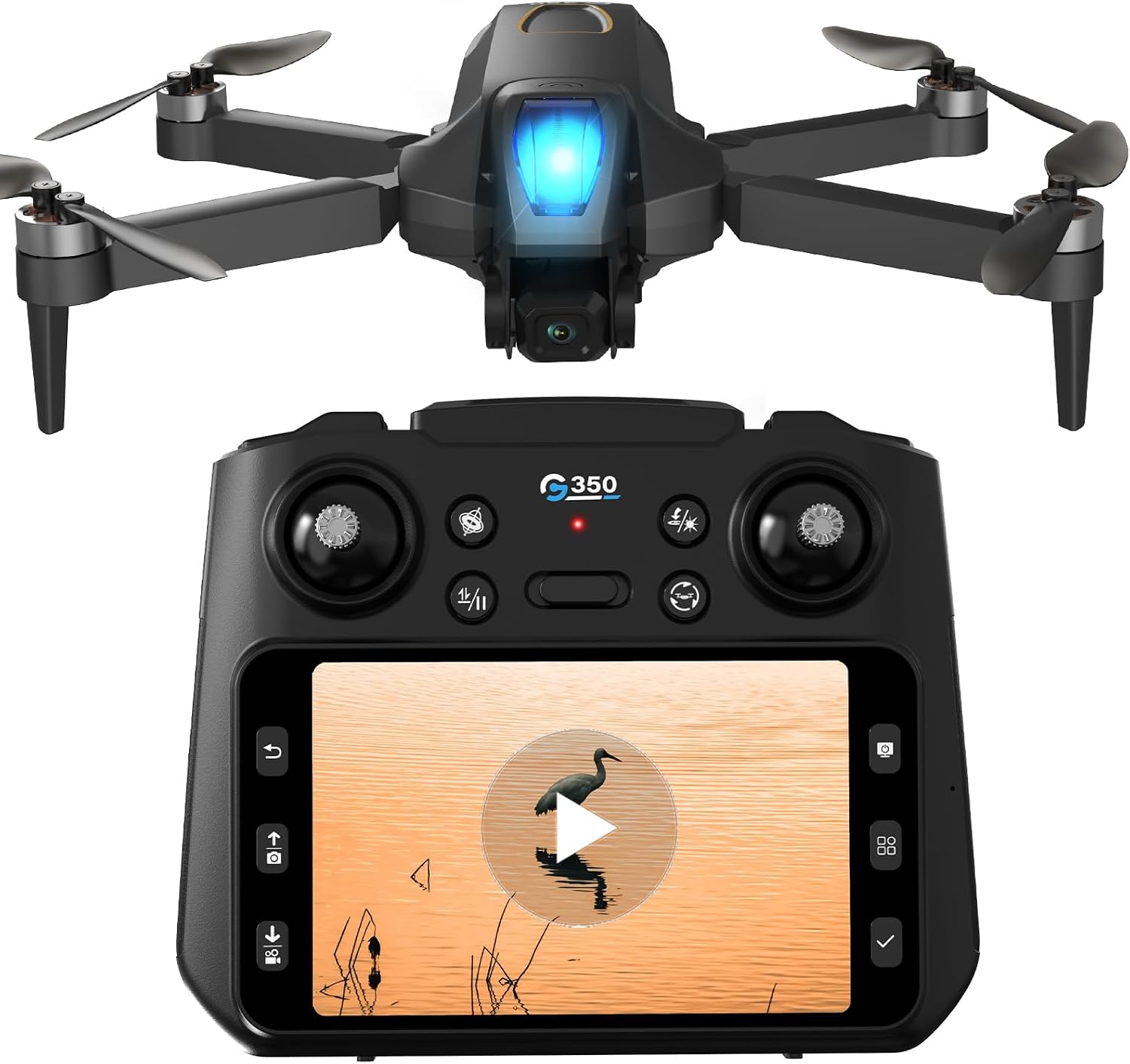
Drone with 1080P Camera 4.5″LCD Screen Remote, FPV RC Drones for Adults
Check current price
An FPV RC drone with a 1080P camera and a 4.5 inch LCD screen built into the remote, so the live view does not depend on a phone mount.
Visit on Amazon
DRONE PHOTOGRAPHY: A Beginners Guide To Aerial Imaging, Next Level Videography/Photography
A printed beginner's guide to aerial imaging and next level videography and photography, aimed at pilots who want to understand framing and exposure rather than only stick inputs.
Visit on AmazonPrices and availability may change. Check the retailer for current details.
How these products were compared
This guide compares camera resolution and stabilization type, weight and the registration threshold that follows from it, what ships in each bundle, control range and transmission ratings, and the app and support ecosystem around each model. Product names, images, and retailer links are matched by product identifier so that every card points to the product shown in it.
The specifications here come from the manufacturer listings rather than from instrumented testing, and manufacturer figures are treated as manufacturer figures. A 93 minute flight claim, for example, is a combined figure across the batteries in a kit, not a promise that a single pack will stay in the air for an hour and a half. That distinction matters more than any single number on a spec sheet, because it is the difference between a bundle that covers a full afternoon of flying and one that gets you 20 minutes and a walk back to the car.
How to choose the right drone
Start with weight, because it decides your paperwork before it decides your footage. A drone under 249 g sits below the registration threshold that applies to heavier aircraft in the United States and several other markets, and that is why three of the models here advertise it directly. If you plan to travel, shoot in public parks, or simply want fewer forms between you and a Sunday flight, the sub-250 g class is where the beginner market has concentrated. If you never plan to leave your own property, the lighter frame buys you less.
Then look at how the camera is stabilized, because this is the single biggest difference between the cheap end and the mid-range. Electronic image stabilization, usually labeled EIS, crops and shifts the frame to smooth out motion. It works, and it is lighter and cheaper, but it softens detail in wind and leaves visible warping in hard turns. A 3-axis mechanical gimbal physically holds the sensor steady, which is why the DJI Mini 4K's footage holds up in conditions where a crop-based system starts to struggle. The camera is roughly half of what you are buying, and stabilization is half of the camera.
Batteries come third, and they are the cost most beginners underestimate. A single-battery drone is a 20 minute drone once you account for the trip out, the flight, and the trip home. A Fly More style bundle with a charging hub changes the shape of a session entirely, and the Potensic ATOM SE and DJI Mini 4K combos both lean on that idea. Read the bundle contents carefully rather than the headline flight time, and count how many packs you are actually receiving.
Finally, decide how much of your budget belongs to learning versus flying. The DRONE PHOTOGRAPHY guide is the only non-aircraft product in this roundup, and it earns its place because framing, exposure, and shot planning are the skills that separate a hobbyist from someone whose footage gets used. If you already understand composition, spend the money on a better camera instead; if you do not, a book is cheaper than a second drone.
One more decision point worth planning around: the app. Every model here except the book depends on a phone or a dedicated controller screen for live view and settings, and the remote with the built-in 4.5 inch LCD display exists specifically to remove that dependency. If you dislike flying with a phone clamped to a controller, that design choice is worth more than a small bump in camera resolution.
DJI Mini 4K Fly More Combo
This is the pick because it combines the three things beginners get wrong most often: weight, stabilization, and batteries. The aircraft is under 249 g, the camera is a 4K UHD unit on a 3-axis gimbal rather than an electronic crop, and the combo ships with three batteries for up to 93 minutes of maximum flight time. Add 10 km video transmission, auto return, and QuickShots automated flight patterns, and you have a drone that can produce usable footage on the first afternoon without a long learning curve.
The trade-off is straightforward. It is the most expensive product in this roundup, and the Fly More premium only pays off if you will genuinely fly three packs in a session. Pilots who fly once a month are paying for batteries that spend most of their life in storage. The listed specifications also do not mention obstacle avoidance, so treat this as a drone that depends on your eyes and your return-to-home settings rather than one that will stop itself. For a beginner, that is a reason to practice in open space, not a reason to avoid the model.
Alternatives to consider
The Holy Stone GPS Drone with 4K UHD Camera is better suited to pilots who want GPS return features, Follow Me tracking, and a rated 10,000 ft control range at a lower entry point, while the Potensic ATOM SE is a stronger fit when you want a Fly More bundle with a 60 W parallel charging hub and a 4K EIS camera under 249 g.
The Oddire Mini Drone with Camera, the Drone with 1080P Camera and 4.5 inch LCD Screen Remote, and the DRONE PHOTOGRAPHY guide cover different jobs. The Oddire is a foldable 1080P flyer with hover, gravity control, auto-follow, and trajectory flight, which makes it a low-stakes way to build stick time. The LCD-screen remote model solves the phone problem for pilots who want live view on the controller itself. The book is for the pilot who has a drone already and wants better footage out of it, which is often the cheapest upgrade available.
Day-to-day use and maintenance
Battery care is where beginners lose the most money. Lithium polymer packs prefer to be stored partway charged rather than full or empty, they dislike being left in a hot car, and they can refuse to charge when they are cold, which is why a winter session sometimes starts with a pack sitting indoors for a while. Heat is the other half of the story: sustained flying in high summer temperatures accelerates the chemical wear that eventually shows up as swelling and a pack that will not hold voltage under load. Store packs cool, charge them the day you fly rather than the week before, and retire any pack that puffs.
The airframe itself needs very little. Keep the gimbal guard on in transit, check props for nicks before each session, and replace a damaged prop rather than flying through the vibration it causes. Firmware updates usually run through the manufacturer app, so budget a few minutes before a flight rather than at the field, and recalibrate the compass if the app asks after you have moved locations.
A few practical habits pay off early. Register and label the aircraft if its weight puts you over the threshold, check for airspace restrictions before you drive anywhere, and keep line of sight on the drone rather than burying your head in the screen. Fly the first few packs in an open field with no people, no roads, and no trees, and practice the return-to-home function until you trust it. Obstacle avoidance, where a model offers it, is a safety net and not a pilot.
Buying checklist
- Measure your storage and travel space, since every aircraft here folds or packs into a case.
- Choose camera resolution and stabilization type based on normal use rather than an occasional edge case.
- Confirm that the exact bundle includes the number of batteries you need, not just the headline flight time.
- Read the cleaning and maintenance instructions, especially the battery storage guidance.
- Verify the current retailer price, availability, and return terms.
Final recommendation
Choose the DJI Mini 4K Fly More Combo when you want the most capable camera and stabilization in this group, you are comfortable flying under 249 g, and you will use the three included batteries. Choose the Potensic ATOM SE when you want a sub-250 g Fly More kit with a parallel charging hub and a lower entry cost. Choose the Holy Stone GPS Drone with 4K UHD Camera when GPS return features and a long rated control range matter more than gimbal stabilization, and the Oddire Mini Drone with Camera or the Drone with 1080P Camera and 4.5 inch LCD Screen Remote when you want to learn to fly before spending on a camera platform. Pick up the DRONE PHOTOGRAPHY guide if your drone already flies well and your footage still does not.