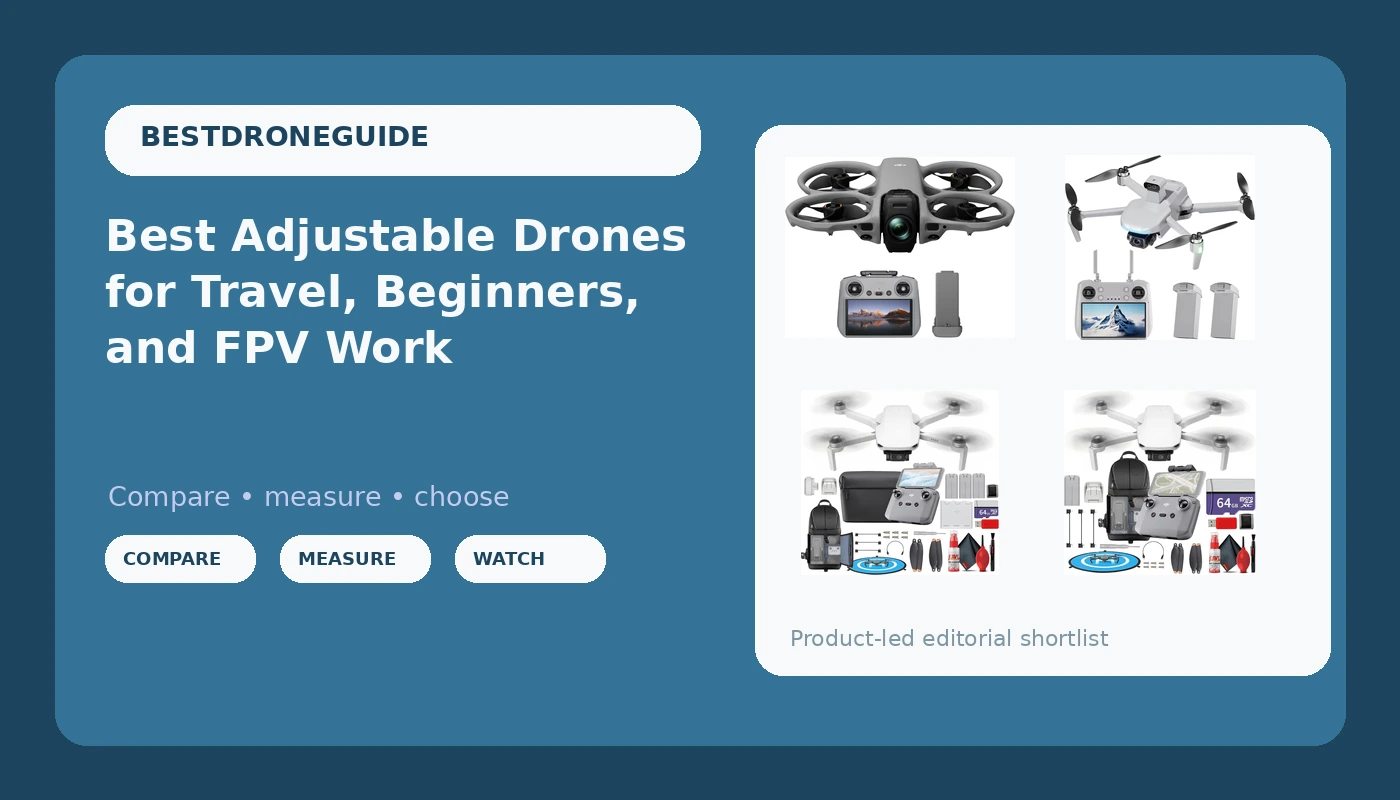
Search for adjustable drones and you get a wall of listings using the word to mean three different things: a lens on a mechanical hinge, a motorized gimbal that re-aims the camera in flight, and footage you re-frame after you land. Those are not the same feature, and they do not cost the same. A hinge is a plastic part on a cheap airframe. A gimbal is a motorized assembly with a control loop behind it. Re-framing is a software trick that only works if the sensor captured enough coverage in the first place. I fly commercially out of Phoenix, mostly real estate and inspection work, and the question I get most from people stepping up from a toy is which of those three is actually worth paying for. Below are six current drones sorted by what adjusts, what that adjustment buys you in the air, and where each one stops being useful.
Related: Why drone flight time claims fall apart in summer heat
Quick answer
The DJI Mini 4K Fly More Combo is the strongest fit for most people shopping for adjustable drones because its 3-axis gimbal lets you re-aim and stabilize the camera in flight, and the combo bundle adds a 64GB card, backpack, landing pad, and card reader you would otherwise buy separately. Choose the DJI Avata 360 (RC 2), 8K 360° Camera Drone instead when you would rather pick the camera angle after the flight than during it.
The adjustable drones worth comparing
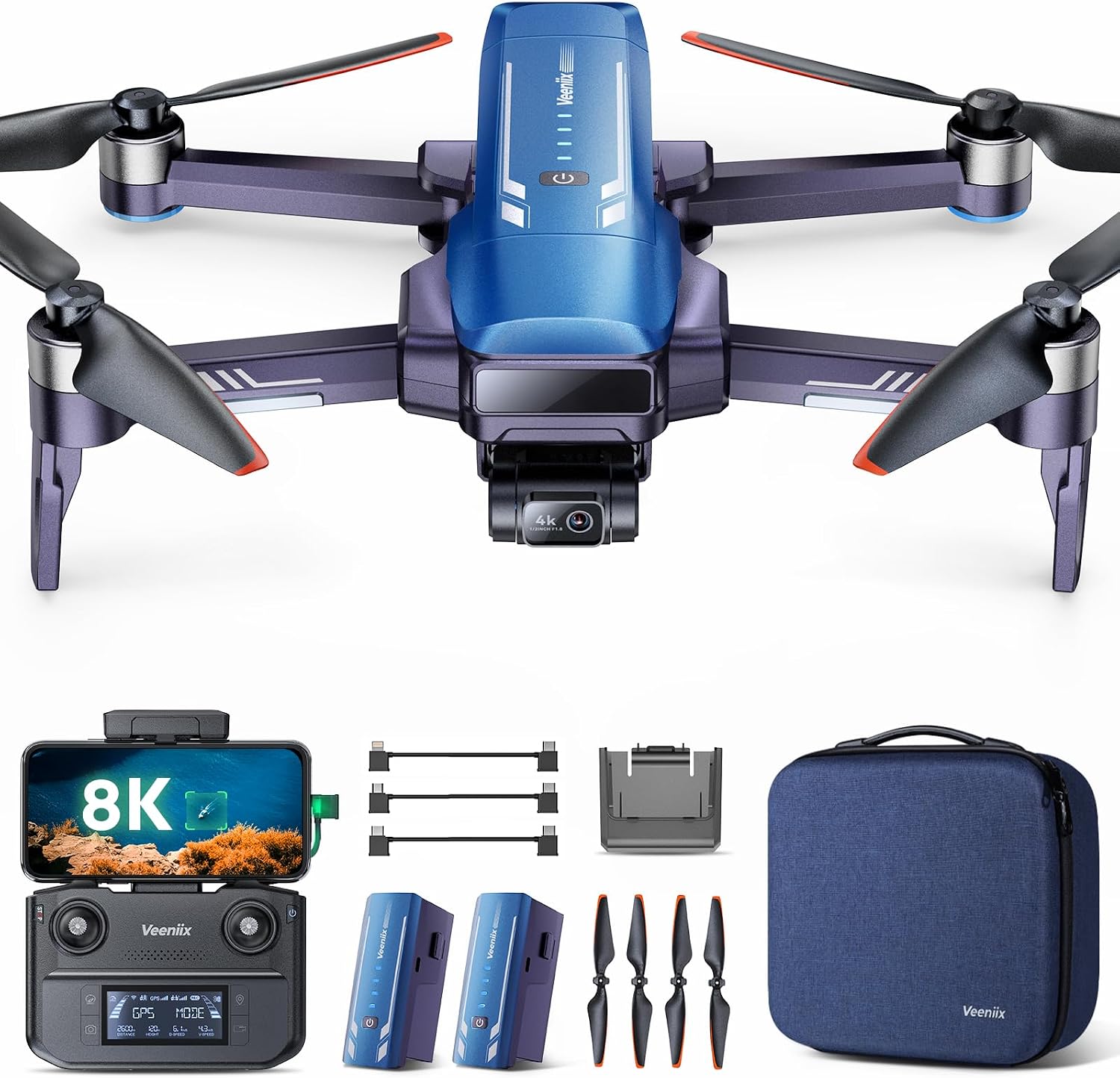
DJI Mini 4K Fly More Combo UHD Foldable Drone | Under 249 g | 12MP Camera, 3-Axis Gimbal, 31-Min Flight Time | For Beginners & Travel Photos + 64GB Card + BackPack + Landing Pad + Card Reader + More
A sub-249 g folding airframe with a 12MP camera on a 3-axis gimbal and 31 minutes of rated flight time, bundled with a 64GB card, backpack, landing pad, and card reader.
Visit on Amazon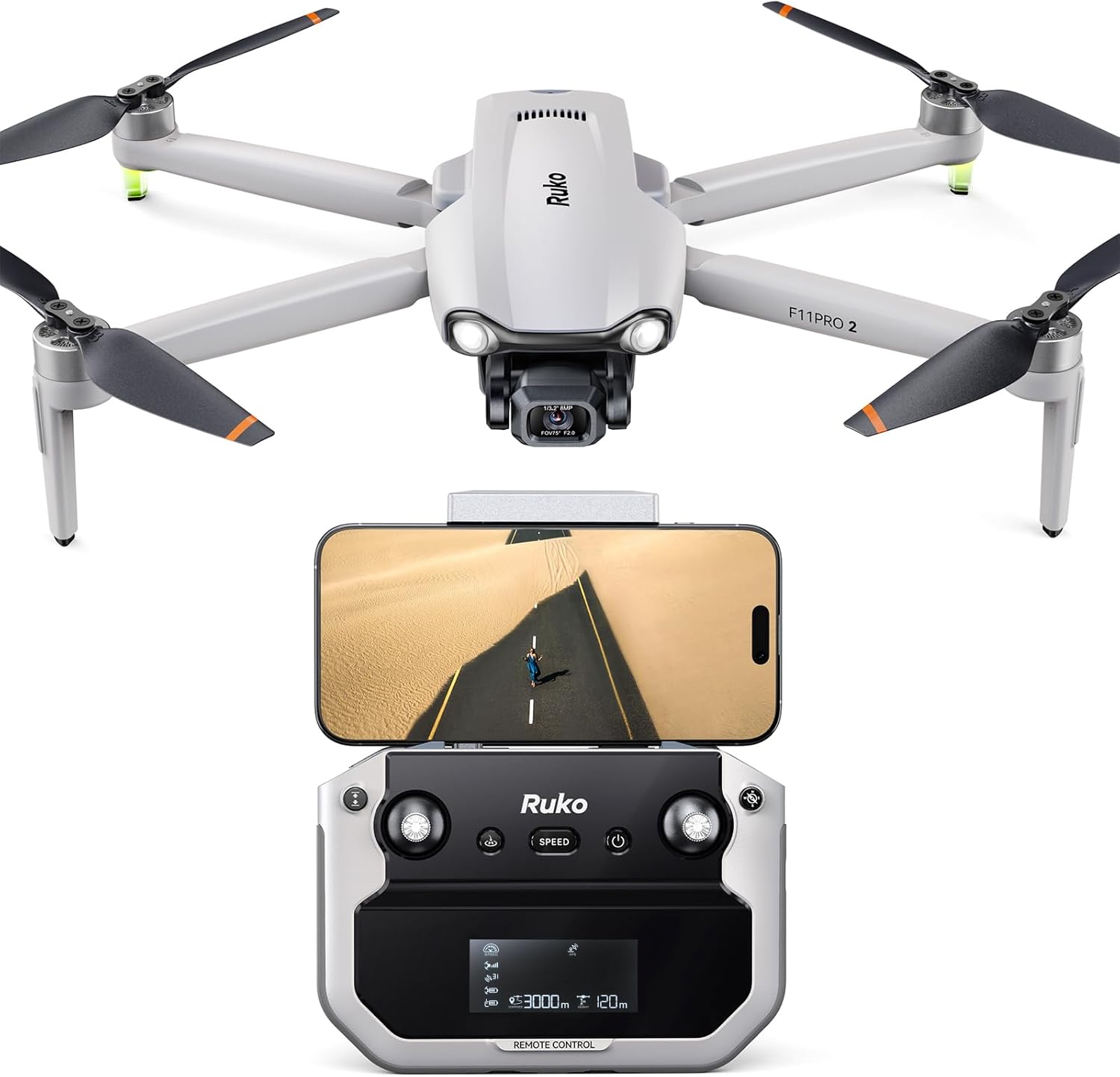
DJI Mini 4K Lightweight UHD Drone, Under 249g | 12MP Camera, 3-Axis Gimbal, 10 km Video Transmission, 31-Min Flight Time | For Beginners & Travel Photography + 64GB Card + BackPack + Landing Pad +More
Check current Amazon price
The same Mini 4K platform with a 12MP camera and 3-axis gimbal, listed with 10 km video transmission and bundled with a 64GB card, backpack, and landing pad.
Visit on Amazon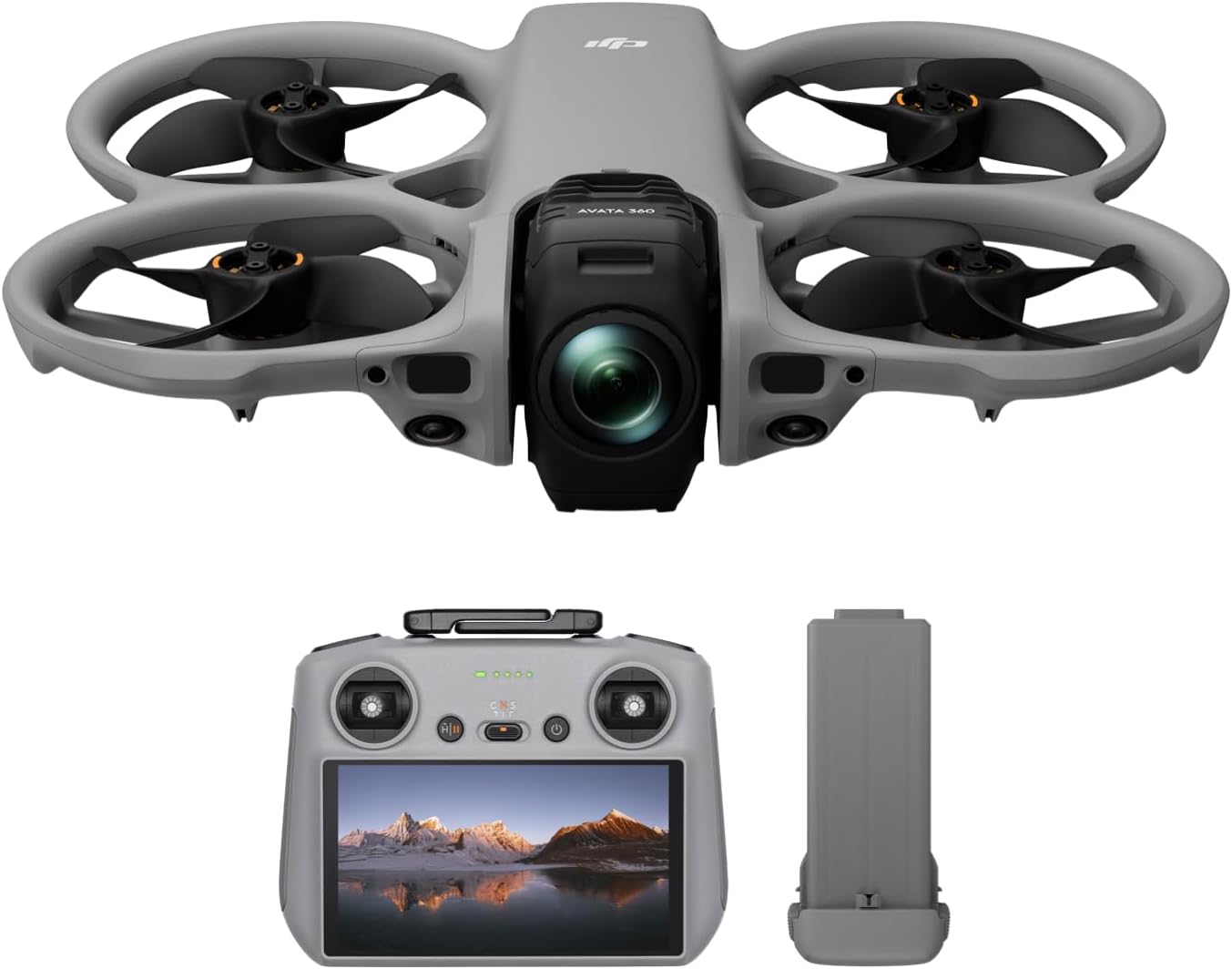
DJI Avata 360 (RC 2), 8K 360° Camera Drone
Check current Amazon price
An 8K 360-degree camera drone that ships with the RC 2 controller, built around footage you re-frame after landing rather than aim during the flight.
Visit on Amazon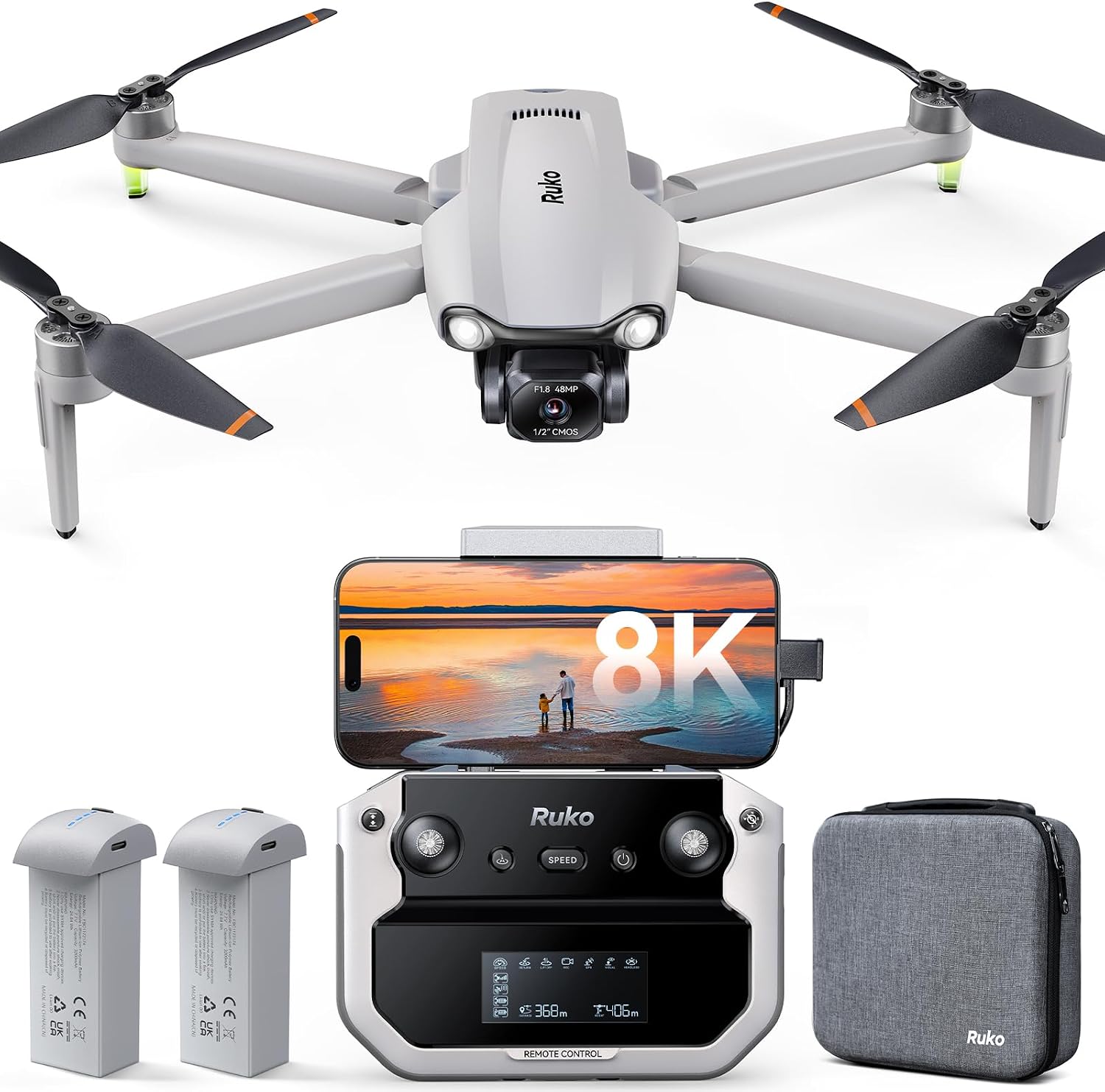
DealPrice Touch Screen Remote Drones with Camera for Adults 4k with Obstacle Avoidance, 3 Axis Gimbal Drone for Adults, GPS Auto Return Home, Follow Me, Long Range, High Wind Resistance, Rainproof, Time-lapse, Flash Lights, Zoom, SD Card Provided
Check current Amazon price
A 4K GPS drone with a 3-axis gimbal, obstacle avoidance, follow-me, auto return home, a touchscreen remote, time-lapse, zoom, and an SD card in the box.
Visit on Amazon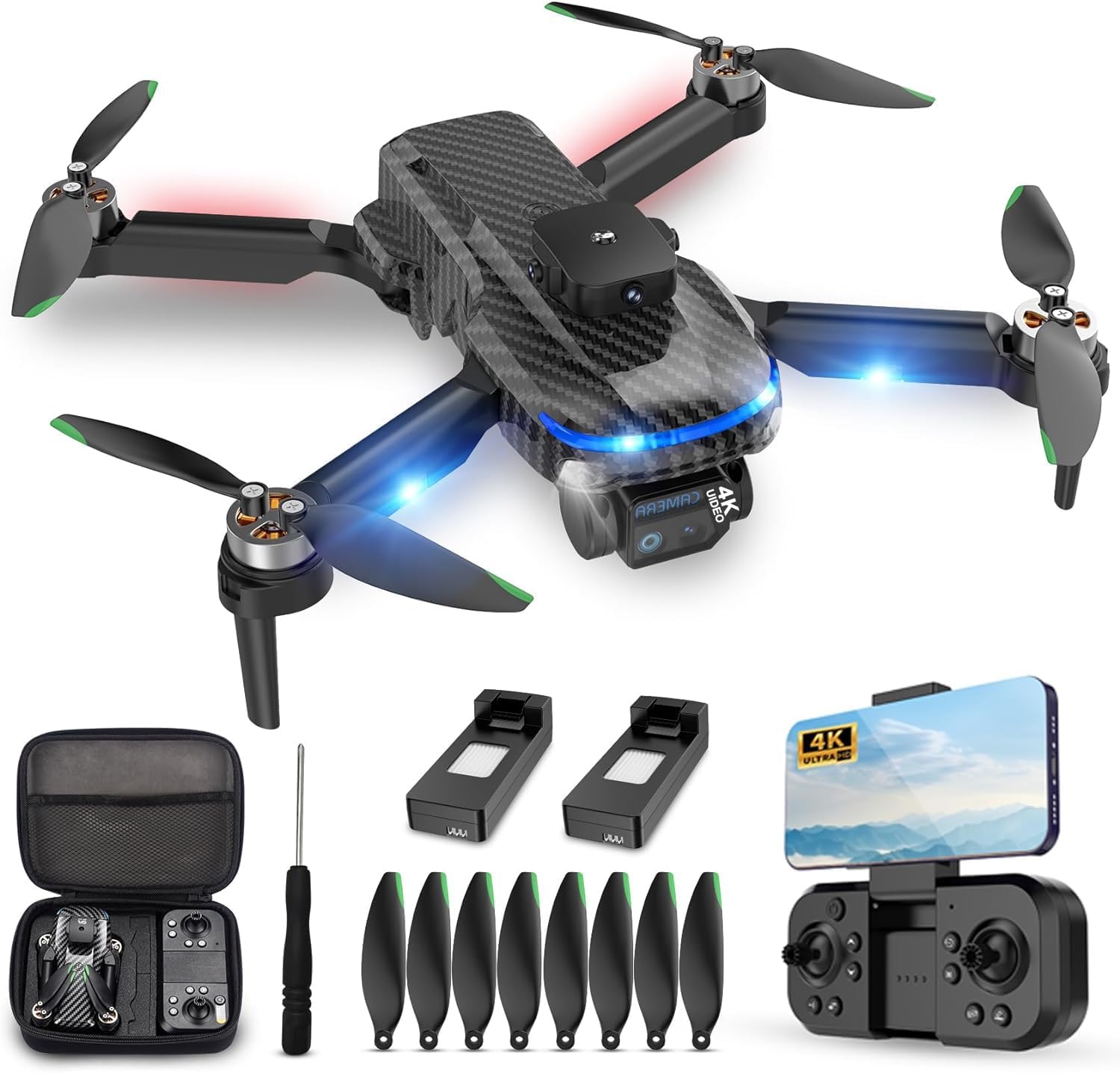
MSMV 4K Camera Drone, Mini FPV Drone with Carry Bag, 4K Dual Cam & 90° Adjustable Lens, 2 Batteries, Altitude Hold, One-Key Takeoff & 360° Flip, Portable RC Drone for Beginners
A beginner mini drone with a 90-degree adjustable lens, dual 4K cameras, two batteries, altitude hold, one-key takeoff and landing, and a carry bag.
Visit on Amazon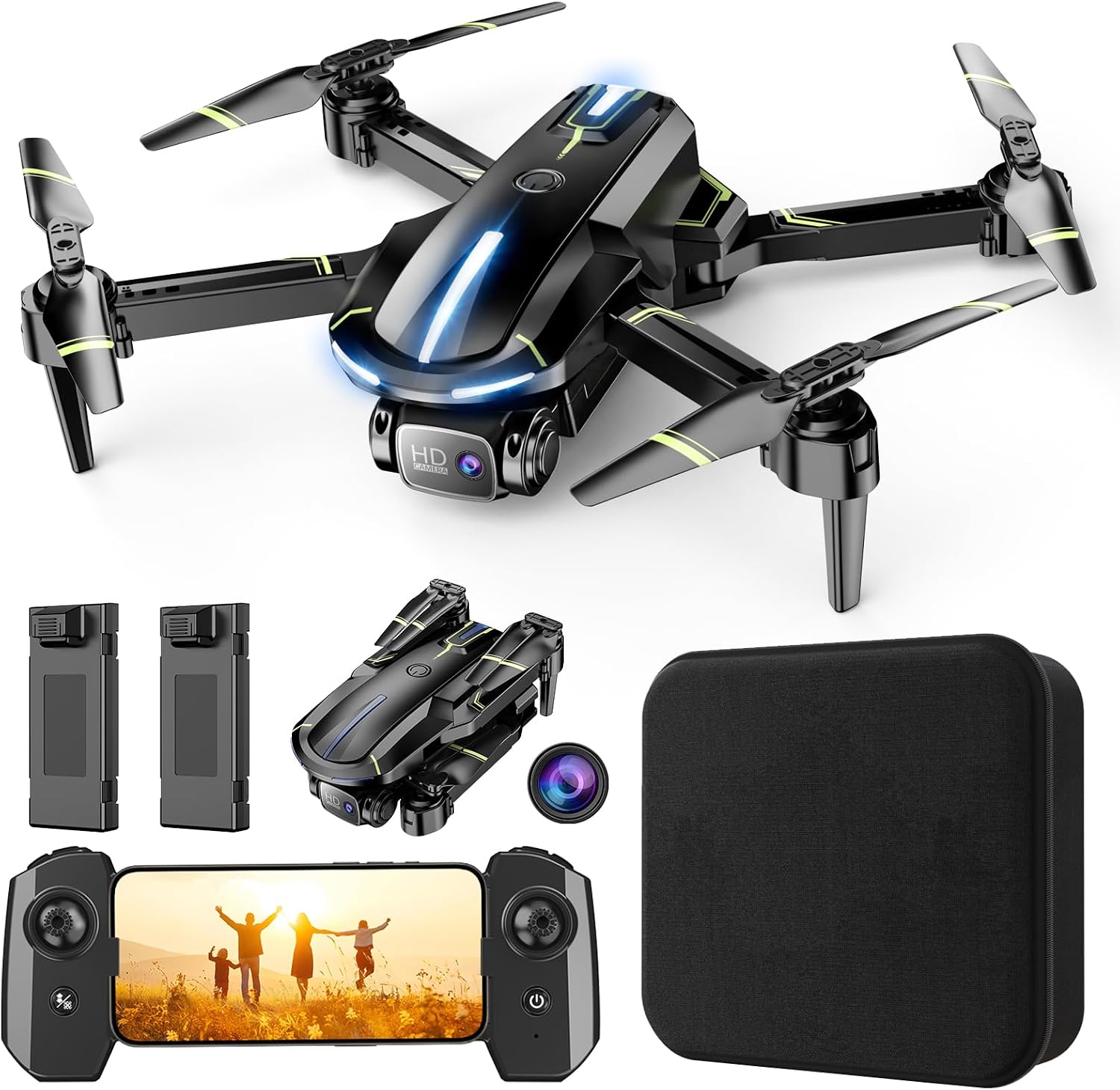
Drone with Camera, Screen on Controller Remote Control Quadcopter FPV Drone
A budget FPV quadcopter with a screen built into the controller, for buyers who want a live view without mounting a phone in a holder.
Visit on AmazonPrices and availability may change. Check the retailer for current details.
How these products were compared
This guide compares what physically adjusts and how you control it, the camera and stabilization hardware, weight and the category each drone falls into, what the bundle actually contains, and the controller and app you have to live with. Product names, images, and retailer links are matched to their exact listings so every card points to the product shown.
Nothing here is presented as a lab test. Specifications and bundle contents come from the product listings, and where a figure is a manufacturer rating it is treated as a rating rather than a measured result. No current price is printed in this article because listings move; use the link on each card to confirm price and availability at the retailer.
How to choose the right adjustable drone
The word adjustable covers three different mechanisms, and the first decision is which one you actually need. A motorized gimbal, which both Mini 4K kits and the DealPrice drone have, moves the camera on three axes while you fly. A hinged lens, which is what the MSMV mini drone offers with its 90-degree adjustable lens, is set before takeoff and stays where you put it. A 360 camera, the whole point of the Avata 360, captures everything around the aircraft and lets you choose the frame afterward.
If you plan to shoot video that anyone else will watch, the gimbal is the feature that matters. A hinge gives you a different angle, not a stable one, so a hinged-lens drone is fine for stills and casual clips and frustrating for anything that needs smooth motion. Three-axis stabilization is what separates usable footage from jitter, and it is the single best reason to spend more on an airframe than the cheapest option on the page.
Weight decides which rules you fly under. The two Mini 4K listings are both under 249 g, which is the tier a lot of buyers now shop inside; the Avata 360, the DealPrice drone, the MSMV, and the budget quadcopter are all heavier and land in a different category. Registration and operating rules vary by country and by how you fly, and they change, so confirm the current requirements where you live before you order rather than after. Heavier also means more momentum in a gust, and a drone with a camera gimbal has more to damage when it lands badly.
The controller is where budget drones give themselves away. The small quadcopter here puts a screen directly on the remote, the DealPrice model uses a touchscreen remote, the Avata 360 ships with the RC 2, and the Mini 4K kits expect you to pair a phone. A screen on the controller means one less battery to manage and one less cable to forget. Whichever you pick, weigh the app as part of the purchase: a drone whose app demands an account before it will push a firmware update is a drone that can strand you at a job site.
Safety features deserve a clear-eyed look. The DealPrice listing includes obstacle avoidance, GPS auto return home, follow me, and a high wind resistance claim, and those are genuinely useful, but avoidance is a safety net and not a pilot. I still fly every aircraft as if the sensors were switched off, because the one time they miss a thin branch is the time you were relying on them. Treat a rainproof rating as splash resistance, not permission to fly in weather.
That is the filter I used for the best adjustable drones here: what the adjustment mechanism actually is, whether the airframe supports the footage you want, and whether the kit saves you a second shopping trip. Rated flight time is the other number to discount. Manufacturer figures assume calm air and a fresh battery, and in real heat and wind you should plan on noticeably less. If you want the longer version of that argument, it is worth reading about how flight time claims hold up in summer heat before you compare endurance numbers between listings.
DJI Mini 4K Fly More Combo
The Mini 4K Fly More Combo is the pick because it does the adjustable part properly and then removes most of the reasons to buy accessories separately. You get a 12MP camera on a 3-axis gimbal, so the camera can be tilted and held steady while the aircraft moves, which is the adjustment that actually changes your footage. The airframe folds and sits under 249 g, the rated flight time is 31 minutes, and DJI positions the whole thing for beginners and travel photography.
The bundle is the argument for this version over the base kit. A 64GB card, a backpack, a landing pad, and a card reader all ship in the box, and those are exactly the items people forget until the night before a trip. The gimbal plus that accessory stack is why this is the version I would hand to someone who wants one purchase and no follow-up research.
The trade-off is that the adjustment stops at the gimbal. This is a single fixed lens with no optical zoom and no post-flight reframing, so you compose in the air or not at all. The 12MP camera is modest next to an 8K 360 sensor, and if your work needs heavy crops or wide interactive deliverables, the resolution ceiling will find you. There is also no obstacle avoidance listed for this platform, which means the safety net is your own line of sight and your own judgment.
Alternatives to consider
The DJI Mini 4K Lightweight UHD Drone is better suited to buyers who already own a decent backpack, cards, and a landing pad, while adding a listed 10 km video transmission figure to the same 12MP, 3-axis gimbal, sub-249 g platform. If you are replacing an older drone and only need the aircraft, that listing trims the bundle instead of the camera.
The DJI Avata 360 (RC 2), 8K 360° Camera Drone is a stronger fit when you want the most adjustable framing on the page. Capturing 8K 360 means the camera angle becomes an editing decision, which is a real advantage for tight interiors, events, and anything where you cannot predict which direction matters. It ships with the RC 2 controller and it costs and weighs more than the Mini 4K pair, so it rewards people who will actually use the reframing.
The DealPrice Touch Screen Remote Drones with Camera for Adults 4k, the MSMV 4K Camera Drone, and the Drone with Camera, Screen on Controller cover the rest of the range. The DealPrice model is the feature-heavy option with a 3-axis gimbal, obstacle avoidance, GPS return home, follow me, time-lapse, zoom, and a touchscreen remote. The MSMV is the true hinge drone here, with a 90-degree adjustable lens, dual 4K cameras, and two batteries in a carry bag. The small screen-on-controller quadcopter is the cheapest way onto this list and the one to choose only if the budget is fixed.
Day-to-day use and maintenance
Batteries are the real running cost, and heat is what kills them. Store them cool and partly charged rather than full and hot, let them come back to room temperature before charging after a flight, and expect capacity to fade over a couple of seasons of hard use. The MSMV ships with two batteries, which is the right instinct: one battery is a session, two batteries is an outing.
Propellers and gimbal guards are the parts that wear. Check props for nicks after every few flights and replace rather than straighten them, because a prop that costs real money is still cheaper than a vibration that ruins every clip. Keep the gimbal guard fitted in transit, and check that it actually clears the camera with the case closed; a guard that fights the case is a guard people stop using. Wipe the lens with a proper cloth, keep spare cards formatted in the aircraft, and update firmware at home on a full battery rather than in the field on a low one.
For brighter days, an ND filter set is the cheapest way to keep shutter speed sensible in video, and it applies to any of these cameras. Wind is the other daily variable: a drone that holds position in a breeze drains battery faster, and the return-to-home point should be set before takeoff, not after the low battery warning. Finally, confirm the rules that apply to your aircraft and your flying before each new location, since the sub-249 g tier and the heavier tier are not treated the same everywhere.
Buying checklist
- Check the folded size against the bag or case you actually carry, and confirm the gimbal guard fits with the drone stowed.
- Decide which adjustment you need: motorized gimbal for video, hinged lens for angle changes on stills, or 360 capture for post-flight framing.
- Confirm the exact listing includes the card, batteries, and case you are counting on, since bundle contents differ between versions of the same drone.
- Check the weight tier and the current local rules for registration and operation before you order.
- Verify the current retailer price, availability, and return terms through the link on the card.
Final recommendation
Choose the DJI Mini 4K Fly More Combo when you want a stabilized, genuinely adjustable camera in a sub-249 g travel kit and would rather buy the accessories once. Choose the DJI Avata 360 (RC 2), 8K 360° Camera Drone when the frame you want is easier to find in editing than in the air. If the hinge is all you need and two batteries matter more than stabilization, the MSMV covers that job, and the DealPrice drone is the feature-first alternative when obstacle avoidance and a touchscreen remote are on your list. Adjustable drones are only worth the premium when the specific adjustment matches how you shoot.