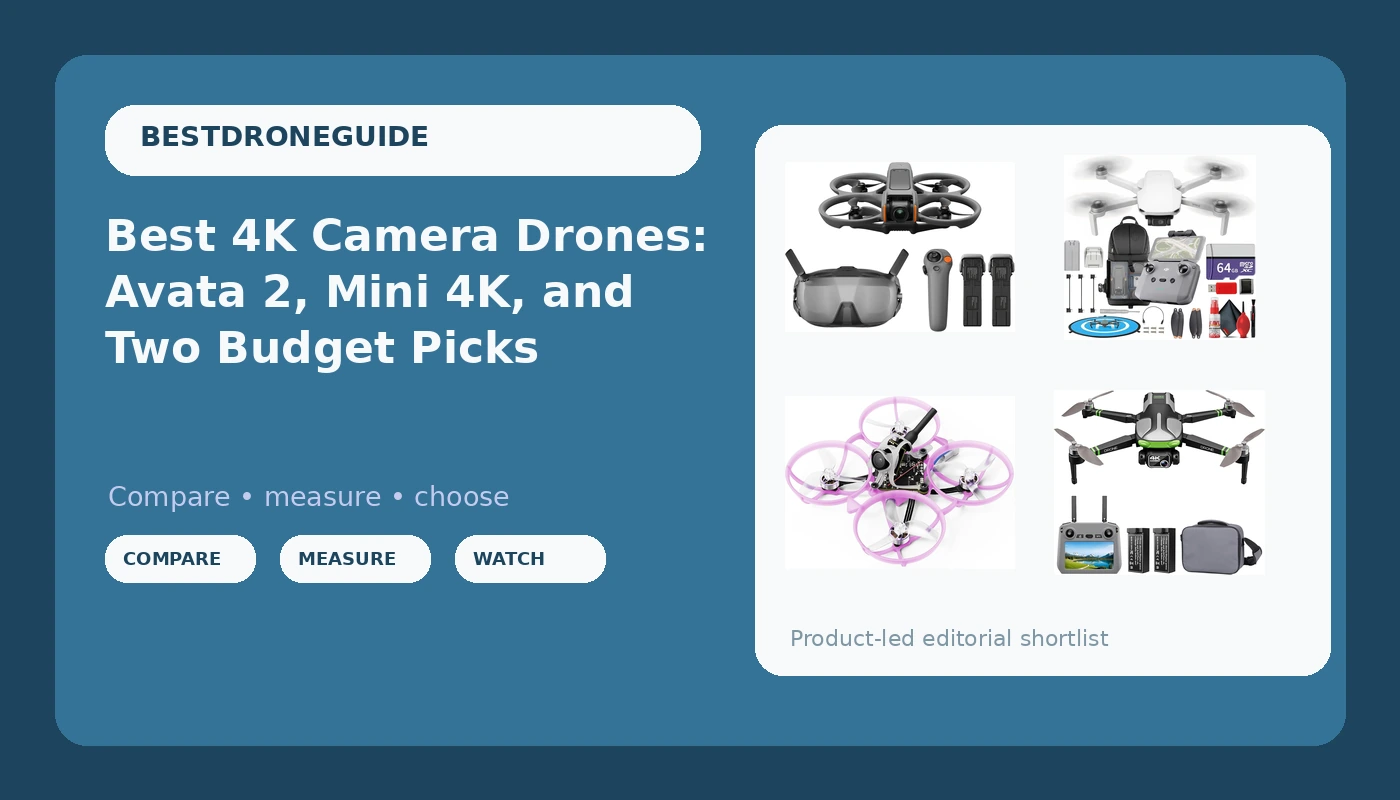
I bought my first drone in 2015, a Phantom 2 that weighed more than my camera bag, and I have owned or flown more than 20 since then, from $300 toys to a rig that cost as much as a used truck. These days I fly four or five days a week around Phoenix shooting real estate, weddings, and solar farm inspections, which means every aircraft I recommend has to answer one question first: does it still work at 110 degrees with wind coming off a parking lot? That question is why I keep a running shortlist of the best 4K camera drones, and it is why this comparison exists. Four drones, four completely different jobs, and not one of them is the right answer for everybody.
Related: Sub-250g Drones and the Rules That Actually Matter
The best 4K camera drones for most buyers in 2026 are the DJI Mini 4K for travel and client work and the DJI Avata 2 for immersive flying, with two budget options below them if your budget is tighter. That is the short answer, and it is honest. The long answer involves ducted props, goggle comfort, 12 megapixels versus a phone-grade sensor, and why a 31-minute flight time claim turns into 21 minutes over a hot cul-de-sac in July.
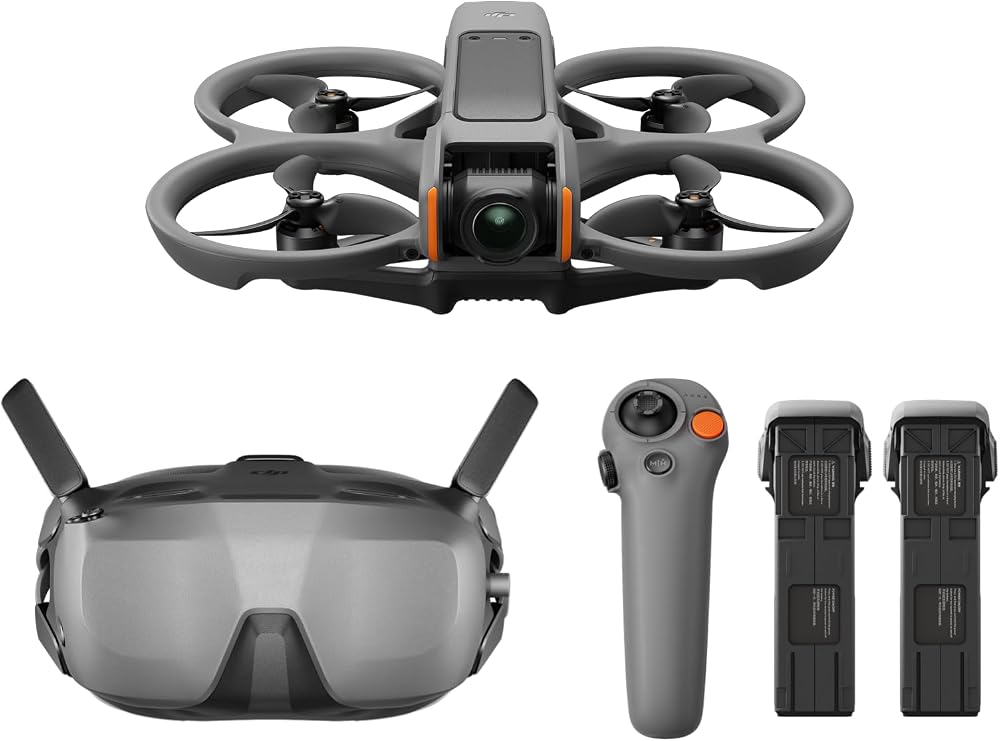
DJI Avata 2 Fly Smart Combo
Three batteries in the box, built-in propeller guards, and the most fun I have had flying in years
Not a client camera, and goggles mean you cannot see the world around you
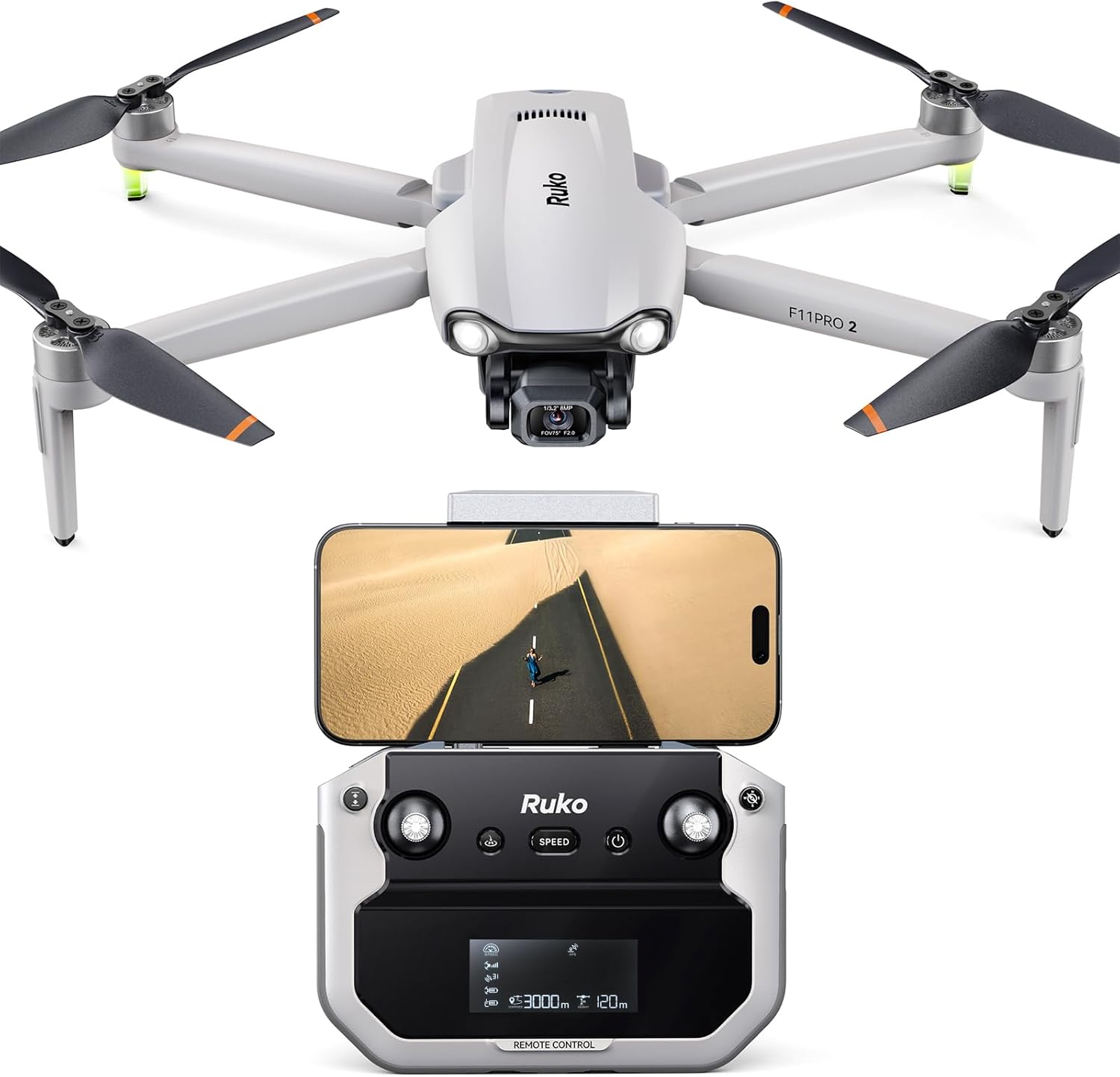
DJI Mini 4K Lightweight UHD Drone
Real 3-axis gimbal, under 249g, and a bundle that kills the accessory tax
12MP stills are thin for print, and the flight time claim is a lab number
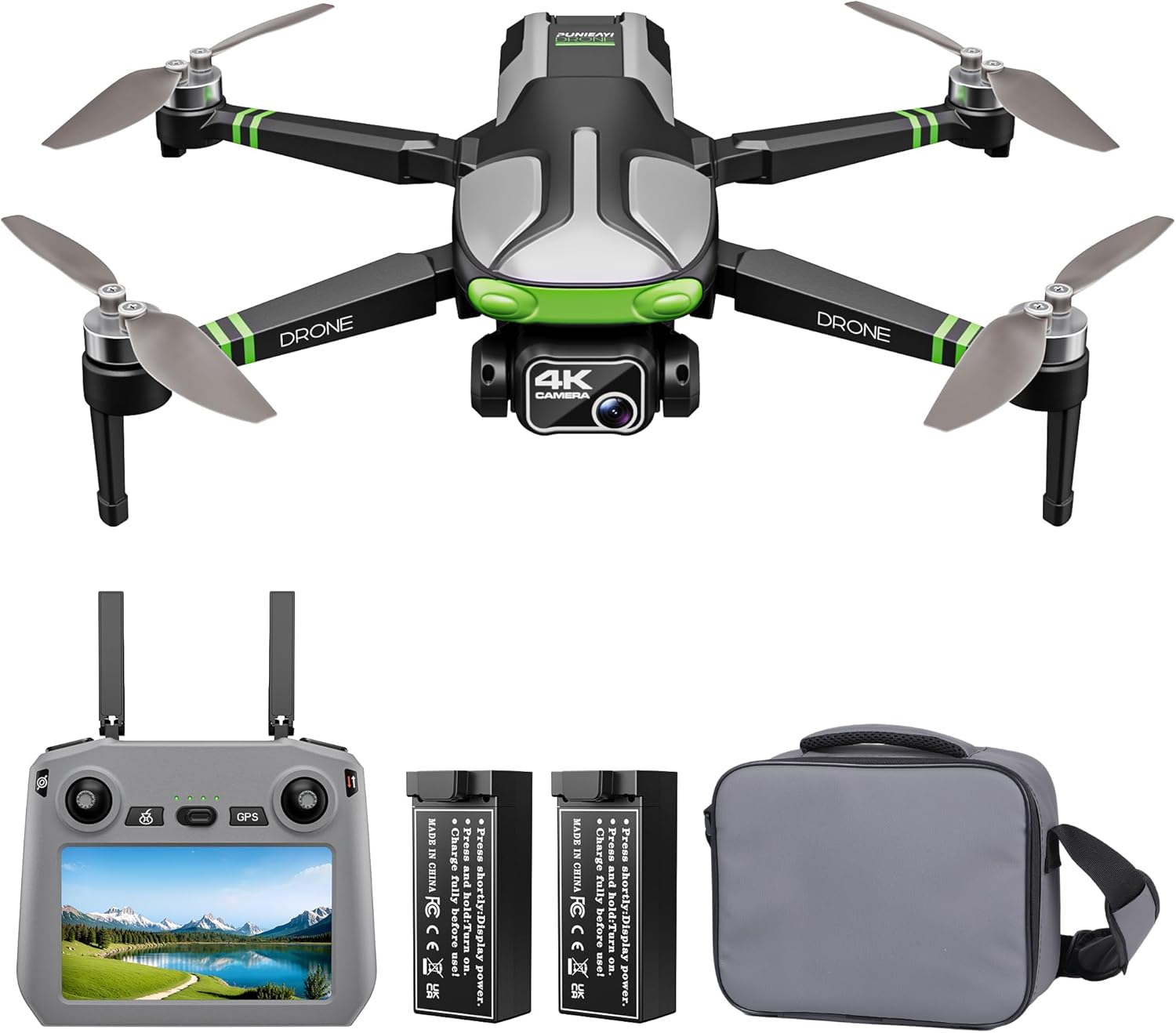
Drones with Camera for Adults 4K, 5.7" FPV Touchscreen
Built-in screen means no phone, no app account, no firmware drama
No service network, no ND filters, and wind is a gamble
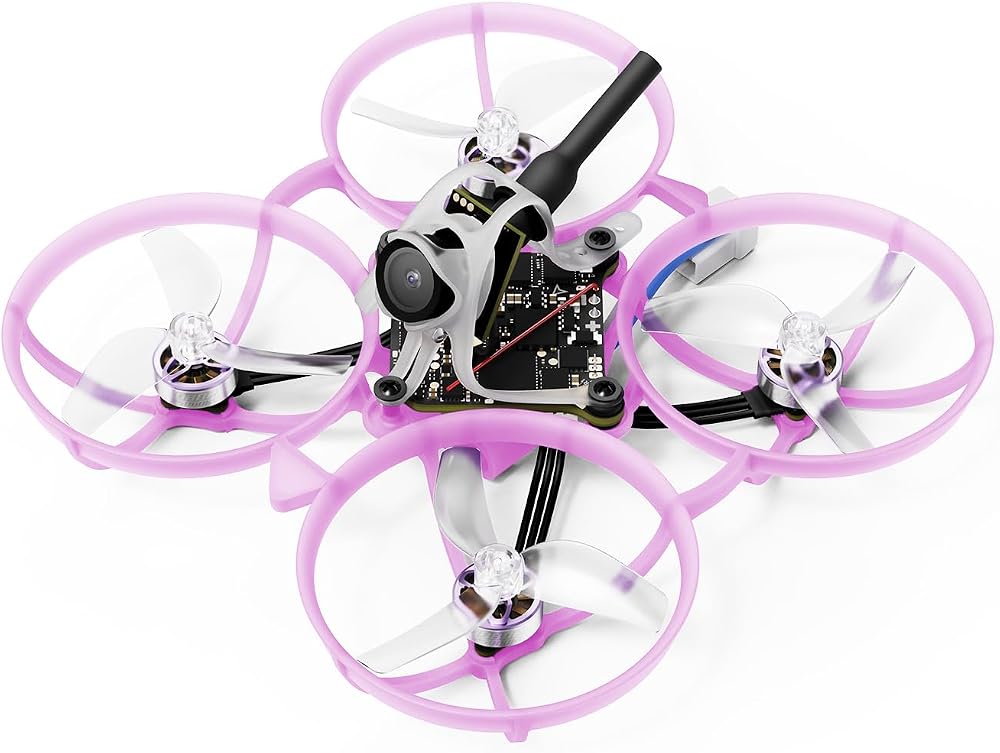
BETAFPV Air75 II Brushless Whoop Quadcopter
The best indoor winter flyer here, and it survives crashes
Expect to tune, solder, and replace props. Not a camera drone for clients
Prices and availability were captured from Amazon Creators API and may change.
How I judge a camera drone
Four things, in order: camera, batteries, app, airframe. Everything else is marketing.
The camera is half the drone. A great airframe with a soft camera is a paperweight, and sensor size beats megapixels every single time. A 12MP image off a decent sensor with a real gimbal will beat a 48MP frame off a phone sensor that smears detail the moment the light drops.
Batteries are the real cost. A drone that ships with one battery is a drone you will fly for 40 minutes total on a Saturday. Buy the kit with extras, or budget for them, because the second and third battery are where the actual flying happens. Heat is the killer here. I have lost two batteries to Phoenix summers, both swelled at around 80 percent health, both from leaving them in a hot truck between shoots.
The app is part of the product. A drone with a buggy app is a drone that will not fly when a client is standing next to you watching the clock.
Flight time is a lab number. In heat and wind, cut every claim by 30 to 40 percent before you plan a shoot around it.
And one boundary I hold: FPV racing builds are a different category with a different skillset. I do not review them as camera drones, and I will explain below why the whoop in this comparison sits in its own lane.
DJI Avata 2 Fly Smart Combo: the one that made flying fun again
The Fly Smart Combo is the version to buy. It ships with three batteries, the Goggles N3, and the RC Motion 3, so you steer by tilting your hand instead of pushing sticks. The 4K camera is mounted behind built-in propeller guards, and the aircraft will flip and roll on command.
What it wins: the experience. Ducted props mean you can fly close to structures and indoors without the constant fear of nicking a branch, and three batteries in the box means an actual session instead of a single pack. Motion control is easier to learn than it looks. My first flight with it felt like cheating.
What it loses: this is not a client camera. The wide, immersive FPV look is not what a real estate agent wants for listing photos, and goggles mean you cannot see the world around you, which is a genuine problem near people. For a first-time pilot the goggles take a session or two to get comfortable, and there is a learning curve on judging distance through a screen. Buy it to fly, not to deliver files.
DJI Mini 4K: the one I would hand to a working photographer
Under 249 grams, a 12MP camera on a 3-axis gimbal, 10 km video transmission, and a 31-minute flight time claim, sold as a bundle with a 64GB card, a backpack, and a landing pad.
That gimbal is the whole story. Three axes of stabilization is what separates a real camera drone from a toy that jitters in a five mile per hour breeze. For web listings, social clips, and travel footage, 12MP is genuinely enough. For print or heavy crops it is thin, and I would not sell a magazine spread off it.
The bundle matters more than people admit. Cards, bags, and landing pads are exactly where budget drones quietly become expensive, and this kit covers all three. Staying under 249 grams also keeps you in the lightest regulatory class in most places, though you should always check your own local rules before you fly.
On flight time, the honest number: 31 minutes is measured in a lab. In Phoenix summer heat with wind and aggressive stick input, plan on the low 20s. The 10 km transmission spec is meaningless to me. What matters is whether the link holds when a building blocks the line of sight, and on this class of drone it usually does.
BETAFPV Air75 II: the whoop in its own lane
I said I do not review FPV racing builds, and I meant it, so treat this as a note rather than a recommendation. The Air75 II is a brushless whoop: an ultralight 1S quad with a Matrix 5IN1 II flight controller, 0802 25000KV brushless motors, 1614-3B props, and a C03 camera under an Air II canopy.
What that adds up to is a tiny indoor aircraft built to bounce off walls and be repaired, not a tool for delivering cinematic footage. If you want to fly in a living room in January when the desert is cold and windy, this is the machine. Expect to tune it, expect to replace props, and expect to learn a soldering iron. It is not a first drone and it is not a client drone.
The budget pick with a screen built in
This one covers a 4K camera, a 5.7 inch FPV touchscreen in the controller, auto return, and follow modes.
The screen is the selling point, and it addresses one of my loudest complaints about cheap drones. No phone mount, no app account, no firmware update that refuses to run until you hand over an email address. You charge it, you turn it on, you fly.
Auto return and follow are also the two features beginners actually use. Follow mode is what makes a solo rider or runner look cinematic without a second operator, and auto return has saved more first drones than any obstacle avoidance system I have tested.
What it loses: there is no service network behind it, the camera is a small sensor that will struggle at dusk, there are no ND filters in the box, and gimbal behavior in gusty wind is a gamble. As a first drone for a teenager, or a backyard flyer for someone who does not want to think about apps, it earns its place.
The flight time math nobody prints on the box
Thirty-one minutes. Forty minutes. Every box carries a number measured in still air at a comfortable temperature with a fresh pack and gentle hovering. I fly in heat, I fly in wind, and I fly with a camera pointed at a paying client's property, which means I am moving the sticks. Cut the claim by 30 to 40 percent and plan around that.
Two practical rules I follow. Buy the kit with extra batteries, because a single pack turns a shoot into a rushed fifteen minutes. And never charge a cold pack. Lithium cells below 50 degrees Fahrenheit will refuse to take a charge or take it badly, which is the number one reason people think their new battery is defective in winter.
What I would actually buy
If you shoot for money, take the Mini 4K bundle. It is the cheapest way into a stabilized 4K camera, it comes with the accessories you would otherwise buy one at a time, and it stays in the lightest weight class.
If you want to fly for the joy of it, take the Avata 2 Fly Smart Combo. Three batteries, goggles, motion control, and prop guards make it the most complete fun package here, and the guards make it the one I would let a friend try.
If it is a gift or a first drone, take the touchscreen model. The built-in screen removes the entire phone-and-app headache.
If you already fly FPV and want an indoor winter machine, the Air75 II is a different purchase for a different pilot. Do not buy it expecting 4K client footage.
The bottom line
Two of these drones are cameras that happen to fly, one is an experience that happens to record 4K, and one is a toy for people who already know how to build and tune. The mistake I see most often is buying the experience when you needed the camera, or buying the camera when what you really wanted was to fly through a tree line at speed.
Pick the job first. Real estate, travel, and social clips point to the Mini 4K. Immersive flying points to the Avata 2. A first drone for a kid points to the touchscreen model. Indoor racing practice points to the whoop, and only if you enjoy the tuning as much as the flying. Then buy the version with the extra batteries, because that is the difference between a drone you own and a drone you actually use.