Related: Best Beginner Drone Under 249g: What to Buy First
I fly drones for a living. Real estate, weddings, and solar farm inspections, four or five days a week, mostly in Phoenix heat that swells batteries and exposes every optimistic spec sheet. So when I sort through the field of drones with camera for adults, I am not reading the marketing copy. I am reading the gimbal spec, the battery count, and the transmission claim, because those three things decide whether a client gets usable footage or gets an apology email.
This roundup covers four items I would actually consider putting in a bag or bolting onto an airframe: two camera drones aimed at adults who want to shoot real footage, one ultralight FPV whoop, and one replacement part. I have not put these specific airframes through a full Phoenix summer, so I will not pretend I have. What I can do is tell you which claims hold up under scrutiny, which ones are just numbers on a box, and who each item is for. Every product link goes to the listing, where you can check the current Amazon price.
Best All-Around: V11PRO Drone with 8K Camera
The V11PRO is the only true camera drone in this group, and it reads like one on paper. The 3-axis gimbal is the feature that matters most, because gimbal stabilization is what separates footage a client will pay for from footage that looks like a phone taped to a ceiling fan. It pairs that gimbal with 4K/30fps video, 48 million pixels for stills, a 6KM video transmission claim, and two batteries in the box.
Two batteries is the detail I care about more than any other. Batteries are the real cost of drone ownership, and a kit with a spare pack is a kit you can actually work with. The 80-minute figure in the product name is the combined claim across both packs, measured in ideal air with no wind and moderate temperature. In Phoenix, on a 105-degree afternoon, I plan on losing 30 to 40 percent of any published flight time, and I would plan on the same here. That still leaves enough airtime for a real estate shoot, provided you land with margin instead of pushing to the last percent.
On the camera, remember that 48 million pixels is a number, not a sensor. Sensor size beats megapixels every time, and a small sensor at high resolution will look soft and grainy in low light no matter how large the number on the box is. Shoot 4K/30fps in good daylight and you will be happy. Shoot at dusk and you will meet the limit of the sensor.
The 6KM transmission number is a line-of-sight claim in clean radio conditions. Trees, buildings, and hills cut it down fast. Fly inside a range you can see and you will never notice the difference.
Best First Drone: Foldable Beginner Drone Under 249g
This is the drone I would hand to a friend who wants to learn without a lot of ceremony. It is under 249g, which is the weight class I expect to keep growing, and it folds down small enough to live in a backpack. It also runs brushless motors instead of the brushed motors you still find on cheap toys. Brushless is the durability difference: fewer wearing contact parts, better heat tolerance, and it holds up to the mistakes beginners make.
The feature list is beginner-friendly in the useful way: auto follow, tap fly, circle fly, and one key start. Auto follow and circle fly are the two modes a new pilot actually uses for footage, because they let you be in the shot without a second person running the camera. One key start sounds like a gimmick until you have watched a first-timer panic with two sticks and a countdown.
The honest caveat is wind. At this weight, gusts push the airframe around, and no amount of software fully fixes that. Footage will be smooth in calm morning air and frustrating at three in the afternoon in a desert. Auto follow also needs contrast to hold onto you, so wear something that stands out and avoid busy backgrounds.
Treat it as a learning tool that can produce decent footage, not as a commercial camera ship.
The FPV Entry: BETAFPV Air75 II Brushless Whoop
Disclosure first: FPV racing builds are not my lane. I shoot cinematic work, and the skills are different enough that I will not pretend otherwise. But a whoop is the one FPV format I recommend to people who want to learn, because ducted props make it survivable indoors and against walls. The Air75 II is exactly that: an ultralight 1S quad with a Matrix 5IN1 II flight controller, 0802 25000KV brushless motors, 1614-3B props, and a C03 camera canopy.
What it is not is a camera drone for client work. The camera is there so you can see where you are going and record the flight, not so you can sell footage. What it is very good at is stick time. You can fly it in a living room, bounce it off a couch, pick it up, and keep going. That loop is how you build the muscle memory that makes every other drone easier to fly.
Buy it if you want to learn FPV or you want to fly indoors when the wind is up outside. Check the listing for what is included before you order, because 1S whoops vary in what comes in the box, and you do not want to discover a missing piece on the day it arrives.
The Part: Landing Feet Front and Rear, Compatible For Autel
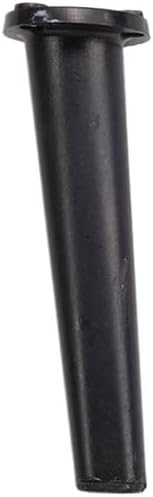
This is the least exciting item in this guide and the one most likely to save a shoot day. Landing feet front and rear, compatible with Autel, are replacement parts. They exist because landing gear does three jobs: it holds the camera and gimbal clear of the ground, it keeps the belly off gravel and sand, and it gives you something to grab when the drone comes back hot.
In Phoenix I land on decomposed granite, dirt, and the occasional driveway. Gear takes a beating. If a foot on your airframe has cracked, gone missing, or started flexing in a way that lets the gimbal get close to the ground, this is the fix, and it is far cheaper than a repair bill for a camera assembly.
Match it to your model before you order, since this is listed as compatible with Autel rather than universal. Do not buy it as an upgrade. Buy it because yours broke.
What I check before I trust a spec sheet
- Gimbal axes, not megapixels. A 3-axis gimbal is the single most important spec on any camera drone. Everything else is secondary.
- Battery count and replacement cost. One pack is a demo. Two packs is a work day. Know what a spare costs before you commit.
- Sensor size over resolution. A modest sensor at a sane resolution beats a tiny sensor at an absurd one, especially after sunset.
- Transmission claims. Treat every range number as a clear-sky, line-of-sight figure and halve it for real terrain.
- The app. A drone with a buggy app is a drone that will not fly when you need it. Check recent reviews for app complaints, not just flight complaints.
- Consumables. Props and landing gear are the parts that break. If they are hard to find or absurdly priced, that is part of the ownership cost.
- Ground clearance. This is why landing gear matters more than people think, and why a cracked foot is not a cosmetic problem.
Spec sheet, side by side
| Product | Class | Headline claims | What to watch |
|---|---|---|---|
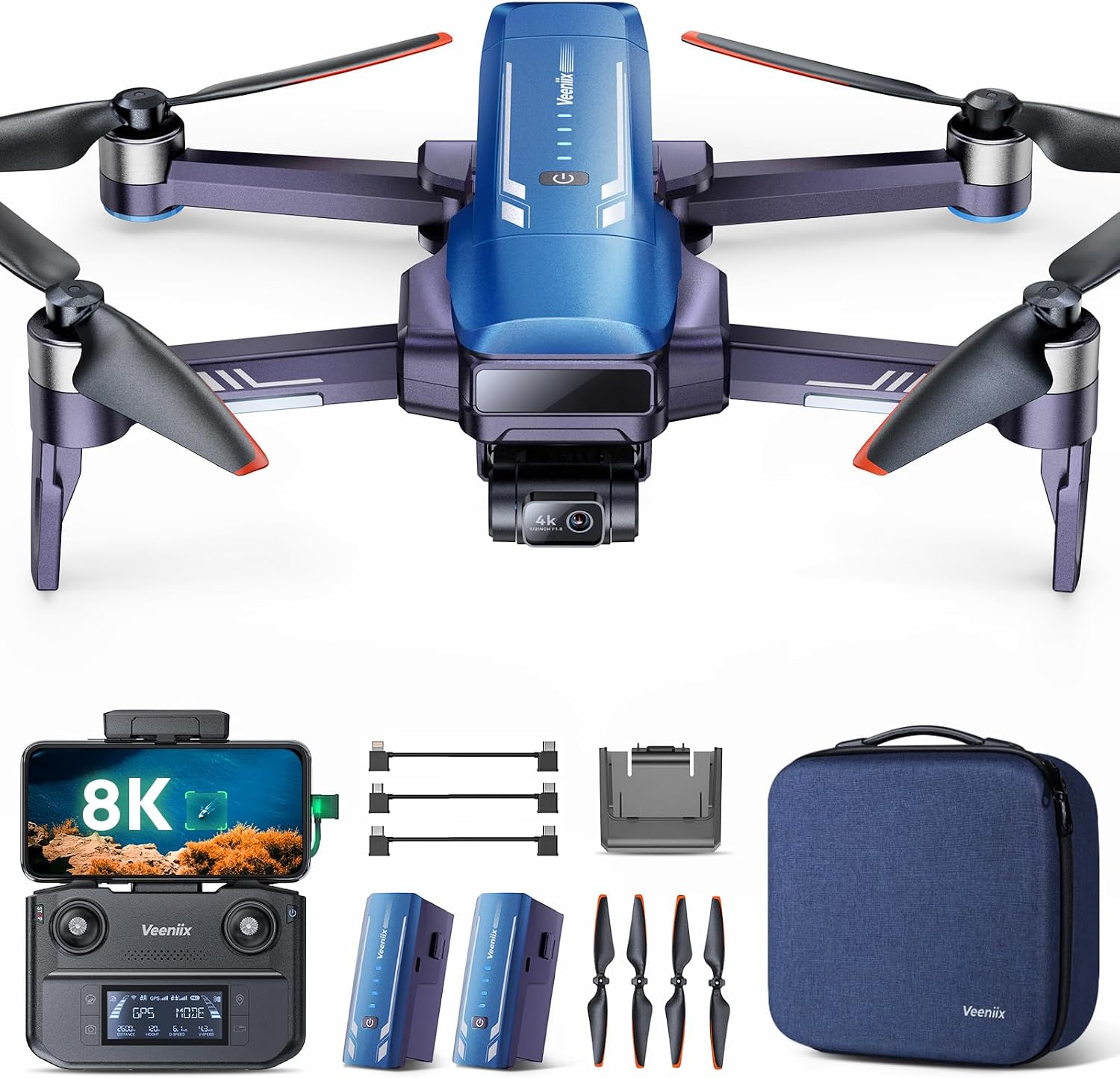 Visit on Amazon → Visit on Amazon →V11PRO Drone with 8K Camera |
Adult camera drone | 3-axis gimbal, 4K/30fps, 48MP stills, 80 min with 2 batteries, 6KM transmission | Flight time is two packs in ideal air; cut it for heat and wind |
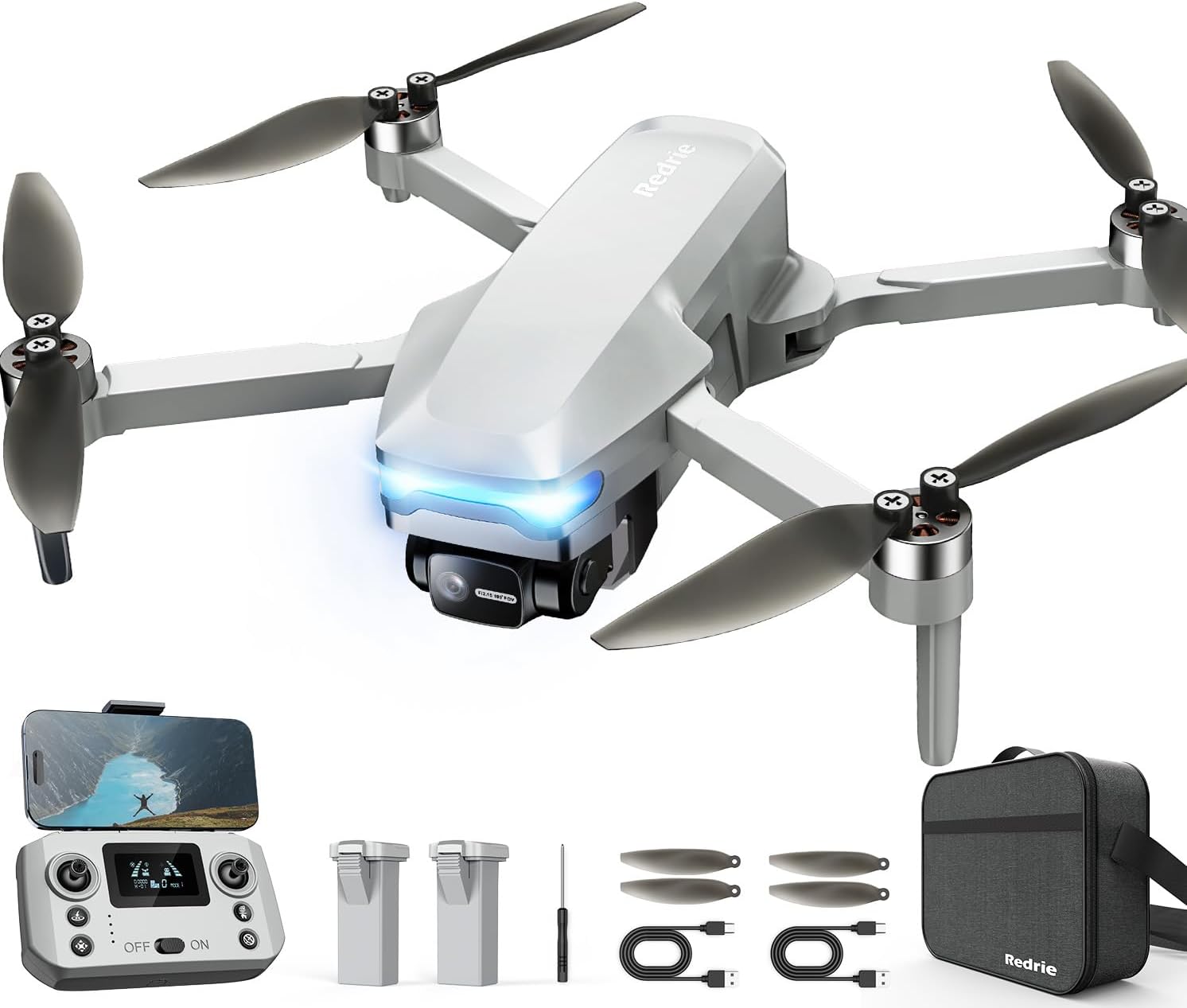 Visit on Amazon → Visit on Amazon →Foldable beginner drone |
Sub-249g camera drone | 4K camera, brushless motors, auto follow, tap fly, circle fly, one key start | Wind is the limiter; smooth footage needs calm air |
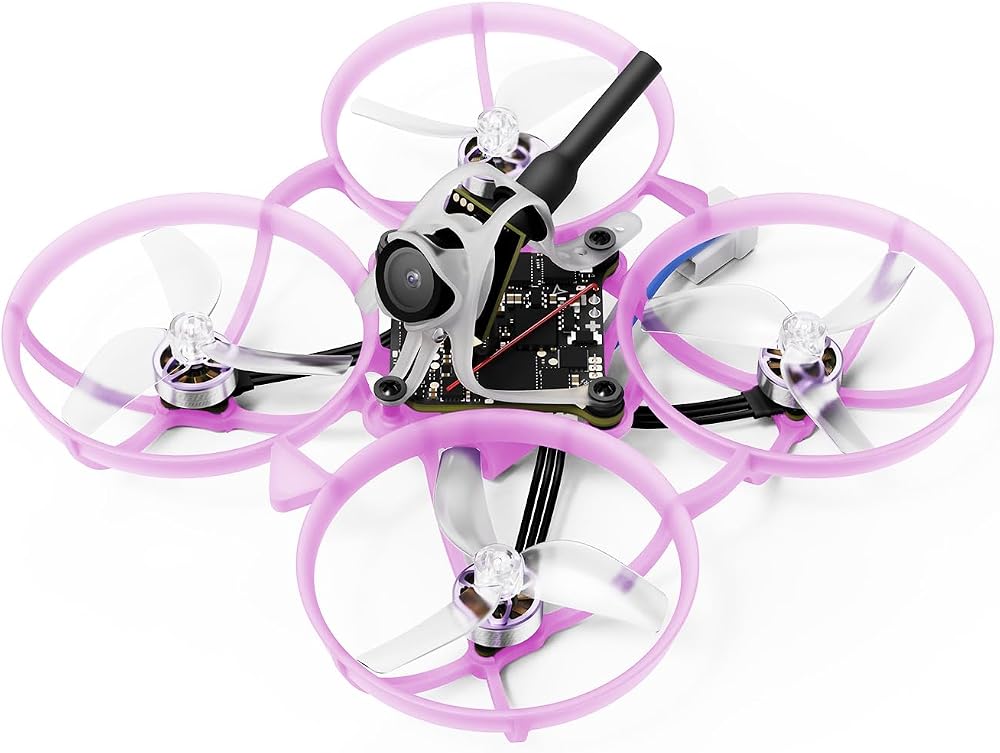 Visit on Amazon → Visit on Amazon →BETAFPV Air75 II whoop |
1S FPV whoop | Ultralight airframe, Matrix 5IN1 II FC, 0802 25000KV motors, C03 camera canopy | Not a camera drone; indoor and close-range FPV only |
 Visit on Amazon → Visit on Amazon →Landing feet, front and rear |
Replacement part | Fits front and rear positions, compatible with Autel | Match it to your airframe; it is a part, not an upgrade |
Where these numbers go soft
Flight time is a lab number. Every manufacturer measures it in still air at a comfortable temperature, hovering, with a fresh pack. Real flying has wind, climbing, camera work, and heat. Heat is the battery killer, and I have lost packs to Phoenix summers that swelled and died at 80 percent health. The rule I use is simple: take the published number, cut 30 to 40 percent, and plan your flight around the smaller figure. If you routinely land at 30 percent remaining, your batteries will last longer and your footage will be safer.
Transmission range is the second soft number. The advertised distance assumes clean radio conditions and a clear line of sight. Add trees, a house, or a hill and it drops quickly. That is true of every drone in every price class, not a knock on any one model here.
Resolution is the third. Megapixels sell drones, but sensor size decides how the footage looks once the sun gets low. If you shoot at golden hour, which is when the good real estate footage happens, a small sensor will struggle regardless of how many pixels it claims.
The app is the fourth, and the one buyers research last. A drone with a buggy app is a drone that will not fly when you need it. Read recent reviews specifically about the app before you buy anything.
Finally, the sub-249g class trades wind resistance for weight. That is the deal, and it is a good deal for beginners. Just do not expect it to behave like a heavier camera ship in a gust.
Should you buy the V11PRO Drone with 8K Camera?
Yes, if you want a genuine camera drone without enterprise money. The 3-axis gimbal is the feature that matters, 4K/30fps is the right shooting mode for daylight work, and shipping with two batteries is the detail most buyers ignore until their first long shoot day. Treat the 80-minute claim as a combined figure for both packs in ideal air, then plan around the number you get after cutting it for heat and wind.
The camera will be at its best in good light, so build your shooting schedule around the sun instead of fighting it. If you shoot real estate, weddings, or inspections, and you want one airframe that can do the job without a second mortgage, this is the one in this group I would start with.
Should you buy the foldable beginner drone?
Yes, if you are learning and you want to stay in the lightest weight class. Brushless motors mean it survives beginner mistakes better than the brushed toys, and auto follow plus circle fly are the modes new pilots actually use. It folds, it travels, and it is light enough that a hard landing is usually just a hard landing.
The catch is wind, and there is no software fix for that. Fly in calm morning air, keep your expectations honest, and treat the first month as practice rather than production. Once your stick control is solid, you will get more out of a heavier camera drone because you will already know how to fly it.
Should you buy the BETAFPV whoop or the landing feet?
Buy the whoop if you want to learn FPV or fly indoors when the weather will not cooperate. It is not a camera drone and it is not for client work, but it is the cheapest way to build real stick time.
Buy the landing feet if a foot on your Autel airframe is cracked or missing. It is a part, not an upgrade, and it is the kind of small purchase that keeps a camera and gimbal off the dirt.