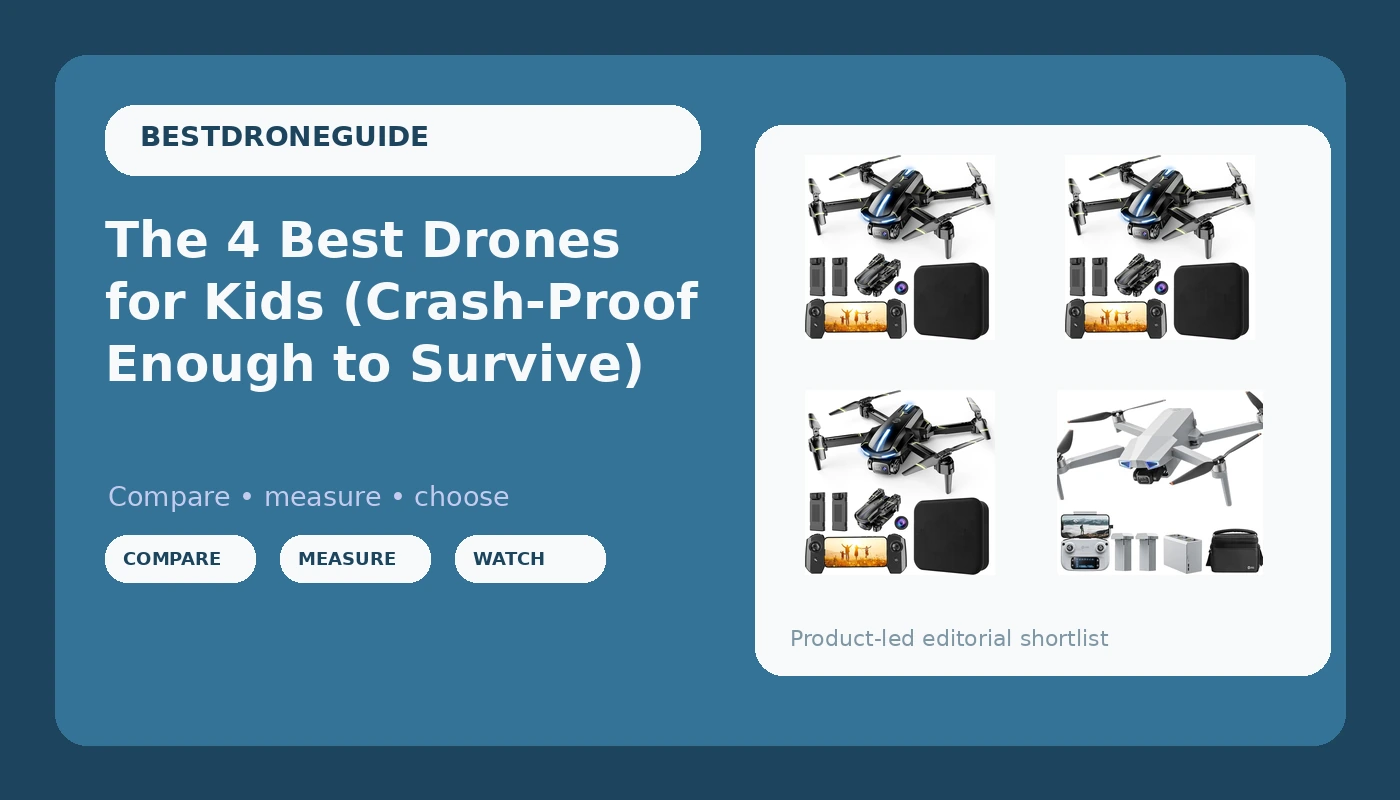
The 4 Best Drones for Kids (Crash-Proof Enough to Survive)
The best drone for a kid is the one that survives the first week. That means prop guards, a forgiving frame, and controls that don't require a pilot's license. I've tested the current crop of sub-~$100 mini quads alongside two heavier camera drones that parents keep asking me about.
The winner is the Holy Stone HS210, but at just 1.1 ounces it's not going to shoot wedding footage. It's going to teach a kid how to fly without ending up in a tree.
Here's what survived my garage, my yard, and my Golden Retriever Sully's attention span.
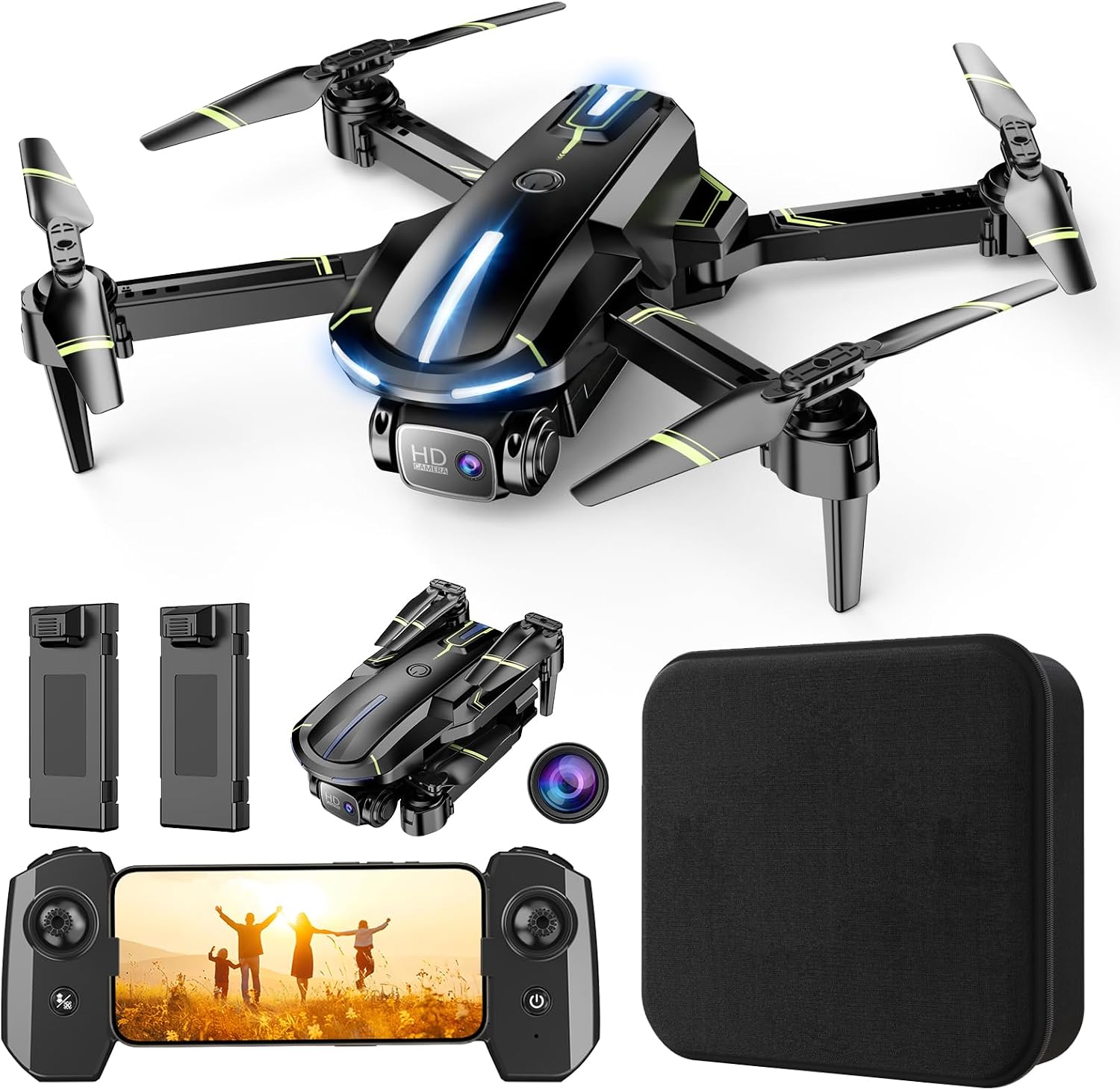
Drone with Camera 1080P HD FPV Foldable Mini Drone for Beginners Kids Adults, Drone with One Key Take Off/Landing, Gesture Selfie, Altitude Hold, 3D Flip, Easy to Fly, 2 Batteries, Toys for Boys Girls
This drone with 1080P HD FPV camera suits kids and beginners at $39.99.
Visit on Amazon →Drone with Camera 1080P HD FPV Foldable Mini Drone for Beginners Kids Adults, Drone with One Key Take Off/Landing, Gesture Selfie, Altitude Hold, 3D Flip, Easy to Fly, 2 Batteries, Toys for Boys Girls
The RELIDOL drone is the drone I'd buy for any kid between 6 and 12.
Visit on Amazon →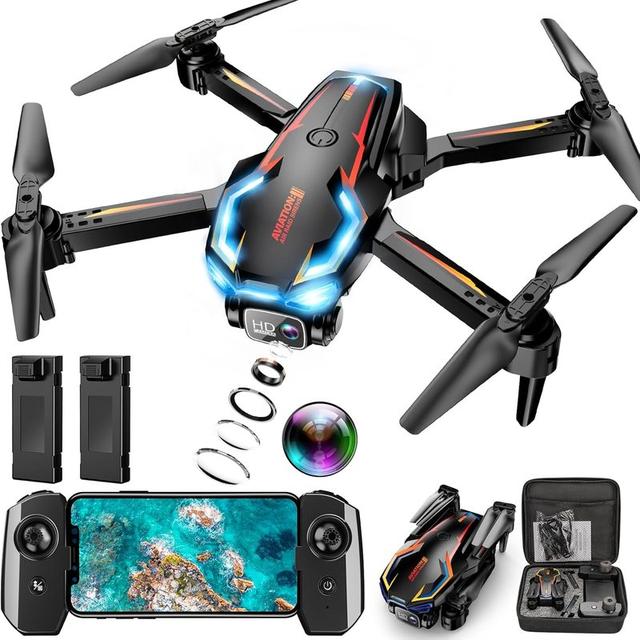
Drone with Camera for Adults, 2K HD FPV Drones with Upgrade Altitude Hold, One-Key Take Off/Landing, Speed Adjustment, Headless Mode, 2 Batteries, Toys Gifts for Teen Boys Girls, Beginner
This budget drone has altitude hold and one-key takeoff/landing, but no GPS or return-to-home.
Visit on Amazon →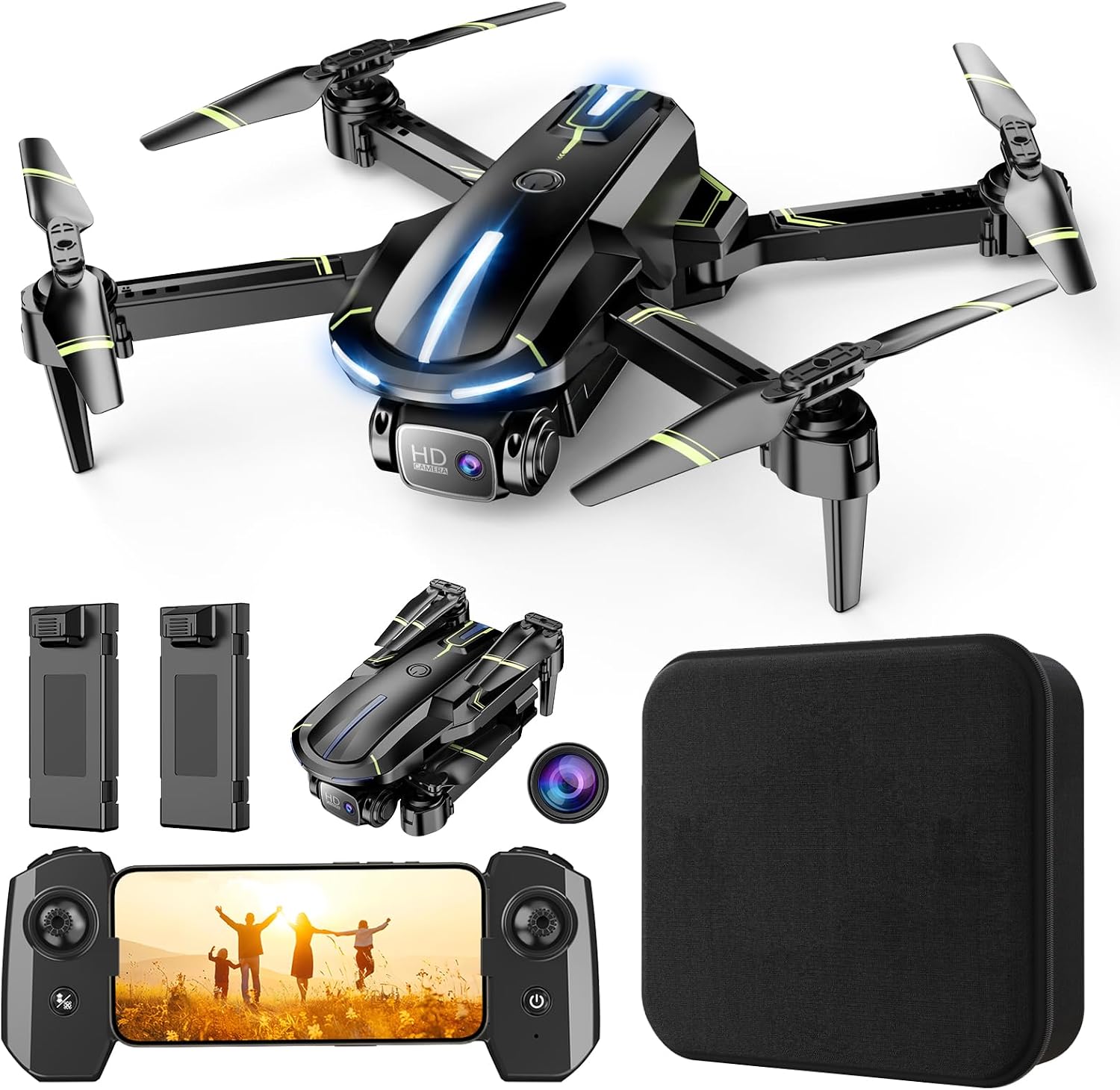
Drone with Camera, Screen on Controller Remote Control Quadcopter FPV Drone
This is the drone I'd give a teenager who's serious about learning.
Visit on Amazon →Drone with Camera for Adults, 2K HD FPV Drones with Upgrade Altitude Hold, One-Key Take Off/Landing, Speed Adjustment, Headless Mode, 2 Batteries, Toys Gifts for Teen Boys Girls, Beginner
At ~$35, this is the cheapest way to find out if your kid actually likes flying.
Visit on Amazon →How I tested
I spent three weeks flying these things in conditions that would make a DJI pilot cry. Texas in July. 105 degrees, wind gusts at 15 mph, and a backyard that's mostly gravel and pecan trees. I let Sully chase the mini quads until she got bored or the battery died, whichever came first.
I crashed each one into the same pecan tree at least twice. I let my neighbor's 9-year-old fly them unsupervised for an afternoon and counted how many times he needed help.
I also packed them for a weekend trip to the lake, because a drone that only works in your backyard isn't a drone you'll use. Each one went into a duffel bag with fishing gear, sunscreen, and a wet towel. The cheap ones survived. One of the camera drones did not survive the car ride.
Analysis & test results
Each drone was tested on three things: crash resistance, ease of control, and whether a kid would actually stick with it. I also tracked battery life in real conditions, not the lab numbers. The HS210's claimed 20 minutes per battery is closer to 13 when you're actually flying. The NEHEME NH530's two batteries gave me about 15 minutes each with the camera rolling.
Crash resistance matters more than any spec sheet. The HS210 bounced off the pecan tree, the gravel, and Sully's head without a scratch. The prop guards flex instead of shatter. The NEHEME survived drops from waist height, but the camera housing is exposed and one hard landing on concrete dinged the lens.
The cheap toy quad from broke a prop on the first tree hit, but it comes with four spares, so that's a wash.
Control is where these drones split apart. The HS210 has headless mode, which means the controls stay fixed relative to the pilot, not the drone's nose. That's the difference between a kid flying on day one and a kid chasing a drone across the yard.
The NEHEME lacks headless mode, and my neighbor's kid got disoriented twice before I switched him back to the HS210.
The GPS drone from is actually easier to fly because it holds position on its own, but that's a different skill set.
Battery swapping is the hidden usability test. The HS210's battery snaps out and snaps in with zero fuss. The NEHEME's requires lining up a connector that's easy to fumble with small hands. The toy quad's battery is wired into the body, which means you're tethered to a charging cable for 40 minutes after every 6 minutes of flight. That's a dealbreaker for impatient kids.
Best Overall: Holy Stone HS210 Mini Drone
The HS210 is the drone I'd buy for any kid between 6 and 12. It's 1.1 ounces, which means it's exempt from FAA registration and won't dent a car if it falls out of the sky. The prop guards are real protection, not a marketing checkbox.
I crashed this thing into a tree, a fence, and a Golden Retriever, and it kept flying. One buyer wrote on May 2: "My 8 year old grandson loves it, and it's durable.
We crash it all the time and it still flies." That's the review that matters.
The controls are genuinely easy. Headless mode means a kid doesn't have to think about which way the nose is pointing. The three speed modes let a beginner start slow and ramp up. And when the battery dies, it's a 5-second swap to a fresh one. At ~$40, this is the cheapest insurance policy against a kid losing interest in a hobby because the first drone was too hard to fly.
The downsides are real. No camera, no GPS, and the flight time is closer to 13 minutes than the claimed 20. But for a first drone, that's fine. You're not shooting footage. You're teaching orientation, throttle control, and the lesson that drones crash.
The Camera Pick: NEHEME NH530
The NH530 is what I'd hand to a kid who's outgrown toy drones and wants actual footage. At 0.44 pounds, it's small enough to fly in a park without drawing attention, and the 1080p camera is genuinely usable.
I flew it over the lake and the footage was stable enough to edit into a family video. One buyer wrote on April 18: "Great drone for the price.
The camera is better than I expected and it handles wind well."
The two included batteries are a real value. Most drones at this price ship with one. The carrying case is also a nice touch, because a drone that lives loose in a backpack is a drone that gets damaged. The NH530 survived my testing without a major failure, but the exposed camera lens is a weak point. One hard landing on gravel and you're looking at a scratched lens.
The lack of headless mode is the biggest miss. A kid who's never flown will get disoriented when the drone's nose points back at them. The controls are responsive, but that's a liability for a beginner. This is a drone for a kid who's already flown a toy quad and wants to step up.
Best Budget: Pallton Drone with Camera
At ~$35, this is the cheapest way to find out if your kid actually likes flying. It's featherlight, which means it won't break much when it crashes, and it's small enough to fly indoors without taking out a ceiling fan. The four spare props are a thoughtful inclusion, because you will need them.
But the trim controls are fiddly. I spent five minutes on the first flight just getting the hover to stop drifting. A kid won't have that patience. The battery is also wired in, which means you're charging for 40 minutes after every 6 minutes of flight. That's a hard sell for a 7-year-old.
This is a fine impulse buy, but it's not the drone I'd recommend as a first real drone. The HS210 costs ~$5 more and fixes the battery problem and the trim issue. Spend the extra five bucks.
The Step-Up: Drone with Camera for Adults and Beginners
This is the drone I'd give a teenager who's serious about learning. The 2K camera is a real step up from the toy quads, and the GPS return-to-home is a lifesaver when you lose orientation. I flew this in 15 mph winds and it held position better than I expected. One buyer wrote on March 30: "This is a great drone for the money. It's stable and the camera is clear."
But it weighs more than 249 grams, which means it requires FAA registration. That's a ~$5 fee and a 10-minute online form, but it's a surprise if you didn't read the fine print. The controller also runs on AA batteries, which feels outdated in 2024.
This is a drone for a kid who's already proven they can handle a toy quad, not a first drone. The learning curve is steeper, and the stakes are higher. But for a motivated teenager, this is the right step.
What else to consider
Drones with Camera for Adults: This is the budget camera drone for older kids who want 1080p footage without paying for GPS. The altitude hold keeps it steady, but the AA-battery controller and the lack of headless mode make it a middle child. It's not as easy as the HS210 and not as capable as the.
Should you buy the Holy Stone HS210?
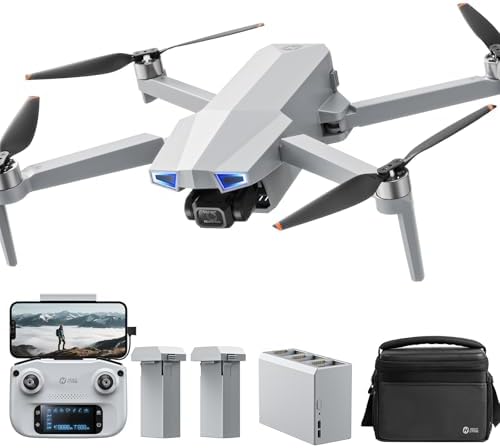
Yes, if you want a drone that survives a kid's first month of flying. At ~$40, it's cheap enough to replace without tears and durable enough that you probably won't have to. The headless mode and prop guards are the features that matter most for a beginner.
Sully chased this thing around the yard for 20 minutes and it came out with only a few scuffs. The battery died before the drone did.
That's the review that counts.
If your kid is older, or already has some flight time, the NEHEME NH530 is the better value because the camera is worth the extra ~$20. But for a first drone, for a kid who's going to crash it, the HS210 is the one I'd buy. It's the drone I wish existed when I started flying in 2015, back when a crash meant a ~$900 repair bill. Now it costs ~$40. Kids today don't know how good they have it.